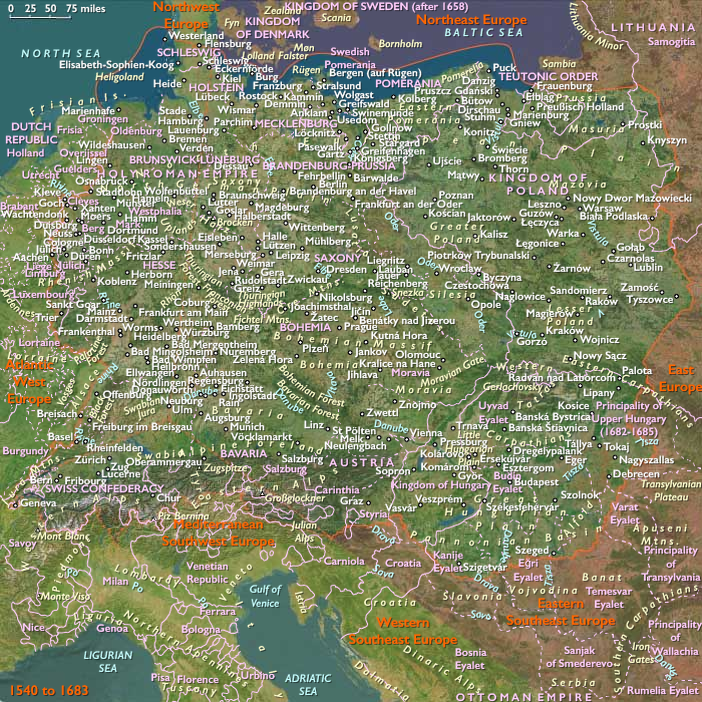
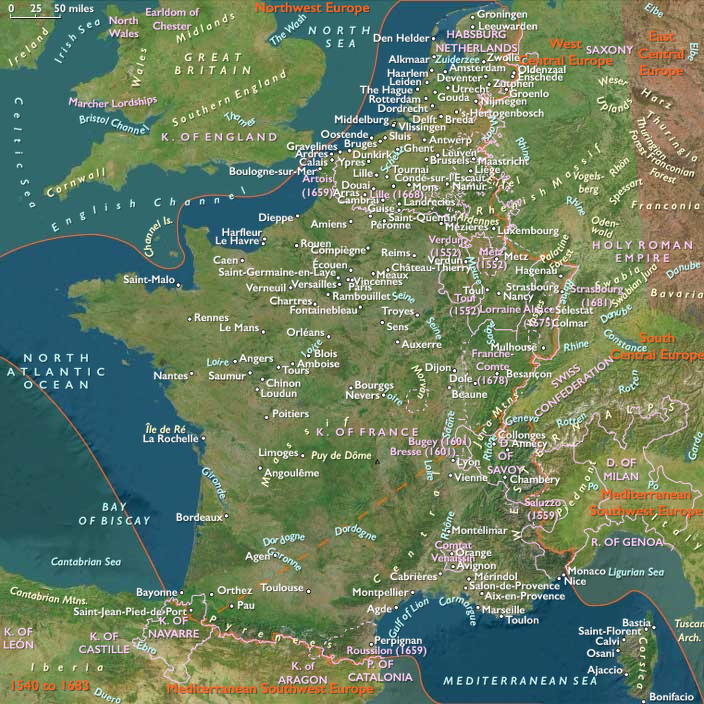
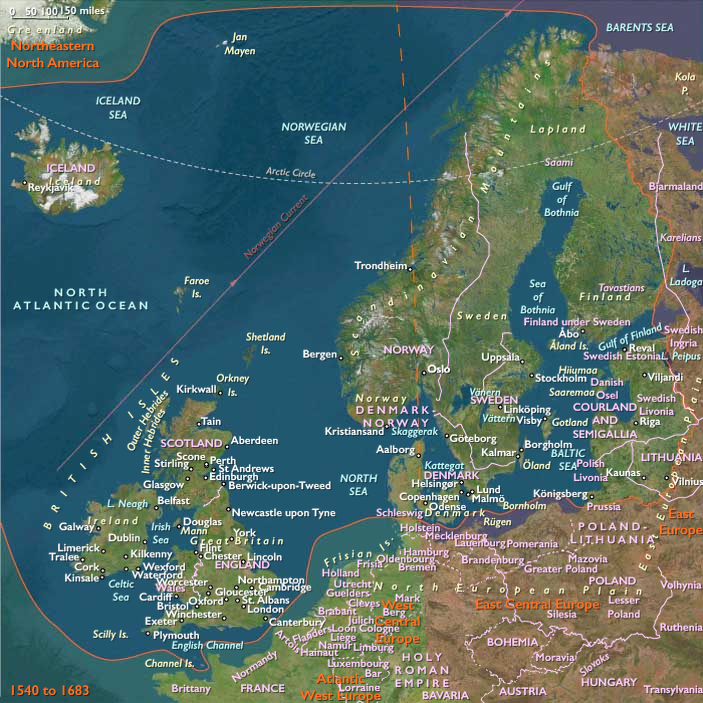
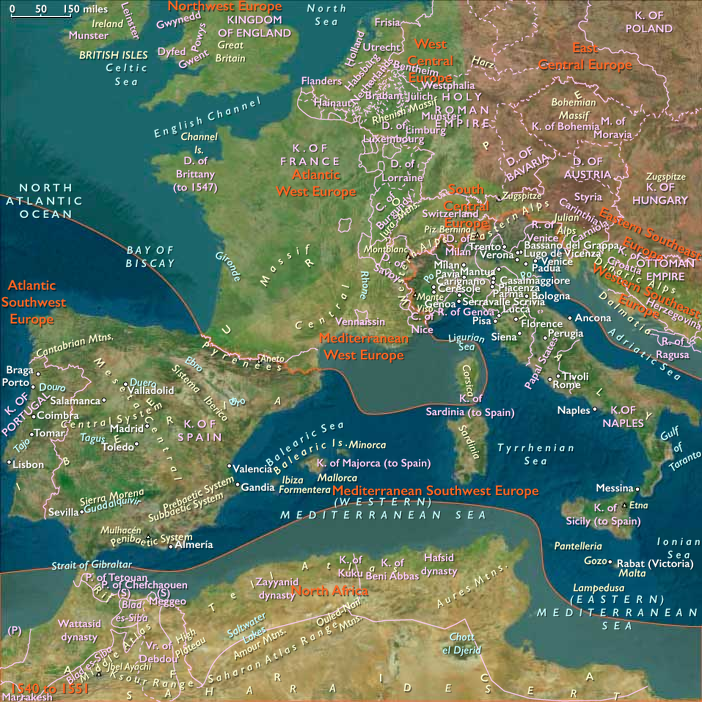
The Truce of Nice, which had ended the Italian War of 1536–38, has provided little resolution to the long conflict between the Holy Roman Emperor and the King of France; although hostilities had ended, giving way to a cautious entente, neither monarch is satisfied with the war's outcome.
Francis continues to harbor a desire for the Duchy of Milan, to which he holds a dynastic claim; Charles, for his part, insists that Francis comply at last with the terms of the Treaty of Madrid, which had been forced on the French king during his captivity in Spain after the Italian War of 1521–1526.
Other conflicting claims to various territories—Charles's to Burgundy and Francis's to Naples and Flanders, among others—remain a matter of contention as well.
Negotiations between the two powers had continued through 1538 and into 1539.
In 1539, Francis had invited Charles—who was facing a rebellion in the Low Countries—to travel through France on his way north from Spain.
Charles had accepted, and been richly received; but while he was willing to discuss religious matters with his host, he delayed on the question of political differences, and nothing had been decided by the time he left French territory.
In March 1540, Charles had proposed to settle the matter by having Maria of Spain marry Francis's younger son, the Duke of Orléans; the two would then inherit the Netherlands, Burgundy, and Charolais after the Emperor's death.
Francis, meanwhile, was to renounce his claims to the duchies of Milan and Savoy, ratify the treaties of Madrid and Cambrai, and join an alliance with Charles.
Francis, considering the loss of Milan too large a price to pay for future possession of the Netherlands and unwilling to ratify the treaties in any case, had made his own offer; on April 24, he had agreed to surrender the Milanese claim in exchange for immediate receipt of the Netherlands.
The negotiations have continued for weeks, but make no progress, and are abandoned in June 1540.