Charles X of France
King of France and of Navarre
Years: 1757 - 1836
Charles X (Charles Philippe; 9 October 1757 – 6 November 1836) is known for most of his life as the Comte d'Artois before he reigns as King of France and of Navarre from 16 September 1824 until 2 August 1830.
A younger brother to Kings Louis XVI and Louis XVIII, he supports the latter in exile and eventually succeeds him.
His rule of almost six years ends in the July Revolution of 1830, which frustrates his attempts to keep the crown in the senior branch of the House of Bourbon and results in the election of Louis Philippe, Duke of Orléans, as King of the French.
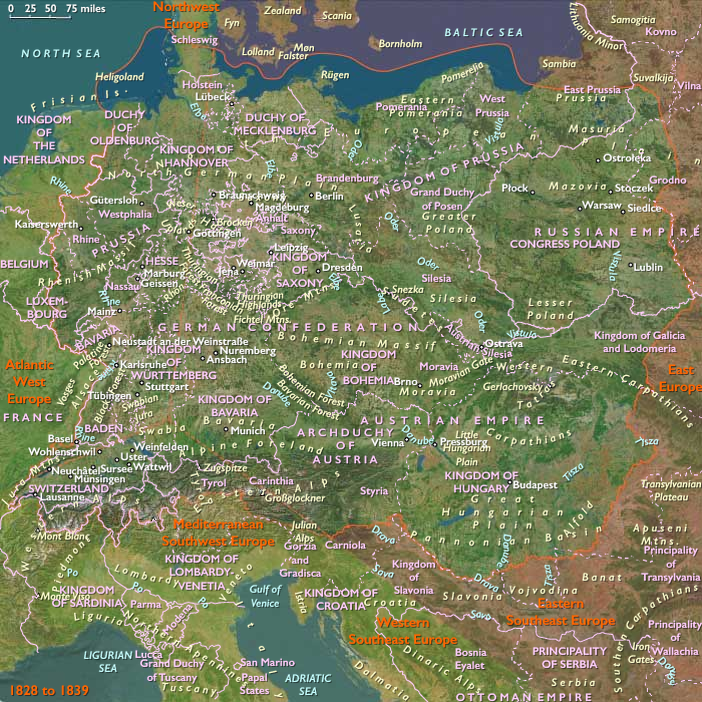
Exiled once again, Charles dies in Gorizia, at this time part of the Austrian Empire.
Related Events
Filter results
Showing 10 events out of 34 total
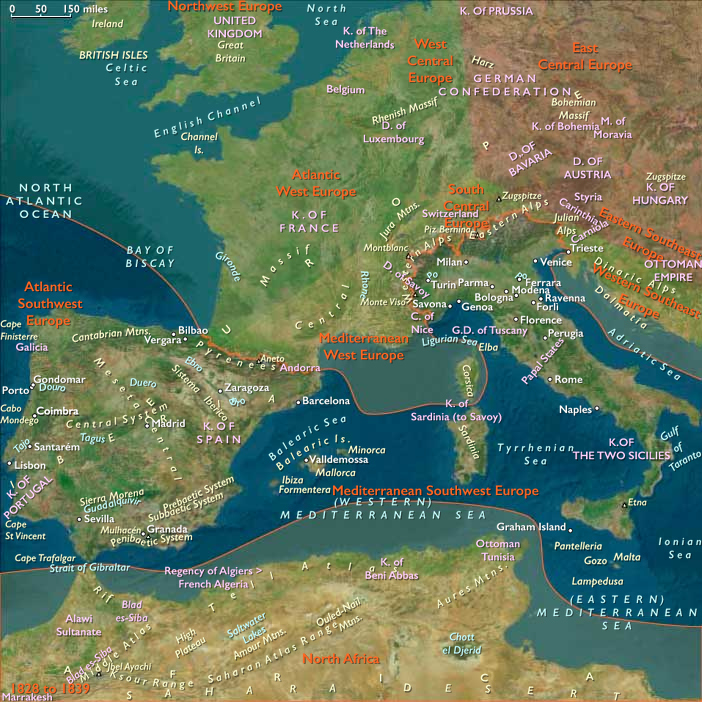
Atlantic West Europe (1684–1827 CE): Ports, Polders, and Revolutions on an Ocean Rim
Geography & Environmental Context
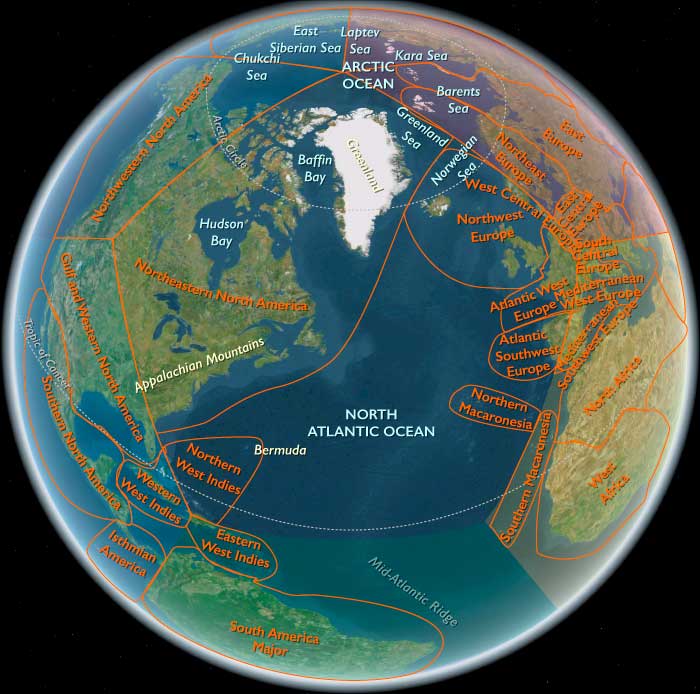
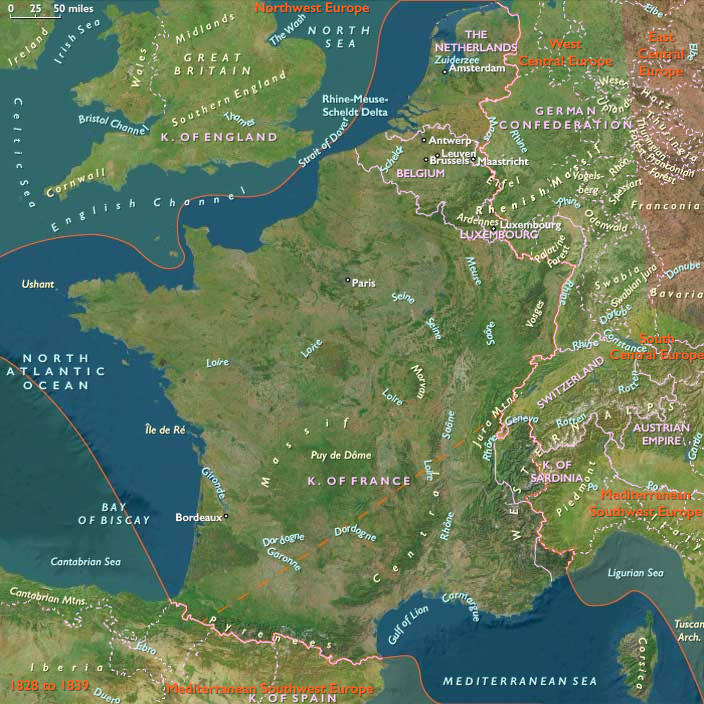
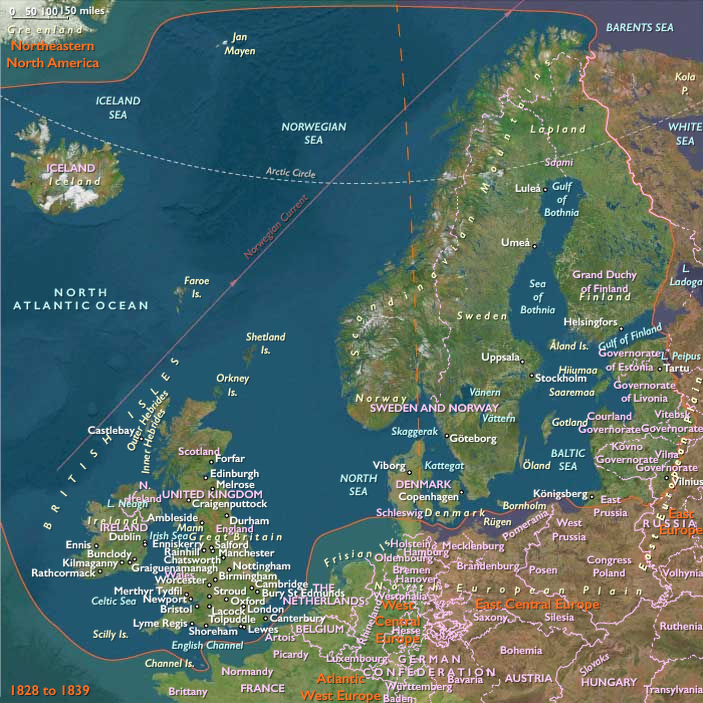
Atlantic West Europe includes the Atlantic and English Channel coasts of France, the Loire Valley, Burgundy, northern France (including Paris), and the Low Countries: Belgium, the Netherlands, and Luxembourg. Anchors include the Seine, Loire, Somme, Scheldt (Escaut), Meuse (Maas), and Rhine–Meuse–Scheldt delta, the Brittany and Cotentin peninsulas, and the Flemish and Dutch polders. The mix of estuaries, dunes, chalk cliffs, river basins, and reclaimed lowlands made an intensely maritime and fluvial landscape.
Climate & Environmental Shifts
In the tail of the Little Ice Age, the Great Frost (1709) and later 1816–1817 dearths (“Year Without a Summer”) hammered grain and wine. North Sea gales and storm surges tested dikes in the Low Countries; Channel tempests menaced fishing fleets and convoys. Yet temperate rains and silt-laden rivers regenerated soils, while coastal upwelling sustained rich fisheries.
Subsistence & Settlement
-
Grain & dairying: Wheat and rye dominated Paris’s provisioning basins; Flanders and Holland balanced grain with dairy, butter, and cheese.
-
Vine & orchard belts: Loire and Burgundy vineyards (Sancerre, Touraine, Côte d’Or) specialized in high-value wines; cider zones dotted Normandy and Brittany.
-
Maritime economies: Herring and cod fisheries (Channel/North Sea); salt works and oyster beds along the French Atlantic; river and coastal shipping sustained small ports and market towns.
-
Urban network: Paris concentrated administration, crafts, print, and finance; Amsterdam, Rotterdam, Antwerp, Ostend, and French ports—Le Havre, Rouen, Saint-Malo, Nantes, La Rochelle, Bordeaux, Brest, Dunkirk—linked hinterlands to Atlantic circuits.
Technology & Material Culture
Wind- and water-power drove mills, sawyers, and paper works; polder engineering (dikes, sluices, windpumps) extended arable land. Canalization—Briare, Centre, Loire–Bretagne, Saint-Quentin, Ourcq, and Dutch canal grids—knit river basins to seaports. Shipyards on the Seine, Loire, Gironde, and Dutch estuaries turned out warships and merchantmen. Textiles flourished: Flemish linens and lace; northern French woolens and printed cottons; Dutch and French faience and porcelain; urban book trades and scientific instruments fed Enlightenment cultures.
Movement & Interaction Corridors
-
Sea lanes & estuaries: Convoys moved colonial staples and manufactures through the Channel, Bay of Biscay, and Dutch delta; river barges provisioned Paris, Rouen, Nantes, Bordeaux, and the Low Countries’ ports.
-
Atlantic empires: Dutch carrying trade persisted though eclipsed by Britain; the Ostend Company briefly challenged monopolies (1720s). French ports (Nantes, Bordeaux, La Rochelle, Saint-Malo) prospered on Caribbean sugar and the triangular trade, then reeled under wartime blockades.
-
War regimes: The War of the Spanish Succession, Seven Years’ War, and Napoleonic Wars re-routed commerce; the Continental System and British blockades choked Atlantic exports, while smuggling through the North Sea and Brittany coasts proliferated.
-
Roads & canals: Turnpikes and towpaths, Dutch trekvaart passenger boats, and French royal canals shortened time–distance to market.
Cultural & Symbolic Expressions
Parisian salons, academies, and presses circulated Enlightenment ideas; the French Revolution (1789) unleashed sans-culottes politics, civic festivals, and new symbols. The Code civil (Code Napoléon) recast property and family law across annexed territories. In the Low Countries, Catholic processions and guild traditions coexisted with a vigorous print and mercantile culture; Antwerp and Amsterdam remained art and publishing hubs. Coastal ritual calendars—fishermen’s blessings, harvest fairs—endured beside neoclassical boulevards in rebuilt Le Havre and Bordeaux quays.
Environmental Adaptation & Resilience
-
Risk spreading: Mixed farming (grain–dairy–flax) and vineyard diversification buffered climate shocks; cider and beer substituted when wine failed.
-
Water management: Continuous dike raising, dune fixation, canal dredging, and bank revetments defended land and kept arteries open.
-
Provisioning systems: Parisian grain police, port granaries, and charitable confraternities cushioned bad years; Dutch urban poor relief and fish protein mitigated famine pulses.
-
Wartime elasticity: Neutral flags (at times), coastal cabotage, and river relays sustained minimal flows when ocean routes were interdicted.
Transition
Between 1684 and 1827, Atlantic West Europe moved from Dutch-led carrying trade toward a Paris-centered, French revolutionary–Napoleonic epoch and a rebalanced Low Countries. Port cities rose and fell with war and blockade; canals and polders bound sea to field; vineyards and dairying financed dense towns. By the 1820s, despite scars from blockades and dearth, the region had the infrastructure, market linkages, and legal reforms to launch nineteenth-century industrial and commercial expansion—its estuaries and capitals poised once more to meet the Atlantic winds.
Dagoty’s portrait of Marie Antoinette in 1775 features the distinctive pouf style coiffure: her own natural blonde hair is extended on the top with an artificial hairpiece of great height and complexity.
The queen's situation becomes more precarious when, on August 6, 1775, her sister-in-law, the comtesse d'Artois, gives birth to a son, the duc d'Angoulême (who will later become the presumptive heir to the French throne when his father, the comte d'Artois, becomes King Charles X of France in 1824).
There follows a release of a plethora of graphic satirical pamphlets, which mainly center on the king's impotence and the queen's searching for sexual relief elsewhere, with men and women alike.
Among her rumored lovers are her close friend, the princesse de Lamballe, and her handsome brother-in-law, the comte d'Artois, with whom the queen has a good rapport.
The personal attacks on the French queen's character cause her to plunge further into the costly diversions of buying her dresses from Rose Bertin and gambling, simply to enjoy herself.
On one famed occasion, she plays for three days straight with players from Paris, straight up until her twenty-first birthday.
She has also begun to attract various male admirers whom she accepts into her inner circles, including the baron de Besenval, the duc de Coigny, and Count Valentin Esterházy.
Marie Antoinette has been given free rein to renovate the Petit Trianon, a small château on the grounds of Versailles, which Louis had given to her as a gift on August 15, 1774; she concentrates mainly on horticulture, redesigning the garden in the English fashion, which in the previous reign had been an arboretum of introduced species, and adding flowers.
Although the Petit Trianon had been built for Louis's mistress, Madame de Pompadour, it becomes associated with Marie Antoinette's perceived extravagance.
With the "English garden", Marie Antoinette and her court adopt the English dress of indienne, of percale or muslin, breaking the tradition of costume at the court at Versailles that had prevailed for more than a decade.
Rumors circulate that she has plastered the walls with gold and diamonds.
Her lady-in-waiting Jeanne-Louise-Henriette Campan replies to such rumors that the queen visits the workshops of the village in a simple dress of white percale with a gauze scarf and a straw hat.
They settle at Turin, where Calonne, as agent for the count d'Artois and the prince de Condé, will begin plotting civil war within the kingdom and agitating for a European coalition against France.
Atlantic West Europe (1816–1827): Restoration, Economic Recovery, and the Rise of Liberalism
From 1816 to 1827, Atlantic West Europe—covering northern France, the Low Countries (modern Belgium, the Netherlands, and Luxembourg), and regions along the Atlantic and English Channel coasts—underwent a period of political restoration, economic reconstruction, and burgeoning liberal and nationalist sentiments following the upheaval of the Napoleonic Wars. This era saw conservative attempts to re-establish traditional monarchies and social orders clashing increasingly with rising demands for constitutional reform, economic liberalization, and national self-determination.
Political and Military Developments
Post-Napoleonic Restoration (1815–1818)
-
Following Napoleon’s defeat at Waterloo (1815), the Congress of Vienna (1814–1815) reshaped Europe, emphasizing balance of power and legitimacy, leading to the re-establishment of Bourbon monarchy in France under Louis XVIII (r. 1814–1824).
-
The Low Countries were united into the newly formed United Kingdom of the Netherlands under King William I (r. 1815–1840), intended as a buffer state against French aggression. Belgium, dominated by Catholic, French-speaking elites, was merged uneasily with Protestant, Dutch-speaking northern provinces.
French Monarchical Consolidation and Challenges
-
Louis XVIII established a constitutional monarchy with the Charter of 1814, providing limited parliamentary governance while preserving royal authority. His reign saw efforts to balance conservative royalists and liberal factions.
-
After Louis XVIII’s death in 1824, Charles X (r. 1824–1830) attempted stronger conservative restoration, antagonizing liberals through press restrictions and increased clerical influence, laying foundations for future conflicts.
Growing National and Political Tensions in the Netherlands
-
Belgium’s forced union with the Netherlands created political, religious, and cultural friction, as southern (Belgian) provinces increasingly resented Dutch political dominance and Protestant policies. Initial liberal resistance emerged strongly in Brussels and other Belgian cities by the late 1820s, foreshadowing eventual revolution (1830).
Economic Developments: Recovery and Early Industrialization
Post-War Economic Recovery
-
Following severe wartime economic disruptions, Atlantic West Europe experienced gradual economic recovery, aided by peace, agricultural revival, and renewed commercial activity through ports such as Antwerp, Rotterdam, Nantes, and Bordeaux.
-
Infrastructure restoration became essential, notably improving canal and road networks to facilitate regional and international trade, stimulating commerce and urban revival.
Early Industrial Growth
-
Northern France, particularly Lille, Rouen, and areas around the Loire and Seine valleys, saw early industrial growth in textiles, coal mining, and iron production. This marked the beginning of significant industrialization that later accelerated mid-century.
-
In the Low Countries, Belgium’s industrialization rapidly expanded, notably around Liège and Ghent, focused on textiles, iron, and machinery, setting the stage for Belgium’s prominent industrial role in continental Europe.
Maritime Commerce and Atlantic Trade
-
Atlantic and Channel ports regained importance, notably Bordeaux’s wine exports, Antwerp’s re-established trade networks, and Amsterdam’s revival as a financial and mercantile hub. These developments significantly boosted regional prosperity.
Social and Cultural Developments
Liberalism and Nationalism
-
Intellectual and political liberalism gained strength, influenced by Enlightenment ideas, emphasizing constitutional government, civic freedoms, press liberties, and parliamentary representation. These ideals gained support in urban centers across northern France and Belgium.
-
Nationalist sentiment grew, especially in Belgium, where distinct cultural identity strengthened opposition to Dutch rule. Increasingly vocal demands for political autonomy and cultural recognition became prominent.
Urban Revival and Social Change
-
Urban centers, particularly Paris, Brussels, Antwerp, and Amsterdam, experienced rapid growth, driven by industrialization and trade. A dynamic urban middle class emerged, advocating for economic liberalization and political reforms.
-
Improved educational institutions and expanding literacy facilitated greater political consciousness among urban populations, laying the groundwork for future political activism and cultural vibrancy.
Intellectual and Religious Developments
Revival of Catholic Influence
-
Post-Napoleonic restorations revived Catholic institutional strength, particularly evident in Belgium and northern France, influencing social policies, education, and cultural life. This resurgence sometimes fueled conflicts between liberal secularists and conservative Catholics.
-
Belgium became a key center of Catholic cultural revival, reflecting broader European patterns of post-revolutionary religious revival.
Liberal Intellectual Movements
-
Liberal intellectual circles in Brussels, Ghent, Paris, and Amsterdam advocated constitutional reform, freedom of expression, and economic liberalization, influencing public debates and setting the stage for political changes in subsequent decades.
-
Prominent figures such as François Guizot in France began formulating doctrines combining conservative order with liberal governance principles, significantly shaping political thought in France and beyond.
Legacy and Historical Significance
The era 1816–1827 represented a crucial transitional phase for Atlantic West Europe, bridging the turbulent Napoleonic era and the subsequent revolutionary period:
-
Politically, it established fragile restorations of conservative monarchies, which encountered mounting challenges from liberal and nationalist forces.
-
Economically, it marked initial recovery and significant early industrialization, laying essential foundations for future economic transformation and prosperity.
-
Socially and culturally, rising liberalism and nationalism increasingly shaped political identities, influencing societal values, political organization, and intellectual debates.
Ultimately, this period set the stage for major revolutionary and constitutional upheavals, notably Belgium’s independence (1830) and France’s July Revolution (1830), critically defining the region’s path toward modern nation-states, constitutional governance, and industrial economies.
Louis XVIII of France had been restored a second time by the allies in 1815, ending more than two decades of war.
He had announced he would rule as a limited, constitutional monarch.
After the Hundred Days in 1815 when Napoleon suddenly returned and was vanquished, a more harsh peace treaty had been imposed on France, returning it to its 1789 boundaries and requiring a war indemnity in gold.
Allied troops remain in the country until it is paid.
There are large-scale purges of Bonapartists from the government and military, and a brief "White Terror" in the south of France claims three hundred victims.
Otherwise the transition is largely peaceful.
Although the old ruling class has returned they do not recover their lost lands, and are unable to reverse most of the dramatic changes in French society, economics, and ways of thinking.
France intervenes in Spain in 1823, where a civil war has deposed king Ferdinand VII.
The French troops march into Spain, retake Madrid from the rebels, and leave almost as quickly as they come.
Despite worries to the contrary, France shows no sign of returning to an aggressive foreign policy and is admitted to the Concert of Europe in 1818.
Louis XVIII, for the most part, accepts that much has changed.
However, he is pushed on his right by the Ultra-royalists, led by the comte de Villèle, who condemn the Doctrinaires' attempt to reconcile the Revolution with the monarchy through a constitutional monarchy.
Instead, the Chambre introuvable elected in 1815 had banished all Conventionnels who had voted Louis XVI's death and passes several reactionary laws.
Louis XVIII had been forced to dissolve this Chamber, dominated by the Ultras, in 1816, fearing a popular uprising.
The liberals thus govern until the 1820 assassination of the duc de Berry, the nephew of the king and known supporter of the Ultras, which brings Villèle's ultras back to power.
Louis dies in September 1824 and is succeeded by his brother.
Charles X of France follows the "ultra" conservative line but is a much less effective coalition builder than Louis XVIII.
John Constable’s The Hay Wain causes a sensation when it was exhibited with other works by Constable at the 1824 Paris Salon (it has been suggested that the inclusion of Constable's paintings in the exhibition were a tribute to Géricault, who died early that year).
In this exhibition, The Hay Wain is singled out for a gold medal awarded by Charles X of France, a cast of which is incorporated into the picture's frame.
The works by Constable in the exhibition inspire a new generation of French painters, including Eugène Delacroix, who, after seeing the Constables at Arrowsmith's Gallery, which he says had done him a great deal of good, repaints the background of his 1824 Massacre de Scio.
Constable is to sell only twenty paintings in England in his lifetime, but in France he will sell more than twenty in just a few years.
Despite this, he will refuse all invitations to travel internationally to promote his work.
Louis XVIII's health has been worsening since the beginning of 1824.
Suffering from both dry and wet gangrene in his legs and spine, he dies on September 16 of this year.
His brother succeeds him to the throne as King Charles X of France.
In his first act as king, Charles attempts to unify the House of Bourbon by granting the style of Royal Highness to his cousins of the House of Orléans, who had been deprived of this by Louis XVIII because of the former Duke of Orléans' role in the death of Louis XVI.
This debt to France will be reduced to ninety million in 1838 and will finally be paid off by the mid-twentieth century.
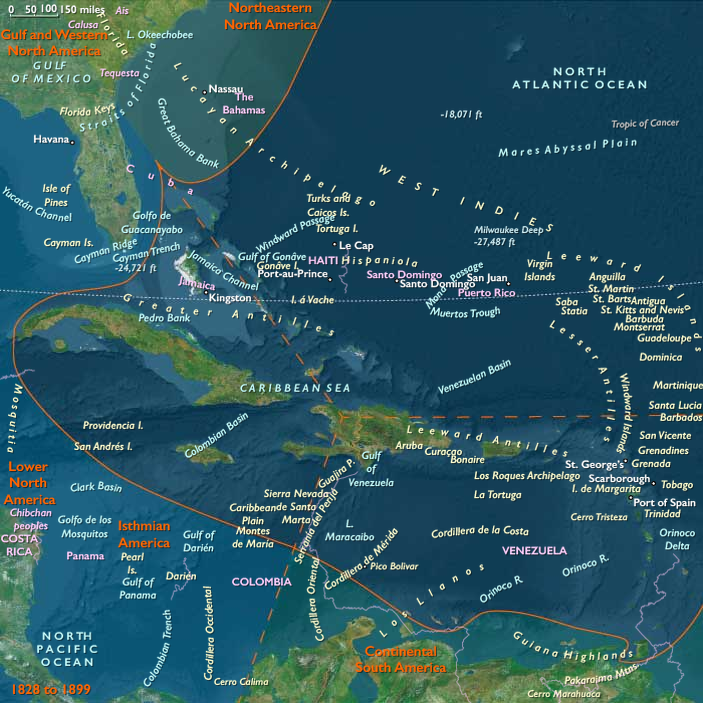
Charles X of France recognizes Haitian independence on April 17, 1825—twenty-one years after it expelled the French following the successful Haitian Revolution—in return for the payment of of one hundred and fifty million million gold francs, thirty million of which Haiti must finance through France itself, as down payment.
The total indemnity, nearly half a million francs, is to be paid at an annual rate until 1887.