Edward III of England
King of England
Years: 1312 - 1377
Edward III (November 13, 1312 –June 21, 1377) is King of England from January 25, 1327 until his death; he is noted for his military success and for restoring royal authority after the disastrous reign of his father, Edward II.
Edward III transforms the Kingdom of England into one of the most formidable military powers in Europe.
His long reign of fifty years also sees vital developments in legislation and government—in particular the evolution of the English parliament—as well as the ravages of the Black Death.
Edward is crowned at age fourteen after his father is deposed by his mother and her lover Roger Mortimer.
At age seventeen he leads a successful coup against Mortimer, the de facto ruler of the country, and begins his personal reign.
After a successful campaign in Scotland he declares himself rightful heir to the French throne in 1337 but his claim is denied due to the Salic law.
This starts what will become known as the Hundred Years' War.
Following some initial setbacks the war goes exceptionally well for England; victories at Crécy and Poitiers lead to the highly favorable Treaty of Brétigny.
Edward's later years, however, are marked by international failure and domestic strife, largely as a result of his inactivity and poor health.
Edward III is a temperamental man but capable of unusual clemency.
He is in many ways a conventional king whose main interest is warfare.
Admired in his own time and for centuries after, Edward is denounced as an irresponsible adventurer by later Whig historians such as William Stubbs.
This view has been challenged recently and modern historians credit him with some significant achievements.

Related Events
Filter results
Showing 10 events out of 134 total
Little is known about the short reign of Glycerius.
In his biography of St. Epiphanius, bishop of Pavia, Ennodius states that Glycerius made "many measures for the public good" but mentions only that he pardoned "the injury done to his mother by certain of his subjects at the petition of bishop Epiphanius."
A single law issued by Glycerius survives, concerning simony, dated March 11, 473 and addressed to Himilco, the Praetorian Prefect of Italy.
Ralph Mathisen speculates that Glycerius tried to stay on good terms with the Eastern Roman Empire For most of his rule, Glycerius lives in Northern Italy, evidenced by the fact that the only mints issued in his name are from Milan and Ravenna.
Euric, King of the Visigoths in 473, orders the invasion of Italy, but his commander Vincentius is defeated and killed by Glycerius' comites Alla and Sindila.
Despite the victorious defense of Italy, Glycerius can do nothing to prevent the Visigoths from conquering Arelate and Marseille, in Gaul.
At the same time, the Ostrogoths led by King Widimir began marching to Italy.
The possibility that the two Gothic armies will merge is disastrous to contemplate.
Glycerius sends an envoy to Widimir and, through a combination of diplomacy and a bribe of two thousand solidi, persuades Widimir that the territories he wants are already occupied by the Visigoths and that he should move to Gaul.
While this strategy prevents Vincentius from receiving reinforcements, it also leads to the convergence of both Gothic armies against Gaul.
The Eastern Roman Emperor Leo I had not recognized Olybrius and does not recognize Glycerius, as his election had not been ratified by the Eastern court, and it is suspected that he is a puppet of Gundobad.
Therefore Leo has chosen a candidate on his own, Julius Nepos, magister militum in Dalmatia and related to the Eastern Empress Verina.
The election is delayed, however, so Julius Nepos cannot leave immediately, as the ports are closed for the winter.
The Burgundians had seized the opportunity to invade northwestern Italy while Odoacer and Theodoric the Great were locked in battle over control of Pavia in the early months of 490, devastating Liguria and carrying away an unknown number of victims into captivity, if not slavery.
Once Theodoric had killed Odoacer and was securely in control of Italy, he sent bishop Epiphanius of Pavia on a mission to ransom as many of these captives as possible.
Accompanied by Bishop Victor of Turin, they crossed the Alps in March.
Shanzer and Wood believe Epiphanius was possibly also entrusted with a mission in connection with the marriage of Gundobad's son Sigismund to Theodoric's daughter Ostrogotho.
In his account of this visit, Magnus Felix Ennodius, who accompanied Epiphanius on this journey, describes Godegisel as germanus regis the "king's brother" and not king—again contradicting Gregory of Tour's later account.
Ennodius notes that "more than six thousand souls" were so ransomed; from Lyon alone, four hundred men were thus freed.
King Denis and the Foundations of Portugal’s National Identity (1279–1325)
King Denis of Portugal (r. 1279–1325) was a visionary ruler who strengthened the kingdom’s economy, navy, language, and education, laying the groundwork for Portugal’s future maritime expansion and cultural identity.
Economic Reforms: Colonization, Markets, and a National Economy
- Denis chartered numerous settlements on lands conquered from the Moors, encouraging colonization and agricultural development.
- To stimulate trade and economic integration, he authorized fairs and markets in each new settlement, fostering a national economy that connected urban and rural communities.
The Foundations of Portugal’s Naval Power
- Recognizing the strategic importance of maritime strength, Denis established Portugal’s first organized navy.
- In 1317, he hired the Genoese admiral Emanuele Pessagno (Manuel Pessanha in Portuguese), granting him the title of hereditary admiral of Portugal. This decision marked the beginning of Portugal’s naval tradition, which would later lead to the Age of Exploration.
- To promote maritime commerce, he negotiated a trade agreement with Edward II of England in 1303, allowing Portuguese merchants and ships access to English ports under secure trading privileges.
Portuguese as a National Language
- Denis played a crucial role in shaping Portugal’s linguistic identity by decreeing that all official documents be written in Portuguese, rather than Latin.
- This measure established Portuguese as the official language of administration, reinforcing a distinct national identity.
Advancement of Higher Learning: The University of Coimbra
- In 1290, Denis founded Portugal’s first higher-learning institution, modeled after the "General Studies" centers in León and Aragon.
- Originally located in Lisbon, the institution was relocated to Coimbra in 1308, where it remained except for a brief period (1521–1537).
- This center evolved into the University of Coimbra, which became Portugal’s premier institution of higher education.
Legacy: The Architect of Portugal’s Future
King Denis’s policies in trade, naval development, language, and education were instrumental in shaping Portugal’s national identity and future maritime ambitions. His reign strengthened the economy, centralized governance, and laid the foundation for Portugal’s later dominance in global exploration and trade.
Philippa of Lancaster and the Anglo-Portuguese Alliance (1387–1430)
In 1387, Philippa of Lancaster, daughter of John of Gaunt, married King João I of Portugal, sealing the Anglo-Portuguese alliance, one of the longest-standing diplomatic alliances in history. Through this union, João and Philippa became the parents of a remarkable generation of princes, whom poet Luís de Camões would later call the "marvelous generation", responsible for leading Portugal into its golden age.
Philippa’s Influence: Education, Morality, and Commerce
Philippa brought to the Portuguese court the Anglo-Norman tradition of aristocratic education, ensuring her children received a rigorous intellectual and moral upbringing. She reformed the royal court, instilling strict standards of morality and discipline, shaping Portugal’s royal culture for generations.
Beyond courtly influence, Philippa also provided royal patronage for English commercial interests, fostering trade between Portugal and England. English merchants supplied cod and cloth, while Portuguese traders exported wine, cork, salt, and olive oil through English warehouses in Porto, strengthening economic ties between the two nations.
The "Marvelous Generation" and Their Achievements
Philippa’s sons were among the most accomplished figures in Portuguese history:
- Duarte (Edward I of Portugal) – A scholar-king, he authored moral treatises and ruled as King of Portugal from 1433 until his death in 1438.
- Pedro, Duke of Coimbra – A well-traveled intellectual, deeply interested in history and governance, who later served as regent of Portugal after Duarte’s death.
- Fernando, the Saint Prince – A crusader, he participated in the failed 1437 attack on Tangier, where he was captured and later died in captivity.
- Henrique (Prince Henry the Navigator) – Master of the Order of Avis, he became the driving force behind Portugal’s early voyages of discovery, laying the groundwork for the Age of Exploration.
Philippa’s Enduring Legacy
Philippa of Lancaster’s legacy extended beyond diplomacy; through her court reforms, patronage, and maternal influence, she shaped the cultural, political, and economic foundations of Portugal’s golden age. Her children’s military, intellectual, and exploratory achievements propelled Portugal to the forefront of European expansion and discovery in the 15th and 16th centuries.
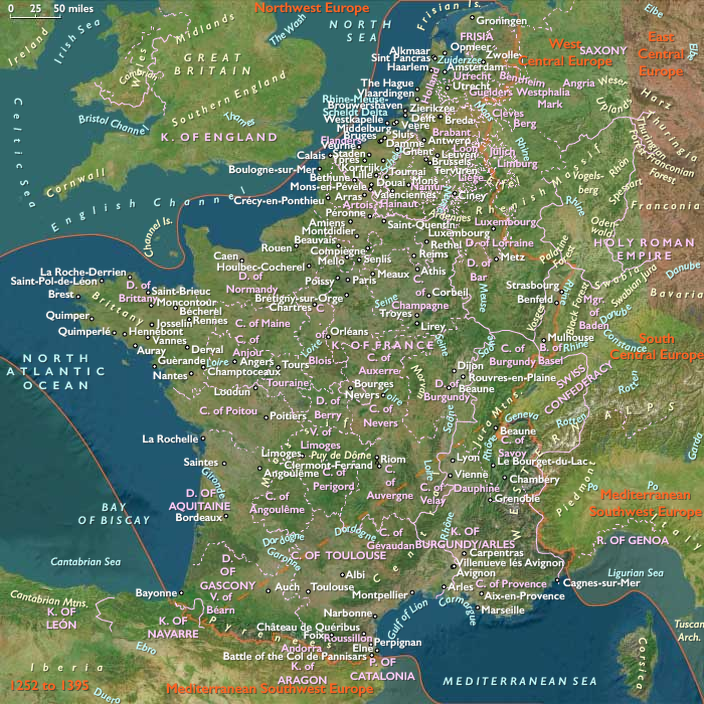
Atlantic West Europe (1108 – 1251 CE): The Angevin Empire, Champagne–Flanders Circuits, and Aquitaine under the English Crown
Geographic and Environmental Context
Atlantic West Europe spans northern France and the Low Countries.
-
Anchors: Paris–Seine–Reims, Upper Loire (Orléans–Blois–Tours), Anjou/Angers–Maine–Le Mans, Poitou/Poitiers–La Rochelle–Saintes, Bordeaux–Gironde–Bayonne, Flanders/Bruges–Ghent–Ypres, Low Countries delta.
Climate and Environmental Shifts
-
High-medieval peak supported population and urbanization; river improvements eased up-country grain and wine traffic.
Societies and Political Developments
-
Eleanor of Aquitaine married Louis VII (1137), annulled (1152), then married Henry II Plantagenet (1152)—creating the Angevin Empire (from Anjou/Normandy to Aquitaine).
-
Capetian–Angevin rivalry dominated: Philip II conquered Normandy (1204), but Aquitaine/Guyenne largely remained under English suzerainty; La Rochelle and Bordeaux became Angevin pillars.
-
Flanders and Champagne fairs integrated Mediterranean–northern circuits; communes of Bruges, Ghent, Ypres asserted charters.
-
Brittany navigated between Plantagenets and Capetians.
Economy and Trade
-
Bordeaux claret exports to England boomed; La Rochelle shipped salt and wine; Nantes handled salt fish and grain.
-
Flanders/Champagne fairs: Italian capital met northern cloth; Bruges emerged as a banking mart.
-
Upper Loire and Anjou–Touraine supplied wine/grain to Paris and ports.
Belief and Symbolism
-
Gothic beginnings in Chartres, Paris; pilgrimage roads of Poitou–Bordeaux remained crowded.
Long-Term Significance
By 1251, Aquitaine was England’s continental anchor; Flanders the cloth workshop; Paris–Loire the Capetian core—poised for 13th–14th-century contests.
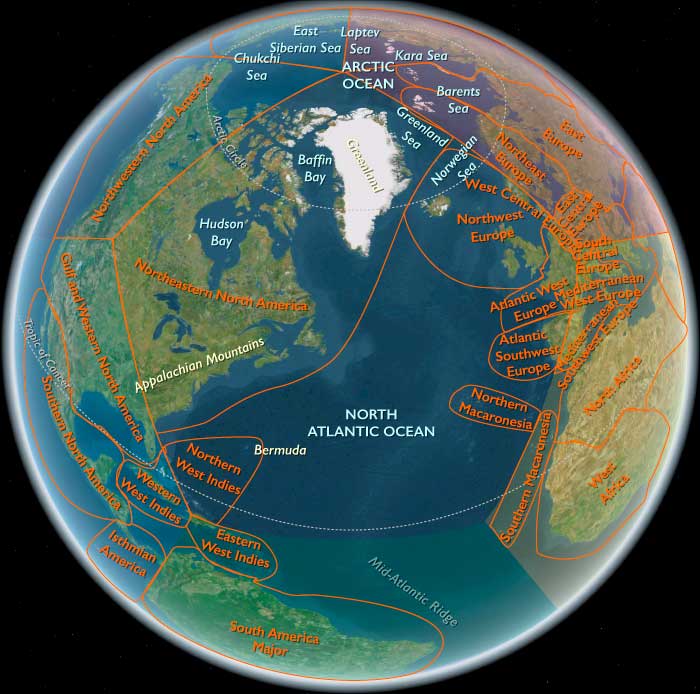
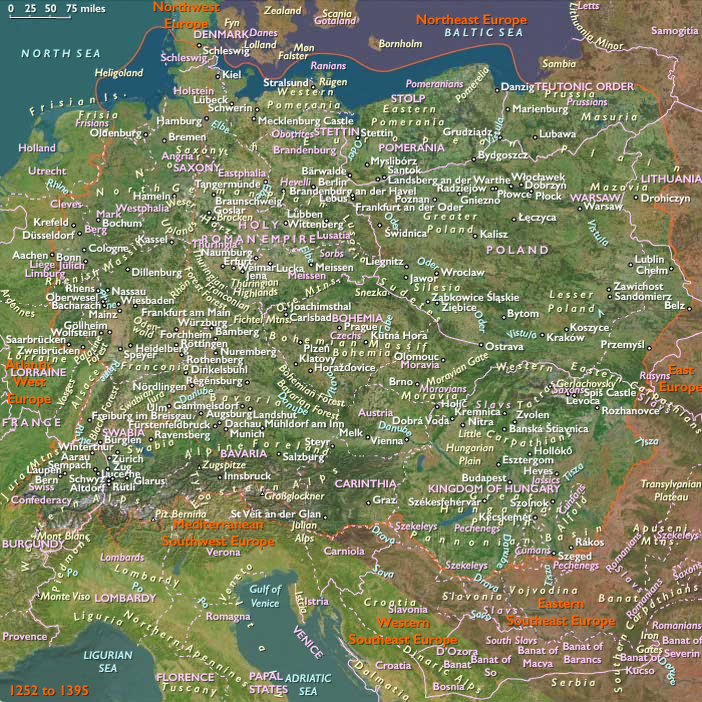
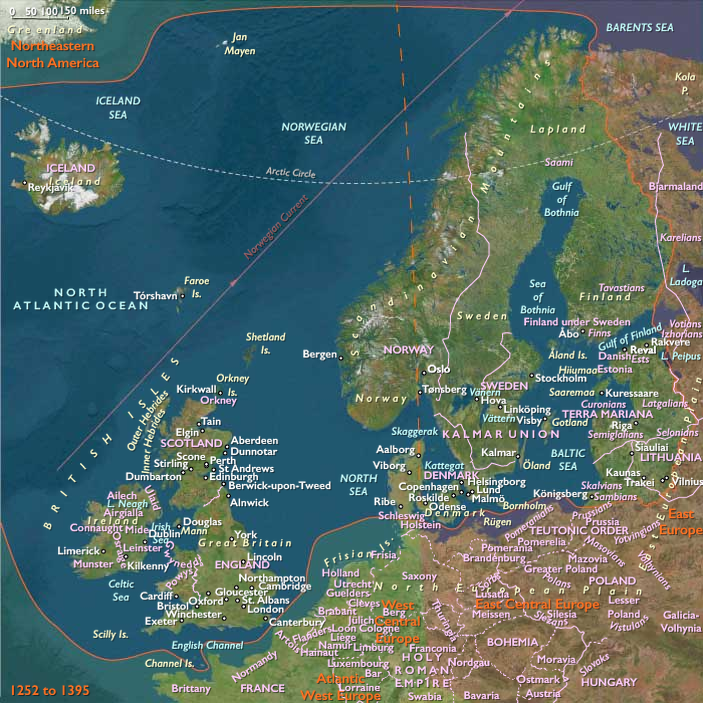
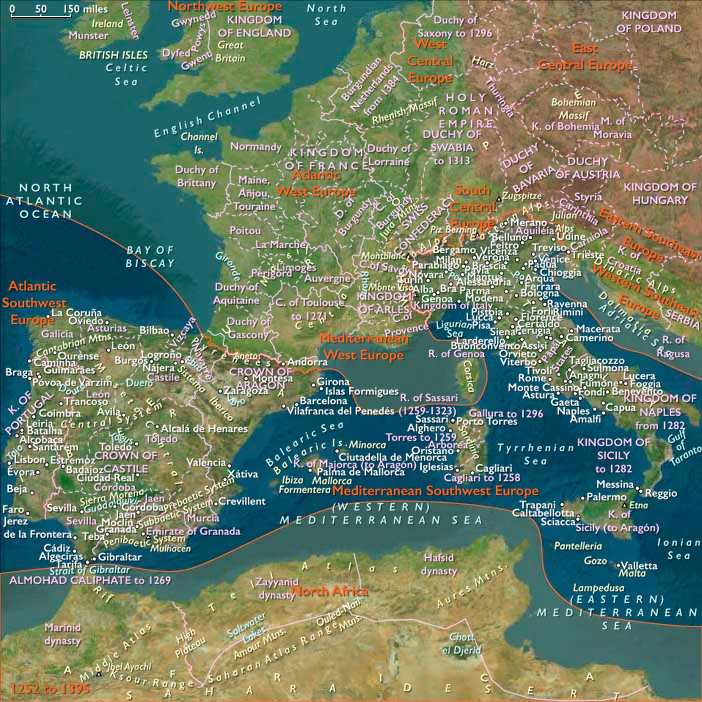
Northwest Europe (1252 – 1395 CE): Hundred Years’ War, Scottish Independence, and North Sea Commerce
Geographic and Environmental Context
Northwest Europe includes Iceland, Ireland, the United Kingdom, the Faroe, Shetland, and Orkney Islands, the Channel Islands, and the western coastal zones of Norway and Denmark (west of 10°E).
-
Anchors: London–Westminster, Dublin–Cork–Waterford, Edinburgh–Stirling, Bergen, Reykjavík–Thingvellir, Channel ports (Dover, Southampton, Bristol), and North Sea ports (Hull, King’s Lynn).
Climate and Environmental Shifts
-
Little Ice Age onset (~1300): cooler, wetter conditions reduced yields; Great Famine (1315–1317) struck Britain and Ireland.
-
Black Death (1348–1350): decimated urban populations (London, Dublin, York, Edinburgh, Bergen).
-
Fisheries (herring, cod) thrived in colder seas.
Societies and Political Developments
-
England: Edward I’s conquest of Wales (1282); Wars of Scottish Independence (1296–1328, 1332–1357); Hundred Years’ War against France (from 1337).
-
Scotland: William Wallace, Robert the Bruce, and victory at Bannockburn (1314) secured independence, recognized in the Treaty of Edinburgh–Northampton (1328).
-
Ireland: Anglo-Norman lordship declined; Gaelic resurgence after 14th-century crises.
-
Norway: waning influence; Orkney, Shetland, Hebrides slipped toward Scottish control.
-
Iceland: under Norwegian crown (1262–64); Althing continued local governance.
Economy and Trade
-
English wool: critical for Flemish cloth industry; Calais staple (post-1347 English conquest) reorganized trade.
-
North Sea ports: Hull, King’s Lynn, Bristol handled wine, cloth, fish.
-
Hanseatic merchants entered London (Steelyard).
-
Norwegian stockfish trade (Bergen to Lübeck, London) flourished; Iceland supplied wool and fish.
Belief and Symbolism
-
Gothic architecture: Westminster Abbey, York Minster; Scottish abbeys; Norwegian stave churches persisted.
-
Saint cults: St. Thomas Becket in Canterbury, St. Magnus in Orkney.
-
Mysticism: English and Irish vernacular devotion expanded (Julian of Norwich).
Adaptation and Resilience
-
Maritime redundancy: trade shifted among ports during war or plague.
-
England’s parliamentary institutions matured (Model Parliament, 1295).
-
Scotland consolidated monarchy; Ireland fragmented between Gaelic and Anglo-Norman spheres.
Long-Term Significance
By 1395, Northwest Europe was a fractured but dynamic region: England locked in war with France, Scotland independent, Ireland divided, and the North Sea–North Atlantic fisheries increasingly central. It was a crucible for the late-medieval state and maritime economy.
At age seventeen he leads a successful coup against Mortimer, the de facto ruler of the country, and begins his personal reign.
Edward III (reigned 1327–1377) restores royal authority and goes on to transform the Kingdom of England into the most efficient military power in Europe.
His reign sees vital developments in legislature and government—in particular the evolution of the English parliament—as well as the ravages of the Black Death.
After defeating, but not subjugating, the Kingdom of Scotland, he declares himself rightful heir to the French throne in 1338, but his claim is denied due to the Salic law.
This starts what will become known as the Hundred Years' War.
Following some initial setbacks the war goes exceptionally well for England; victories at Crécy and Poitiers lead to the highly favorable Treaty of Brétigny.
Edward's later years, however, are marked by international failure and domestic strife, largely as a result of his inactivity and poor health.
The Succession Crisis of 1328 and the Rise of the House of Valois
The Salic Law, which governed the French succession, strictly prohibited the crown from passing to a woman or through the female line. This principle became decisive in 1328, when King Charles IV the Fair died without a male heir, ending the direct Capetian line.
With no direct male descendant, the question of succession arose. The closest male claimant by blood was Edward III of England, the son of Isabella of France, Charles IV’s sister. However, the French nobility, adhering to Salic tradition, rejected Edward’s claim on the basis that kingship could not be transmitted through a woman. Instead, the crown passed to Philip of Valois, Charles IV’s cousin, who ascended the throne as Philip VI.
The Peak of Medieval French Monarchy
Philip VI’s reign (1328–1350) marked the height of medieval French power, as he inherited a kingdom that had been strengthened by his Capetian predecessors. France was the largest, wealthiest, and most populous kingdom in Western Europe, with a strong centralized monarchy and a formidable military. However, Philip’s rule was soon challenged by Edward III, who, resentful of his exclusion, revived his claim to the French throne in 1337, thus initiating the Hundred Years’ War.
While Philip initially secured French dominance at sea and maintained control over Flanders and Gascony, the early stages of the war would ultimately test and weaken the monarchy. His reign, though significant in consolidating Valois rule, marked the beginning of a prolonged struggle between England and France, which would shape the political and military landscape of Europe for the next century.
Atlantic West Europe (1324–1335): War, Crisis, and Social Transformation
Between 1324 and 1335, Atlantic West Europe—including the Low Countries, Brittany, Normandy, Burgundy, Aquitaine, central France, Alsace, and Franche-Comté—faced significant military confrontations, internal crises, economic challenges, and social transformations. This era marked intensified struggles over territorial sovereignty, devastating famines, and shifting political alliances that reshaped regional dynamics.
Political and Military Developments
-
France: Intensified Royal Control and Conflict
-
King Charles IV (the Fair, r. 1322–1328) continued centralizing royal power, but his death without a male heir in 1328 triggered the Capetian dynasty's end and initiated the Valois succession.
-
The accession of Philip VI (House of Valois, r. 1328–1350) intensified dynastic tensions with England, sparking the early conflicts that would lead to the Hundred Years’ War.
-
-
Aquitaine and Gascony: Anglo-French Tensions
-
Increasing disputes over English-held Aquitaine and Gascony escalated, contributing to the outbreak of war in 1337, driven by competing claims from Edward III of England and Philip VI of France.
-
-
Low Countries: Urban Autonomy and Resistance
-
Flemish cities, particularly Ghent and Bruges, continued to assert their economic and political independence, leading to sporadic conflicts with French royal and local noble authority.
-
-
Burgundy, Alsace, and Franche-Comté: Navigating Sovereignty
-
The Duchy of Burgundy, under Eudes IV (r. 1315–1350), maneuvered diplomatically between French royal interests and regional autonomy, consolidating power internally.
-
Alsace and Franche-Comté remained contested between imperial and French influence, strengthening local governance to maintain relative independence.
-
-
Brittany and Normandy: Struggles and Alliances
-
Brittany experienced internal power struggles among competing noble factions, impacting its relationship with France and England.
-
Normandy continued integration efforts into royal administration, balancing loyalty to the French crown with local autonomy.
-
Economic and Social Developments
-
Great Famine and Economic Decline
-
The Great Famine (1315–1322) severely impacted agriculture, resulting in widespread food shortages, rising mortality rates, and economic hardship persisting into this period.
-
Urban economies, particularly in Flemish cities, faced significant disruption, although recovery began slowly toward the end of the era.
-
-
Trade and Maritime Activities
-
Maritime trade remained vital despite disruptions, especially wine trade from Bordeaux and wool trade through Flemish ports like Bruges.
-
Trade networks experienced temporary instability due to ongoing conflicts and climatic challenges.
-
Cultural and Intellectual Developments
-
Continued Gothic Influence and Artistic Innovation
-
Gothic architecture flourished despite regional hardships, evident in continued construction and embellishments of cathedrals, including those at Amiens and Strasbourg.
-
-
University of Paris and Scholarly Output
-
The University of Paris maintained its intellectual prominence, advancing theological and philosophical scholarship despite broader societal instability.
-
Religious Developments
-
Growing Influence of Mendicant Orders
-
The Franciscans and Dominicans expanded their influence in urban areas, addressing social and spiritual needs exacerbated by famine and hardship.
-
-
Jewish Communities and Social Tensions
-
Jewish populations in the region faced heightened persecution, blamed for economic hardships and facing expulsions and violence in several locales.
-
Legacy and Significance
The era 1324–1335 significantly reshaped Atlantic West Europe, setting the stage for prolonged conflict in the Hundred Years’ War, revealing vulnerabilities in social and economic structures, and prompting shifts in governance and alliances. The challenges of famine and economic distress, combined with increasing political tensions, catalyzed profound transformations that would shape the region's trajectory in subsequent decades.
The Second War of Scottish Independence begins properly in 1333 when Edward III of England overturns the 1328 Treaty of Northampton, under which England had recognizes the legitimacy of the dynasty established by Robert Bruce.
The war itself is destined to last on and off until 1357, when David II is released from English captivity.
English involvement in Scotland is also to be one of the factors leading to the outbreak of the Hundred Years War with France in 1337.