George Grey
3rd Governor of South Australia, 3rd Governor of New Zealand Governor of Cape Colony, 11th Premier of New Zealand
Years: 1812 - 1898
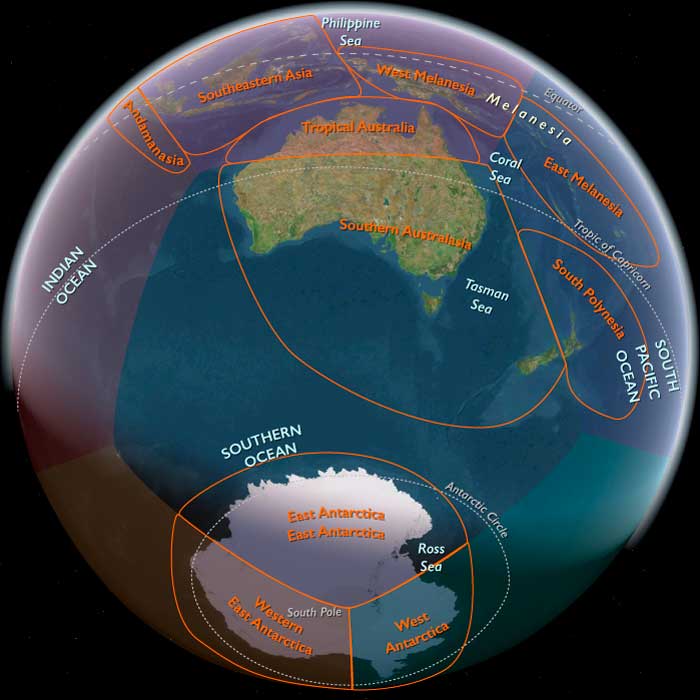
Sir George Grey, KCB (14 April 1812 – 19 September 1898) was a soldier, explorer, Governor of South Australia, twice Governor of New Zealand, Governor of Cape Colony (South Africa), the 11th Premier of New Zealand and a writer.
Related Events
Filter results
Showing 10 events out of 28 total
A great river is believed to enter the Indian Ocean on the northwest of Australia, and if so, that the country it drains might be suitable for colonization.
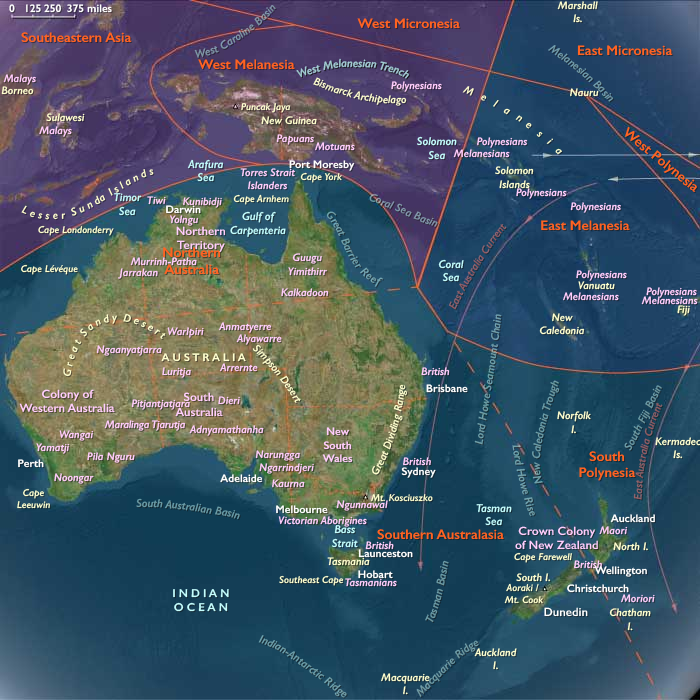
British colonial administrator and army lieutenant George Edward Grey, in conjunction with Lieutenant Lushington, offers to explore this country and on July 5, 1837, sails from Plymouth in command of a party of five, the others being Lieutenant Lushington, a surgeon and naturalist named Walker, and two corporals of the royal sappers and miners.
Others are added to the party at Cape Town and early in December they land at Hanover Bay.
The expedition is catastrophically ill prepared—only one man of Grey’s party has seen northern Australia before.
Wrecked, almost drowned, and completely lost, with Grey wounded in a skirmish with Aborigines, they trace the course of the Glenelg River before giving up and retiring to Mauritius to recover.
George Grey returns to Western Australia in 1839 and is again wrecked with his party at Kalbarri; they are the first Europeans to see the Gascoyne River but must then walk to ...
...Perth, surviving the journey through the efforts of Maigo, a Whadjuk Noongar, who organizes food and what water can be found (they survive by drinking liquid mud).
At about this time, Grey becomes one of the few Europeans to learn the Noongar language of southwest Western Australia.
New South Wales has fallen into chaos by the time Britain intervenes and appoints resident magistrate George Grey colonial governor in 1841.
He imposes stringent measures and succeeds in restoring the economy to health.
Western Australia, which has experienced the same sort of rapid economic deterioration as New South Wales, also benefits from official intervention.
The autocratic George Grey, appointed governor of New Zealand in 1845, begins suppressing the Maoris who resist the British invasion.
The New Zealand Wars open with the Flagstaff War when, on March 11, 1845, Chiefs Kawiti and Hone Heke lead seven hundred Māori in the burning of the British colonial settlement of Kororāreka (modern-day Russell, New Zealand).
George Grey is made a Knight Commander of the Order of the Bath in 1848 for his efforts as a colonial administrator.
Following the suppression of the Uva Rebellion the Kandyan peasantry had been stripped of their lands by the Wastelands Ordinance, a modern enclosure movement, and reduced to penury.
The British have found that the uplands of Sri Lanka are very suitable for coffee, tea and rubber cultivation.
By the mid-nineteenth century, Ceylon tea has become a staple of the British market bringing great wealth to a small number of white tea planters.
Coffee is grown on the land taken from the peasants.
The principal impetus to this development had been the decline in coffee production in the West Indies, following the abolition of slavery there.
However, the dispossessed peasantry were not employed on the plantations: the Kandyan villagers refuse to abandon their traditional subsistence holdings and become wage-workers on these new estates.
The British therefore have to draw on its reserve pool of labor in India.
A system of contract labor is established that transports hundreds of thousands of Tamil 'coolies' from southern India into Sri Lanka for the coffee estates.
An economic depression in the United Kingdom has severely affected the local coffee and cinnamon industry, and planters and merchants are calling for a reduction of export duties.
Sir James Emerson Tennent, the Colonial Secretary in Colombo, had recommended to Earl Grey, Secretary of State for the Colonies in London, that taxation should be radically shifted from indirect taxation to direct taxation, which proposal was accepted.
It had been decided to abolish the export duty on coffee and reduce the export duty on cinnamon leaving a deficit of forty thousand pounds, which is to be met by direct taxes on the people.
A new Governor, thirty-five-year-old Lord Torrington, a cousin of Prime Minister Lord Russell, had been dispatched to Colombo by Queen Victoria to carry out these reforms.
On July 1, 1848, license fees are imposed on guns, dogs, carts, and shops, and labor is made compulsory on plantation roads unless a special tax is paid.
These taxes weigh heavily not only on the purse but also on the traditions of the Kandyan peasant.
A mass movement against the oppressive taxes begins to develop.
The masses are without the leadership of their native King (who had been deposed in 1815) or their chiefs (who had been either crushed after the Uva Rebellion or are collaborating with the colonial power).
The leadership passes for the first time in the Kandyan provinces into the hands of ordinary people.
Gongalegoda Banda is called "Sri Wickrama Subha Sarva Siddhi Rajasinghe".
He ask the people whether they are on the side of the Buddhists or the British.
On the same day Dines, his brother, is declared the sub-king and Dingirala as the uncrowned king of the Sat Korale (Seven Counties).
Veera Puran Appu is appointed prime minister and the sword bearer to Gongalegoda Banda and attenda his consecration ceremony with four thousand others.
After the proclamation of the king, he with his army leave Dambulla via Matale to capture Kandy from the British.
They attack government buildings including the Matale Kachcheri and destroy some of the tax records.
Simultaneously, Dingirirala instigates attacks in Kurunegala, where eight people are shot dead by the British army.