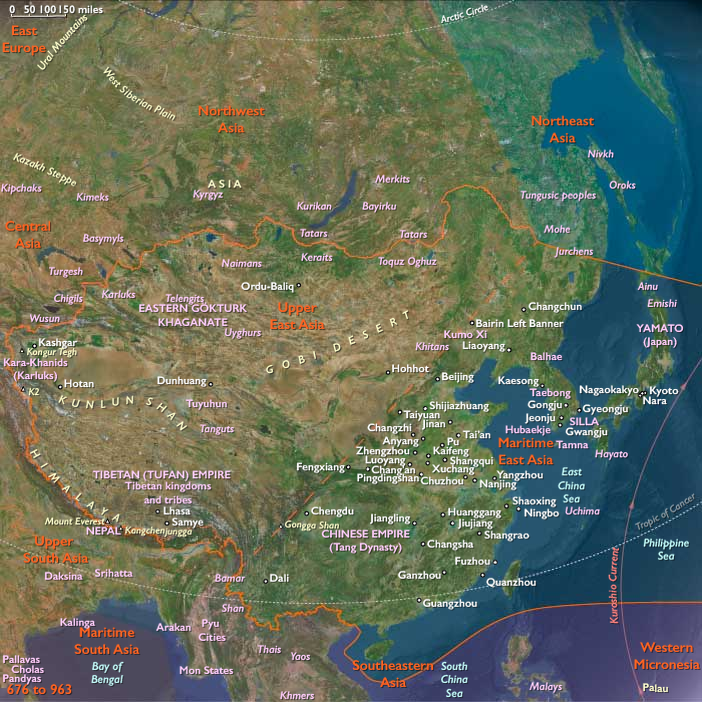
The Unified Silla kingdom is shaken in the ninth and tenth centuries by problems arising from its reliance on the "bone rank system", a rigid class system under which only those from an aristocratic background can be appointed in high office.
The system is being abused as means for the ruling royal family to dominate politically and this causes much unrest in the latter days of Silla.
The local gentry called hojok, i.e.
midlevel nobility or village chiefs, strengthen heir power during this chaotic period by assembling armies of their own and independently centralizing their forces.
Dissension deepens within the nobility after the death of King Hyegong as contention over royal succession intensifies and power struggles are constant among the hojok.
Not only is the political atmosphere in shambles, the financial state of Silla is dire.
Taxation is difficult without the nobles' cooperation.
As a result, the tax burden falls heavily on the peasants and farmers, who consequently had revolted in 889, the third year of Queen Jinseong's reign.
Numerous revolts and uprisings will occur during the ensuing century, causing the breakdown of the Unified Silla state.
As Silla starts to crumble, Gyeon Hwon, a former general of Silla, leads rebel troops to seize the provincial capital of Mujinju, today's Gwangju, in 892.