The Far East
Related Events
Showing 10 events out of 4441 total
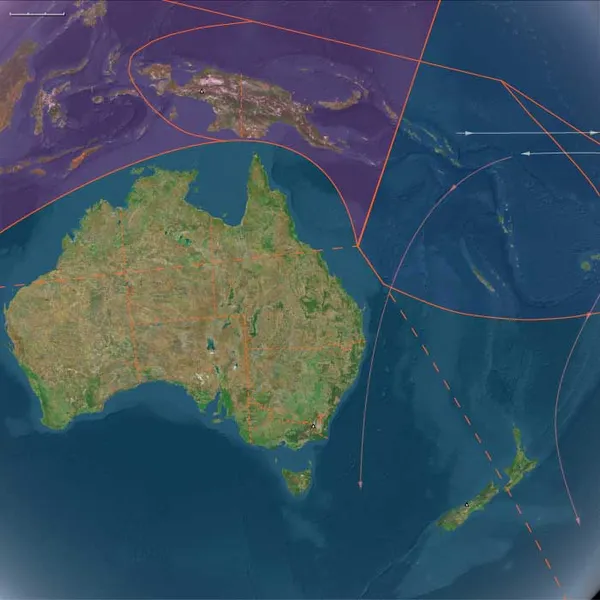
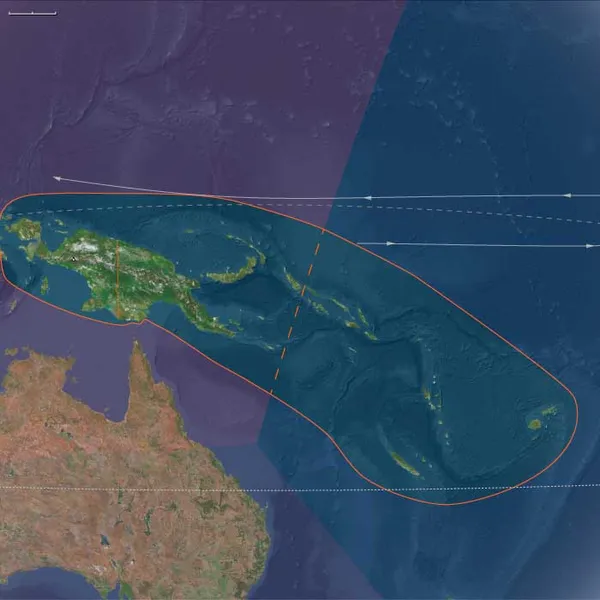
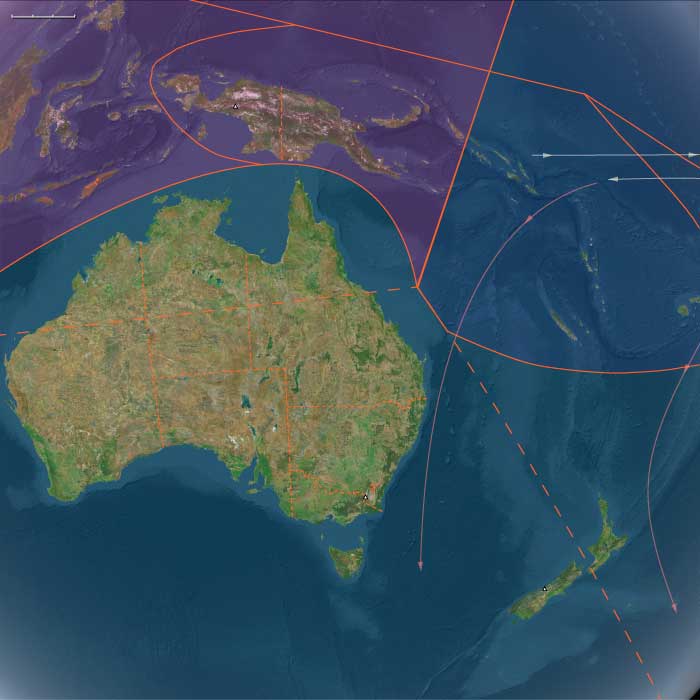
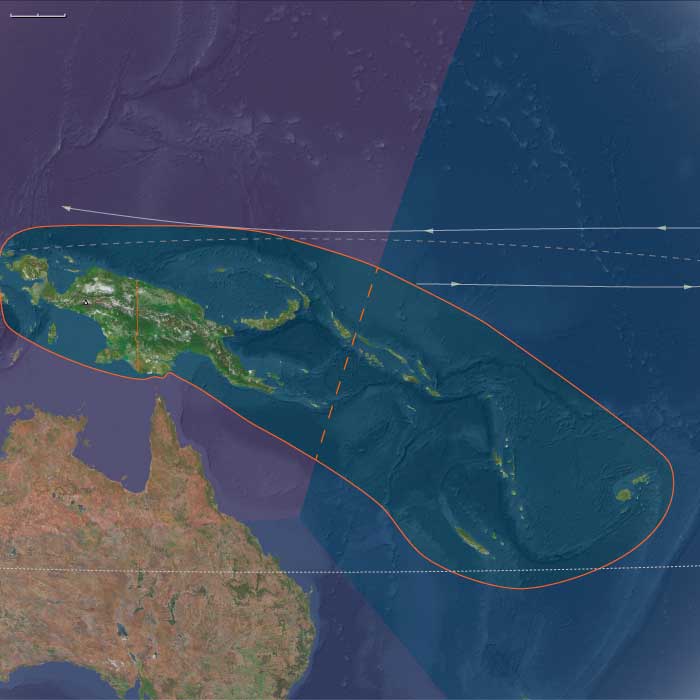
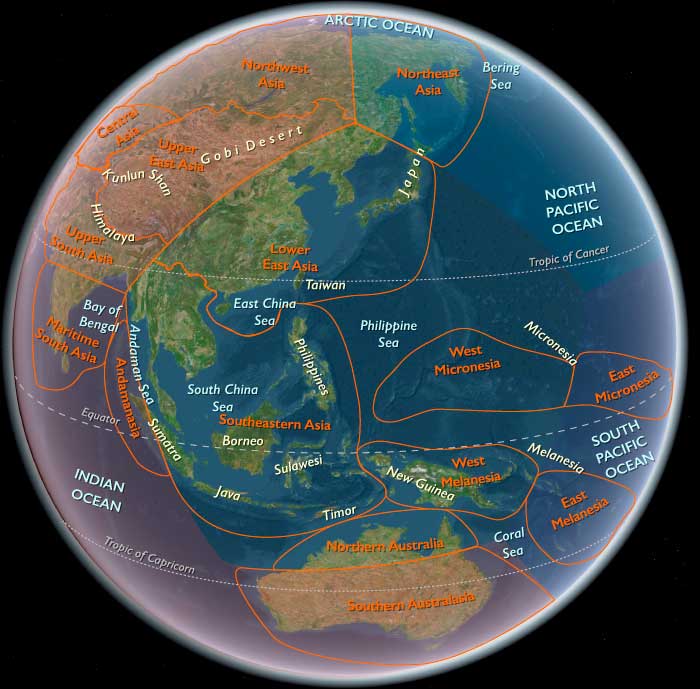
The Far East, one of the twelve divisions of the Earth, encompasses northern Australia, the entire Indonesian archipelago (excluding Aceh and Sumatra), the Philippines, the island of New Guinea, mainland Southeast Asia, the Malay Peninsula, eastern and southern China (China proper), Taiwan, the Korean Peninsula, the southern portion of the Russian Far East, and most of the Japanese archipelago, except for Hokkaido.
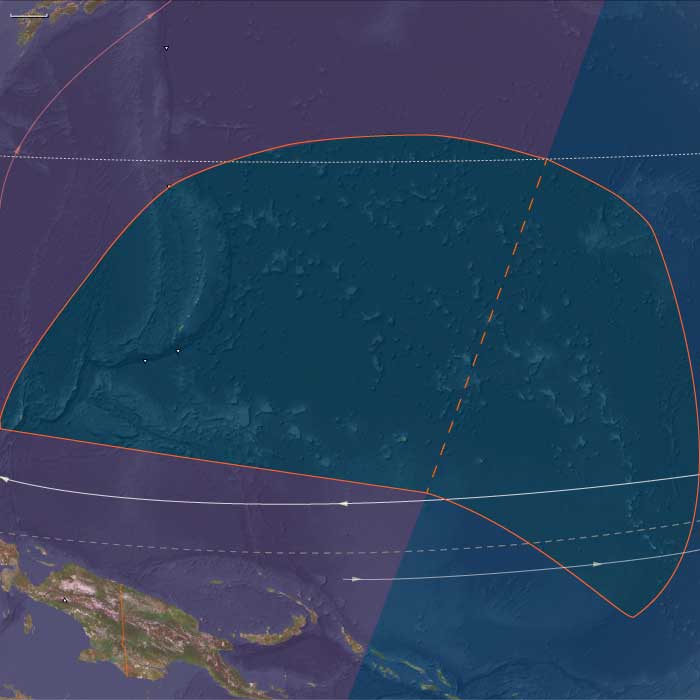
The southeastern boundary runs through Micronesia and Melanesia, dividing these regions into eastern and western subregions.
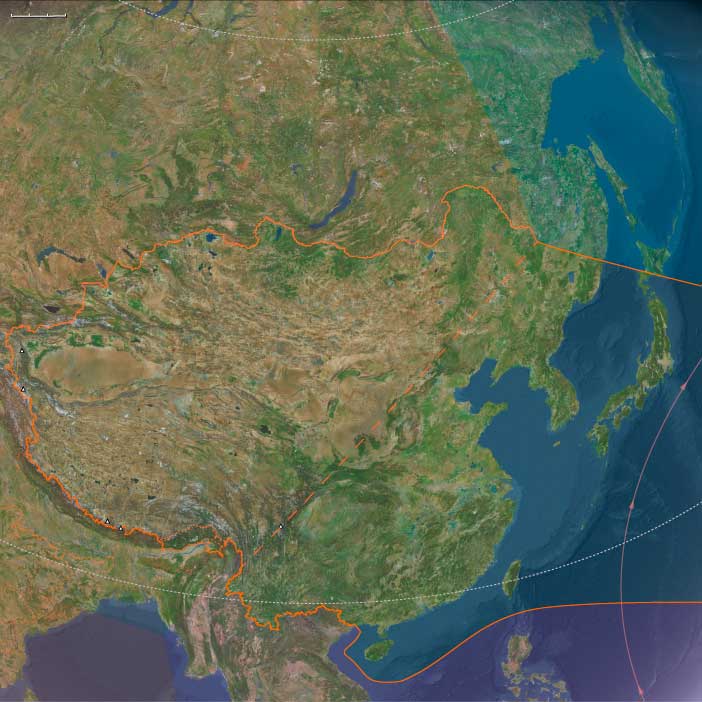
The northwestern boundary follows a line that separates Mongolia from China and delineates the division between Xinjiang and Tibet from China proper. It extends from its northernmost point, just beyond the northern arc of the Amur River—which marks China’s border with Russia—to its westernmost point, at the tri-border junction of Burma, India, and the Bay of Bengal.
The northeastern boundary distinguishes the extreme southern portion of the Russian Far East from the rest of the district and separates most of Hokkaido from Honshu, Kyushu, and Shikoku.
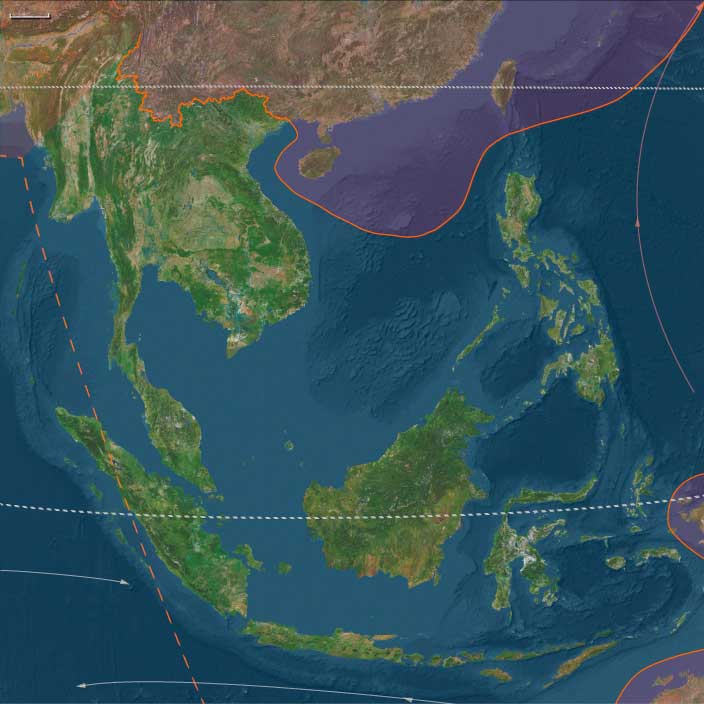
The southwestern boundary encompasses nearly all of Southeast Asia, with the exception of Aceh, which juts into the Indian Ocean and forms the southern shore of the Strait of Malacca, historically the key maritime gateway to the East.
HistoryAtlas contains 4,553 entries for The Far East from the Paleolithic period to 1899.
Narrow results by searching for a word or phrase or select from one or more of a dozen filters.
Homo erectus inhabited what is now China more than a million years ago.
Xiaochangliang, the site of some of the earliest Paleolithic remains in East Asia, located in the Nihewan Basin in Yangyuan County, Hebei, is most famous for the stone tools discovered there, including side and end scrapers, notches, burins, and disc cores.
Although it is generally more difficult to date Asian sites than African sites because Asian sites typically lack volcanic materials that can be dated isotropically, the age of the tools has been magnetostratigraphically dated as 1.36 million years.
This method is more accurate than carbon dating since it uses the data of changes caused by earth's magnetic field.
The archaeological site of Xihoudu in Shanxi Province is the earliest recorded use of fire by Homo erectus, which is dated 1.27 million years ago.
The excavations at Yuanmou and later Lantian show early habitation.
The so-called Peking Man, discovered in 1923-27 at Zhoukoudian, near Beijing, is perhaps the most famous specimen of Homo erectus found in China.
More recently, the finds have been dated from roughly five hundred thousand years ago, although a new 26Al/10Be dating suggests the remains may be as much as six hundred and eighty thousand to seven hundred and eighty thousand years old.
Homo erectus, long settled in sparse communities throughout East Asia, probably becomes extinct in China before 200,000 BCE, evidently replaced by Homo sapiens.
Australia is possibly occupied by at least 174,000 BCE (a date suggested by archaeological fieldwork in Western Australia’s Kimberley district).
The Moderns are taller, more slender, and less muscular than the Neanderthals, with whom they share—perhaps uneasily—the Earth.
Though their brains are smaller in overall size, they are heavier in the forebrain, a difference that may allow for more abstract thought and the development of complex speech.
Yet, the inner world of the Neanderthals remains a mystery—no one knows the depths of their thoughts or how they truly expressed them.
The foundation population of the humans that today inhabit the world are the survivors of what appears to be an evolutionary bottleneck caused by a global catastrophe during the period that begins around 90,000 BCE.
The Toba supereruption (Youngest Toba Tuff or simply YTT), a supervolcanic eruption that occurs some time between sixty-nine thousand and seventy-seven thousand years ago at Lake Toba in Sumatra, Indonesia, is recognized as one of the Earth's largest known eruptions and is the most closely studied supereruption.
The related catastrophe hypothesis holds that this event plunged the planet into a six-to-ten-year volcanic winter and possibly an additional one thousand-year cooling episode.
This change in temperature results in the world's human population being reduced to ten thousand or even a mere one thousand breeding pairs, creating a bottleneck in human evolution.
Consistent with the Toba catastrophe theory, evolutionary biologist Richard Dawkins has postulated that human mitochondrial DNA (inherited only from one's mother) and Y chromosome DNA (from one's father) show coalescence at around one hundred and forty thousand and sixty thousand years ago, respectively.
In other words, all living humans' female line ancestry traces back to a single female (Mitochondrial Eve) at around one hundred and forty thousand years ago.
All humans can trace their ancestry with certainty via the male line back to a single male (Y-chromosomal Adam) at ninety thousand to sixty thousand years ago.
The history of indigenous Australians is thought to have spanned forty thousand to forty-five thousand years, although some estimates have put the figure at up to seventy thousand years before European settlement.
A genetic study of one hundred and eleven Aboriginal Australians, published in the journal Nature on March 8, 2017 (Aboriginal mitogenomes reveal 50,000 years of regionalism in Australia), implies that "the settlement of Australia comprised a single, rapid migration along the east and west coasts that reached southern Australia by 49–45 ka. After continent-wide colonization, strong regional patterns developed and these have survived despite substantial climatic and cultural change during the late Pleistocene and Holocene epochs. Remarkably, we find evidence for the continuous presence of populations in discrete geographic areas dating back to around 50 ka, in agreement with the notable Aboriginal Australian cultural attachment to their country.”
For most of this time, the Indigenous Australians lived as nomads and as hunter-gatherers with a strong dependence on the land and their agriculture for survival.
Only Africa has older physical evidence of habitation by modern humans.
There is also evidence of a change in fire regimes in Australia, drawn from reef deposits in Queensland, between seventy thousand years and one hundred thousand years years ago, and the integration of human genomic evidence from various parts of the world supports a date of before sixty thousand years for the arrival of Australian Aboriginal people in the continent.
Modern humans reach Australia by at least 58,000 BCE.
In 1990, a date of sixty thousand years was suggested for a rock shelter in the Northern Territory, but the finding, based on the use of a recently developed technique called thermoluminescence, is still being evaluated.
The first settlement would have occurred during an era of lowered sea levels, when there was an almost continuous land bridge between Asia and Australia, but watercraft must have been used at some points.