Atlantic Southwest Europe (1576–1587 CE): Crisis, Dynastic Union, and the Intensification of Iberian Integration
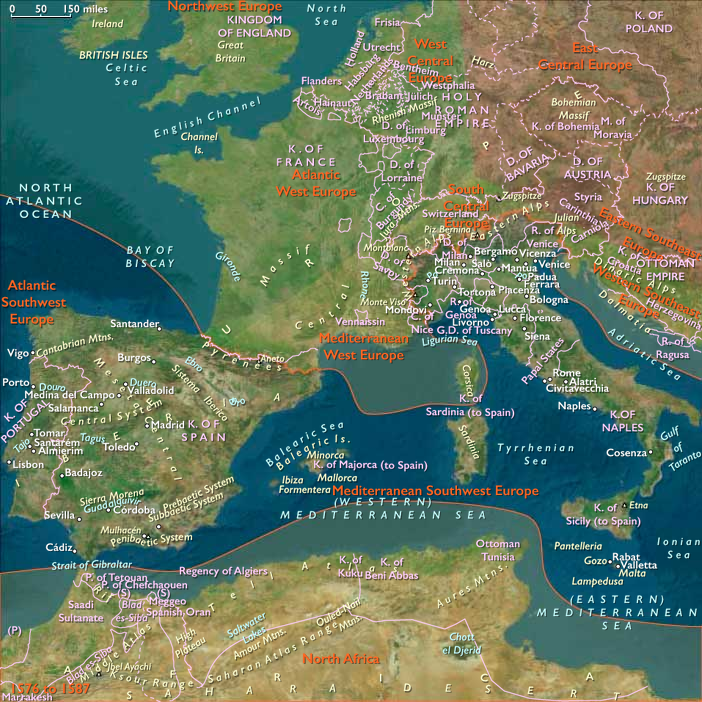
Between 1576 and 1587 CE, Atlantic Southwest Europe—including northern Portugal, Galicia, Asturias, Cantabria, northern León and Castile, northern Navarre, northern Rioja, and the Basque Country—experienced profound dynastic upheaval, intensified centralization under Habsburg rule, deepening Counter-Reformation influences, and substantial economic realignments. Marked by Portugal’s dynastic crisis culminating in the Iberian Union (1580), the region navigated significant military, economic, religious, and social pressures while striving to maintain traditional regional autonomy.
Political and Military Developments
Portuguese Dynastic Crisis and the Iberian Union
In 1578, King Sebastião of Portugal launched a catastrophic expedition against Morocco, which ended disastrously at the Battle of Alcácer Quibir, resulting in his disappearance and presumed death. This tragedy plunged Portugal into severe dynastic turmoil, exacerbated further by the death of the elderly King-Cardinal Henrique (1580), leaving no direct heir. Capitalizing on this vacuum, Philip II of Spain decisively secured his claim over Portugal after successfully defeating rival claimants, notably António, Prior of Crato. The Iberian Union thus brought Portugal under Habsburg rule, reshaping Iberian geopolitics profoundly, though Philip II carefully allowed limited Portuguese autonomy, particularly in the northern territories.
Philip II’s Centralization and Regional Autonomy
Throughout northern Spain, Philip II reinforced centralized Habsburg governance, enforcing heavier taxation, intensified military levies, and greater bureaucratic oversight, significantly affecting Basque Country, Cantabria, and northern Castile. Nevertheless, Philip prudently respected traditional local privileges (fueros), notably in Basque territories and northern Navarre. Basque and Navarrese nobility skillfully balanced submission to central authority with vigorous defense of local autonomy, maintaining distinctive administrative, legal, and cultural independence.
Northern Navarre’s Stability Amid Dual Allegiances
Northern Navarre, particularly Pamplona, continued navigating diplomatic complexities with pragmatic neutrality, carefully balancing its allegiances between Spanish and French interests. This nuanced policy sustained local stability, preserving its distinct legal system and regional autonomy amid escalating geopolitical tensions.
Economic Developments and Maritime Pressures
Impact of Iberian Union on Portuguese Maritime Interests
Initial anxiety in Portuguese northern ports—particularly Porto and Viana do Castelo—over economic marginalization eased somewhat as Philip II respected established Portuguese trade rights. Portuguese maritime commerce, notably in sugar, spices, and Asian goods, continued relatively uninterrupted. However, growing naval conflicts with England, France, and the Netherlands placed increasing pressure on maritime security and profitability, necessitating costly defensive fortifications and expanded naval forces along Portugal’s northern Atlantic coast.
Expansion and Pressures on Basque and Cantabrian Maritime Economies
Basque maritime centers such as Bilbao and San Sebastián flourished economically, driven by transatlantic trade, wool exports, and intensive shipbuilding activities linked directly to Philip II’s naval preparations for the forthcoming Spanish Armada. Cantabrian ports, notably Santander, similarly prospered through naval provisioning and mercantile trade. Nonetheless, the sustained influx of silver from American colonies drove inflation, significantly eroding local purchasing power and contributing to mounting regional economic pressures.
Rural and Urban Economic Disparities
While coastal urban centers thrived, inland rural communities in Galicia, Asturias, and northern Castile experienced economic stagnation, deepening demographic and socioeconomic disparities. Rural communities faced increased impoverishment and demographic pressures, accentuating regional inequalities.
Cultural and Religious Transformations
Intensified Counter-Reformation and Inquisitorial Activities
Under Philip II’s centralized religious policies, the Counter-Reformation decisively intensified across the region. The Portuguese and Spanish inquisitions coordinated closely, rigorously pursuing heretics, Protestant sympathizers, and conversos. Major northern cities—including Porto, Valladolid, Burgos, Bilbao, Vitoria, and Pamplona—became focal points of inquisitorial scrutiny, significantly affecting merchant classes, intellectual elites, and everyday social interactions. Religious uniformity strengthened, curtailing previously flourishing humanist and scholarly exchanges.
Cultural Patronage Aligned with Counter-Reformation Ideals
Northern Spanish cities such as Burgos, Valladolid, Salamanca, and Pamplona continued receiving significant artistic patronage closely aligned with Counter-Reformation values. Religious architecture, paintings, sculptures, and literature flourished, reflecting intensified religious orthodoxy and Tridentine aesthetics. In Portugal, despite increasing inquisitorial constraints, Coimbra University and northern monasteries maintained vibrant scholarly traditions, preserving classical learning and religious literature within strictly regulated frameworks.
Galician Cultural Resilience and Pilgrimage Traditions
Galicia maintained robust cultural vitality, supported significantly by the ecclesiastical prominence of Santiago de Compostela. Continued artistic patronage, architectural investment, manuscript preservation, and pilgrimage activities reinforced Galician cultural resilience, regional identity, and international prominence.
Social and Urban Dynamics
Social Unrest and Local Resistance
Escalating fiscal demands, military conscription, and centralized imperial policies provoked significant regional discontent and social tensions. Urban riots and localized rural unrest periodically erupted, notably in response to taxation and recruitment burdens, expressing regional resistance to increased centralization and imperial pressures.
Urban Prosperity and Merchant Class Influence
Northern maritime cities, particularly Bilbao, Santander, Porto, and Lisbon, continued to experience substantial urban expansion and commercial prosperity. The rising merchant classes consolidated economic influence, increasingly shaping civic politics and urban governance. The stark contrast with stagnating rural hinterlands further deepened regional socioeconomic divisions.
Basque and Navarrese Autonomy
Basque territories and northern Navarre successfully maintained considerable local autonomy through the vigorous defense of their fueros, preserving traditional administrative, legal, and economic systems despite Philip II’s intensified centralization. This balance of regional autonomy with centralized rule significantly shaped Basque identity, resilience, and governance.
Notable Regional Groups and Settlements
-
Portuguese: Experienced profound dynastic upheaval resulting in the Iberian Union, yet maintained maritime commercial strength and regional autonomy despite growing imperial pressures.
-
Spaniards (Castilians, Cantabrians, and Riojans): Endured heightened centralization, increased military obligations, and intensified religious orthodoxy, decisively shaping regional political dynamics and cultural life.
-
Galicians: Maintained robust economic resilience, cultural vitality, and ecclesiastical prominence, significantly supported by pilgrimage activities and maritime commerce.
-
Basques (Navarre): Preserved distinctive regional autonomy, cultural identity, and administrative independence despite intensifying central authority, significantly influencing regional stability.
Long-Term Significance and Legacy
Between 1576 and 1587 CE, Atlantic Southwest Europe:
-
Underwent profound political realignment through the Iberian Union, reshaping governance structures, regional autonomy, and imperial integration.
-
Experienced intensified Counter-Reformation influences and inquisitorial oversight, decisively reshaping regional religious identity, intellectual life, and cultural expression.
-
Maintained maritime economic prosperity amid growing international pressures and internal vulnerabilities, highlighting future economic tensions and challenges.
-
Preserved significant regional autonomy, especially in Basque and Navarrese territories, laying enduring foundations for future resistance movements and regional identity politics.
This transformative era critically shaped regional identities, governance structures, economic dynamics, and cultural trajectories, decisively influencing Atlantic Southwest Europe’s historical trajectory toward sustained global influence, increased centralization, heightened religious orthodoxy, and enduring regional autonomy.