Hugh the Great
Duke of the Franks and Count of Paris
Years: 898 - 956
Hugh the Great (898 – 16 June 956) is the Duke of the Franks and Count of Paris.

Related Events
Filter results
Showing 10 events out of 48 total
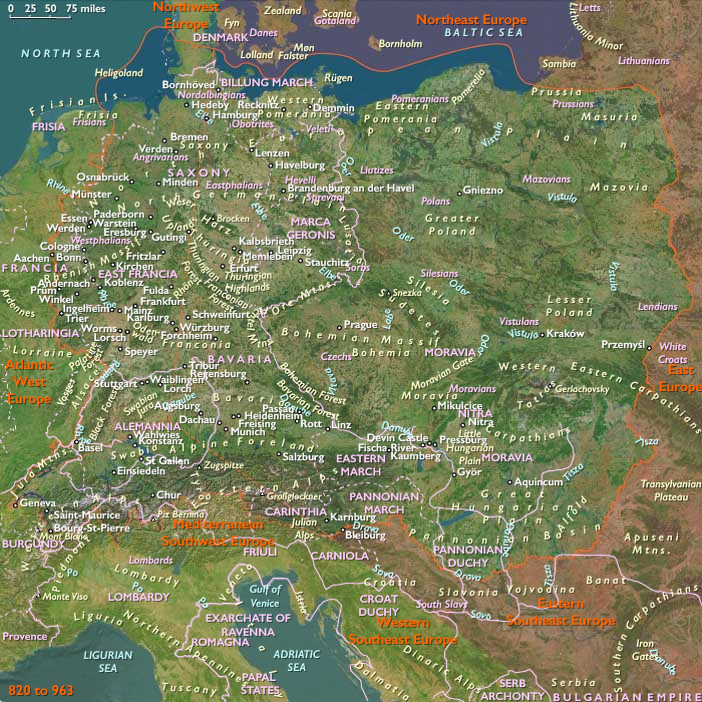
The Magyars raid Alsace in 917.
Magyar Raid on Alsace (917): The Eastern Frankish Kingdom Under Attack
In 917, the Magyars, nomadic warriors from the Hungarian plains, launch a raid into Alsace, continuing their devastating incursions into East Francia. This attack is part of a broader wave of Magyar invasions that threaten the crumbling Carolingian realm in the early 10th century.
Context: The Magyar Raids into East Francia
- The Magyars had emerged as a dominant force in Central Europe, taking advantage of the fragmentation of East Francia following the death of Louis the Child (911).
- Lacking a strong central ruler, East Francia was vulnerable to external attacks, and the Magyars frequently raided into Bavaria, Swabia, and Lotharingia.
- The raid on Alsace in 917 follows previous incursions into Germany, Italy, and Burgundy, as the Magyars exploit weak defenses along the Rhine frontier.
The Raid on Alsace
- The Magyars, known for their swift horse-mounted warfare, penetrate deep into Alsace, targeting towns, monasteries, and trade routes.
- The raiders plunder villages and religious sites, taking slaves and loot before retreating to their strongholds in the Hungarian plains.
- The East Frankish nobility struggles to mount a coordinated defense, as the kingdom is divided among powerful dukes, each focused on securing their own territories.
Consequences of the 917 Magyar Raid
-
Continued Weakness of East Francia
- The raid highlights the vulnerability of the eastern frontier, as local rulers fail to repel the invaders effectively.
- The Carolingian system of decentralized rule makes a unified military response difficult, allowing the Magyars to raid almost at will.
-
The Need for Stronger Defenses
- The attacks lead to greater reliance on local ducal leadership, particularly in Bavaria, Swabia, and Franconia, which begin to fortify their regions.
- This foreshadows the rise of the Ottonian dynasty, which will later develop military strategies to counter the Magyar threat.
-
Prelude to Further Magyar Raids
- The Magyar raid of 917 is one of many incursions into East Francia and signals continued instability in the region.
- Their attacks will intensify throughout the 920s and 930s, culminating in the Battle of Lechfeld in 955, where they will finally be defeated by Otto I of Germany.
Conclusion: The Growing Magyar Threat
The 917 raid on Alsace demonstrates the ongoing weakness of the East Frankish kingdom, which is unable to effectively resist the Magyars. The fragmentation of Carolingian authority ensures that these raids will continue, pushing East Francia toward military reform and centralized ducal leadership, ultimately paving the way for the rise of the Holy Roman Empire.
Viking Raids in West Francia and Rudolph’s Ambush at Fauquembergues (924)
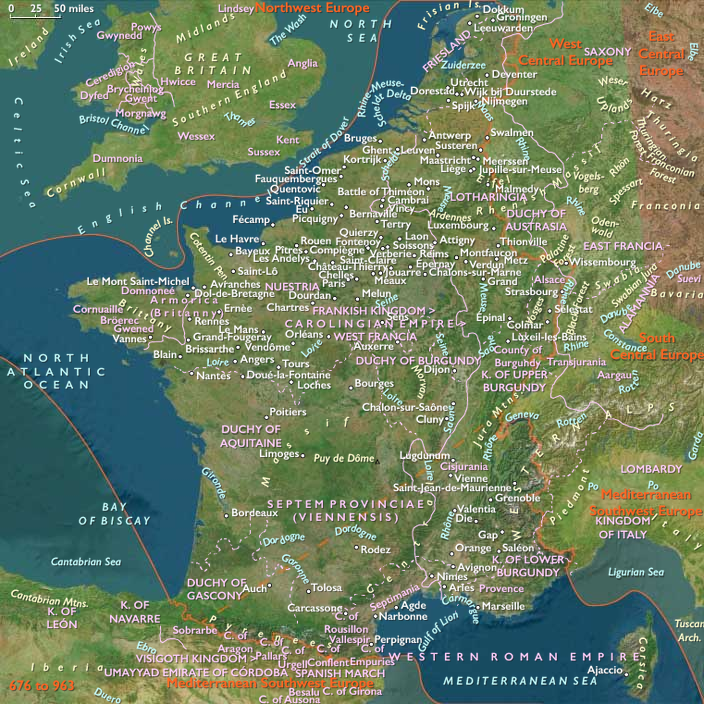
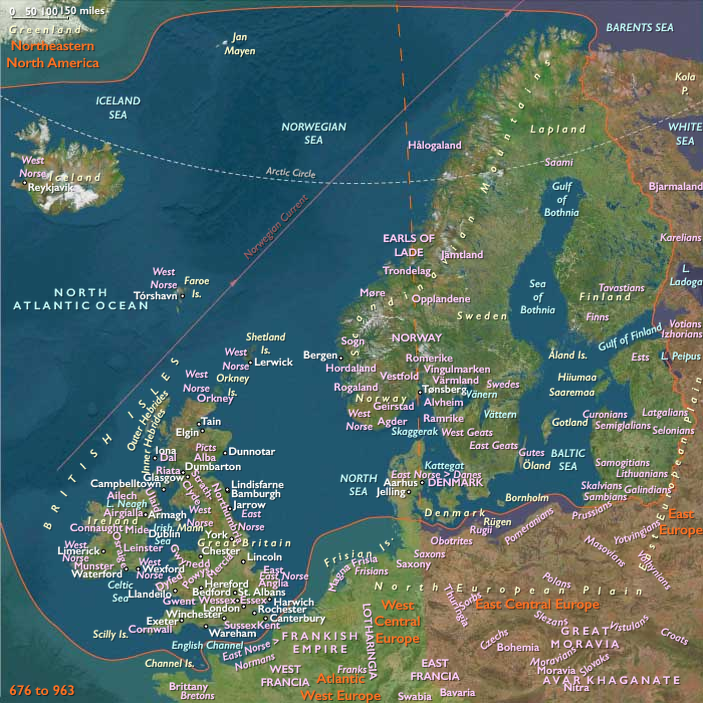
By 924, Viking raiders launch a fresh wave of attacks on West Francia, continuing their persistent threat to the weakened Frankish kingdom. Their incursions target key regions, forcing King Rudolph of West Francia to finally take action. However, his delayed response, lack of noble support, and personal injury in battle expose the fragility of his rule.
The Viking Raids of 924
-
Initial Raids on the Loire Valley
- The Vikings launch a new round of raids, advancing from their strongholds in the Loire Valley.
- Their movements threaten Hugh the Great, the powerful Duke of the Franks and brother of Queen Emma, but Rudolph does nothing to intervene.
-
The Viking Assault on Burgundy
- The Norsemen shift their attacks toward Burgundy, the domain of Rudolph’s own brother, but they are repulsed.
- Pushed back, the Vikings move north toward Melun, dangerously close to the royal demesne, forcing Rudolph to act.
Rudolph’s Response and the Ambush at Fauquembergues
-
Recruiting Forces to Confront the Vikings
- Only Herbert II of Vermandois and Rudolph’s ecclesiastical vassals initially support him, revealing the weakness of his noble alliances.
- Hugh the Great, after some persuasion, eventually joins him, ensuring that the king has a larger military force to confront the Norse invaders.
-
Viking Withdrawal and the Battle at Fauquembergues
- The Vikings, seeing the gathering Frankish forces, withdraw from Melun.
- However, as they retreat, they are ambushed near Fauquembergues (near modern Pas-de-Calais).
- The battle is fierce:
- King Rudolph is wounded in the fighting.
- The Count of Ponthieu is killed.
- Many Normans are left dead on the battlefield, marking one of the few significant Frankish victories against the Vikings.
Rudolph and Louis the Blind Discuss the Magyar Threat (924)
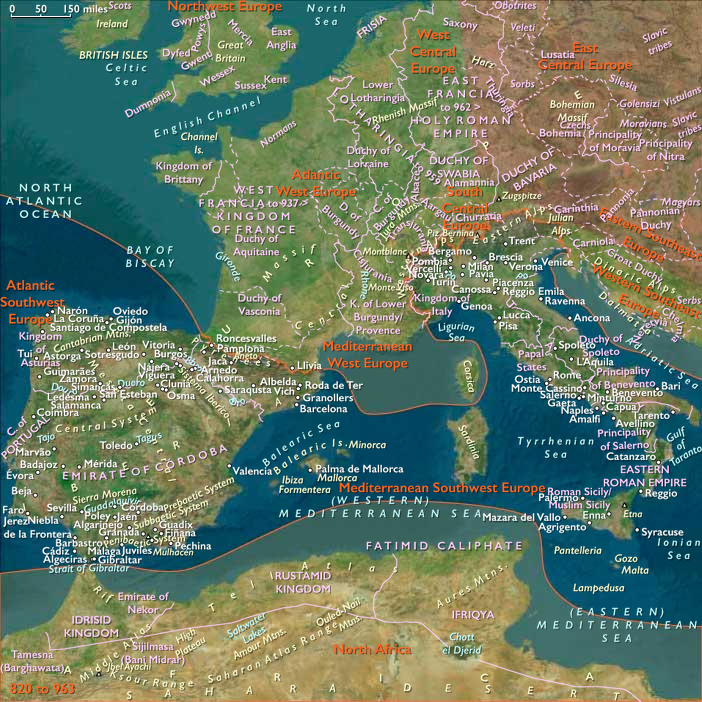
- In the same year, Rudolph meets with Louis the Blind, King of Provence, to discuss the growing menace of the Magyars.
- The Magyars, newly arrived in Europe, pose a serious threat to Italy, Germany, and Burgundy, conducting devastating raids into the heart of the Frankish world.
- This meeting signals that West Francia is beginning to recognize the Magyar threat, though it will take decades before an effective response is mounted.
Consequences of the 924 Viking Raids and the Battle of Fauquembergues
-
Rudolph Proves Militarily Competent but Struggles for Noble Support
- His delayed response to Viking raids, particularly his initial inaction in the Loire Valley, weakens his standing among the nobility.
- However, his leadership in battle and personal injury at Fauquembergues enhance his military reputation.
-
West Francia Remains Politically Weak
- The disunity of the Frankish nobles continues to hinder effective responses to external threats.
- The Viking raids persist, taking advantage of Frankish instability.
-
The Emerging Magyar Threat
- With Viking activity still ongoing, the Magyars present an additional danger to Francia’s eastern and southern borders.
- This foreshadows the future conflicts that will consume East Francia and Italy, leading to major battles against the Magyars in the mid-10th century.
Conclusion: A Fragile Victory and a Kingdom Under Siege
The events of 924 highlight the continuing instability of West Francia under Rudolph’s reign. Though he manages to repulse the Vikings at Fauquembergues, his wounded authority and reliance on hesitant nobles show that royal power is declining. Meanwhile, as the Magyars threaten the borders of Europe, new challenges will soon overshadow the Viking menace, pushing the Carolingian successor states into greater military and political turmoil.
Rollo’s Expansion Westward: The Growth of Normandy (922–924)
Following the Treaty of Saint-Clair-sur-Epte (911), Rollo, the Viking ruler of Normandy, had fulfilled his oath to defend the shores of the Seine River from further Viking incursions. However, his loyalty was tied to King Charles the Simple, and after Charles was deposed by Robert I in 922, Rollo considered his obligations void, leading him to pursue his own expansionist policies.
Rollo’s Continued Raids on Flanders
- Even after settling in Normandy, Rollo continued raiding into Flanders, expanding his influence into Carolingian territories.
- His attacks targeted Flemish settlements, including monasteries and trade routes, further destabilizing West Francia during its period of political upheaval.
Rollo’s Expansion Westward (924): The Seizure of Bessin
- With Charles the Simple no longer in power, Rollo looked westward to expand his control beyond the Seine Valley.
- French barons, seeking peace and an alliance with the Normans, negotiated with Rollo, ultimately ceding him Le Mans and ...
- Bayeux.
- This agreement facilitates his conquest of the Bessin region in 924, further consolidating Norman control over key territories.
- Bayeux becomes one of the most Viking-influenced regions, with Norse settlements growing under Rollo’s leadership.
Consequences of Rollo’s Expansion
-
Strengthening the Duchy of Normandy
- The acquisition of Le Mans, Bayeux, and Bessin expands Normandy westward, solidifying its long-term territorial foundation.
-
Norman Influence Grows in Western Francia
- Rollo’s increasing power and independence make Normandy a major force in West Francia, rather than a mere vassal of the French king.
-
The Path to Norman Stability
- With territorial expansion secured, Rollo lays the groundwork for Normandy’s long-term development, which will later culminate in the Norman Conquest of England in 1066.
Conclusion: Rollo’s Evolution from Viking Raider to Norman Duke
By 924, Rollo has transformed from a Viking warlord into a powerful feudal ruler, expanding his domain far beyond the original lands granted in 911. Though he initially swore loyalty to the King of France, Charles’ deposition in 922 provided an opportunity for independent expansion, allowing him to further strengthen the foundations of Normandy as a powerful duchy in medieval France.
Rollo Consolidates Normandy: Land Distribution and Settlement (c. 924–930s)
After securing Normandy through the Treaty of Saint-Clair-sur-Epte (911) and further expanding his domain westward into Bayeux, Le Mans, and Bessin (924), Rollo begins the process of formally organizing and governing his territory. One of his key measures is the distribution of land among his most trusted chieftains, ensuring stability and long-term Norman control.
Dividing the Land Between the Epte and Risle
- Rollo grants land between the Epte and Risle rivers to his Norse followers, effectively settling Viking warriors as feudal lords.
- These settlements follow a Norse-style system, but gradually adapt to Frankish feudal traditions, blending Viking and Carolingian governance.
- By granting land to his chiefs, Rollo secures their loyalty, ensuring that Normandy becomes a defensible and well-organized stronghold.
Rouen as the De Facto Capital of Normandy
- Rollo establishes Rouen as his primary seat of power, making it the de facto capital of Normandy.
- The city becomes the administrative and military hub of the duchy, overseeing:
- Trade along the Seine River, connecting it to the rest of West Francia.
- Fortification projects, strengthening Norman defenses.
- Norse and Frankish cultural integration, as Norse settlers begin adopting Frankish language, religion, and legal customs.
The Long-Term Impact of Rollo’s Settlement Policy
-
Norman Stability
- By distributing land strategically among his chieftains, Rollo prevents internal conflicts and strengthens his rule.
-
Cultural Fusion
- Over time, the Norse settlers intermarry with local Frankish and Gallo-Roman populations, leading to the emergence of a distinct Norman identity.
-
Establishment of Norman Feudalism
- Rollo’s system of land grants lays the foundation for the feudal structure of Normandy, which will later influence feudal England after the Norman Conquest of 1066.
Conclusion: The Birth of Norman Governance
By dividing land among his followers and establishing Rouen as his capital, Rollo successfully transforms Normandy from a Viking raiding base into a structured feudal territory. His rule not only stabilizes the region but also ensures that Normandy becomes one of the most powerful feudal states in medieval France, ultimately shaping the future of European history.
The Norman Rebellion and the Sack of Eu (924)
By 924, the Normans, who had been granted land around Rouen in 911 under the Treaty of Saint-Clair-sur-Epte, begin raiding and ravaging the surrounding regions. Though originally intended to defend West Francia from further Viking incursions, the Normans, led by Rollo and his successors, expand their territory through force.
Norman Raiding and Expansion Beyond Rouen
- The Normans, originally settled in the lower Seine Valley, begin raiding their neighboring regions, testing the limits of their agreement with the Frankish crown.
- Their targets include territories bordering Normandy, with Eu, a coastal settlement in modern-day Seine-Maritime, becoming a primary focus.
- This move threatens both local Frankish rulers and neighboring lords, prompting a coalition to oppose Norman expansion.
The Frankish Response: The Sack of Eu (924)
- Herbert II of Vermandois and Arnulf I of Flanders form an alliance against the Normans to contain their growing power.
- They launch a joint military expedition against Rollo’s forces, capturing and sacking the town of Eu in 924.
- This marks the first large-scale Frankish response to Norman expansion, though it does not completely halt their territorial ambitions.
Consequences of the 924 Conflict
-
Norman Expansion is Temporarily Checked
- The capture of Eu limits Norman coastal control, though Rollo and his successors will continue to expand westward over time.
-
Franco-Norman Relations Deteriorate Further
- The Normans now operate with increasing autonomy, proving they are no longer mere vassals of the West Frankish king.
- Their continued aggression undermines the original agreement made with Charles the Simple in 911.
-
The Power of Regional Lords Increases
- The role of Herbert II of Vermandois and Arnulf I of Flanders in opposing the Normans reflects the ongoing decline of royal authority in West Francia.
- The kingdom is increasingly shaped by local rulers acting independently, reinforcing the feudal fragmentation of power.
Conclusion: A Prelude to Further Norman Expansion
Though Herbert and Arnulf temporarily halt Norman advances by capturing Eu in 924, this event foreshadows continued Norman encroachment into Brittany and northern France. The Normans are no longer just settlers defending Frankish territory—they are now an independent force shaping the medieval landscape of France.
Henry I Seizes Lotharingia from West Francia (925): The Final Shift to East Francia
In 925, King Henry I of Germany (Henry the Fowler) invades Lotharingia, taking advantage of the political instability under Duke Gilbert and the weakness of King Rudolph of West Francia. This conquest permanently transfers Lotharingia from West Francia to East Francia, marking a major shift in the balance of power in medieval Europe.
Gilbert of Lorraine’s Shifting Loyalties
- Gilbert, Duke of Lorraine, had long been unreliable, frequently switching allegiances between West Francia and East Francia as political conditions changed.
- His indecisiveness had weakened Lotharingia’s position, making it vulnerable to external intervention.
- Sensing an opportunity, Henry I launches an invasion, facing little resistance from Rudolph of West Francia, who is too weak to oppose him.
Henry I’s Conquest of Lotharingia
- With Rudolph unable to respond militarily, Henry quickly wrests control of Lotharingia from West Francia.
- Rather than being removed from power, Gilbert submits to Henry, swearing fealty to the German king.
- This effectively solidifies Lotharingia as part of East Francia, where it will remain for centuries.
The Significance of the 925 Conquest
-
Lotharingia Becomes Part of East Francia Permanently
- After decades of shifting allegiances, Henry’s conquest ensures that Lotharingia is politically and militarily tied to Germany rather than France.
-
Further Weakening of West Francia
- With the loss of Lotharingia, Rudolph of West Francia is even more diminished, unable to maintain Carolingian-era borders.
- This loss accelerates the decline of royal authority in West Francia, as regional lords like the Robertians and the Dukes of Burgundy grow more powerful.
-
A Step Toward the Holy Roman Empire
- By integrating Lotharingia, Henry strengthens the foundation of East Francia, setting the stage for its transformation into the Holy Roman Empire under Otto I in 962.
Conclusion: A Turning Point in the Carolingian World
The seizure of Lotharingia in 925 marks the permanent separation of the region from France, ensuring that it remains part of the German sphere of influence. While Gilbert remains Duke, his subordination to Henry I reflects the growing dominance of East Francia over West Francia, paving the way for the eventual formation of Germany as a distinct political entity.