
Inder Kumar Gujral
Indian diplomat, politician, and anti-colonial independence activist who served as prime minister of India
1919 CE to 2012 CE
Inder Kumar Gujral (4 December 1919 – 30 November 2012) was an Indian diplomat, politician, and anti-colonial independence activist, who served as prime minister of India from April 1997 to March 1998.
Born in Punjab, he was influenced by nationalistic ideas as a student, and joined the All India Students Federation and the Communist Party of India. He was imprisoned for taking part in the Quit India movement. After independence, he joined the Indian National Congress party in 1964, and became a Member of Parliament in the Rajya Sabha.
He was the Minister of Information and Broadcasting during the emergency. In 1976, he was appointed as the Ambassador of India to the Soviet Union. In 1996, he became the Minister of External Affairs in the Deve Gowda ministry, and developed the Gujral doctrine during this period. He was appointed the prime minister of India in 1997. His tenure lasted for less than a year.
He retired from all political positions in 1998. He died in 2012 at the age of 92, following hospitalization due to a lung infection.
World
The Great Crossroads
View →Related Events
Showing 1 events out of 1 total
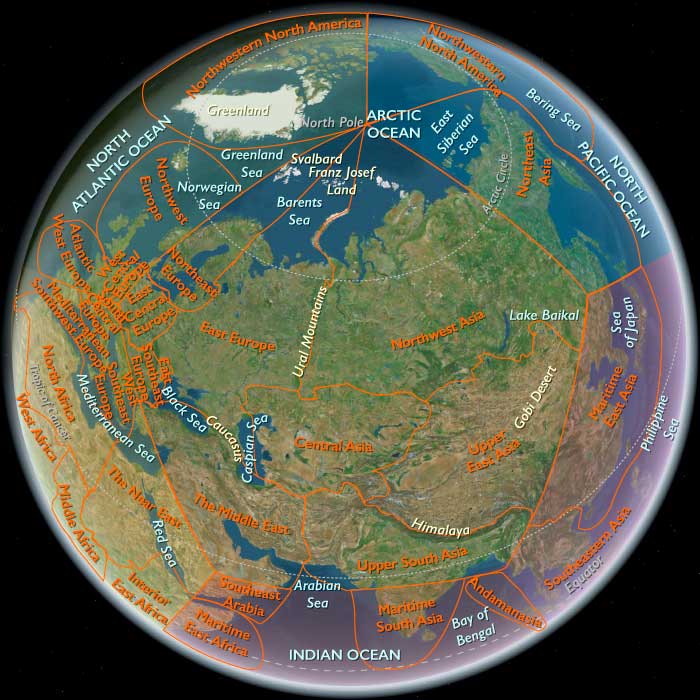
Upper South Asia (1996–2007 CE): Conflicts, Shifts, and New Beginnings
India: Economic Expansion and Political Realignments
From 1996 to 2007, India experienced a significant phase of economic expansion, despite political fragmentation. The era opened with coalition governments marked by instability and rapid changes, exemplified by Prime Ministers H.D. Deve Gowda and Inder Kumar Gujral.
In 1998, the Bharatiya Janata Party (BJP)-led coalition government under Atal Bihari Vajpayee assumed power, significantly altering India’s political landscape. Under Vajpayee’s leadership, India conducted nuclear tests (Pokhran-II) in May 1998, asserting itself as a nuclear-armed state, but prompting international sanctions.
Vajpayee pursued diplomatic engagements with Pakistan, highlighted by the Lahore Declaration in 1999, although optimism was short-lived due to the Kargil War (May–July 1999), a high-altitude conflict in Kashmir triggered by incursions from Pakistani troops and militants. India’s eventual military success boosted national unity and Vajpayee’s political stature.
Economically, Vajpayee promoted infrastructure and connectivity projects, including the Golden Quadrilateral Highway, enhancing India’s economic integration. The burgeoning technology sector, notably IT and software services centered in Bengaluru and Hyderabad, drove rapid economic growth and global recognition.
The 2004 elections brought the Indian National Congress (INC)-led United Progressive Alliance (UPA) government to power, with Manmohan Singh as Prime Minister. Singh continued liberalization policies, driving strong economic growth, poverty alleviation programs, and significant rural employment schemes, notably the National Rural Employment Guarantee Act (NREGA, 2005).
Pakistan: Military Rule and Political Instability
In Pakistan, political turbulence intensified. Benazir Bhutto’s second tenure ended amidst corruption charges in 1996. Her rival, Nawaz Sharif, returned to power in 1997, overseeing nuclear tests in response to India’s Pokhran-II tests, thus escalating regional nuclear tensions.
In 1999, General Pervez Musharraf seized power in a bloodless coup, exiling Nawaz Sharif. Musharraf’s regime navigated complex geopolitics, particularly after the September 11, 2001 terrorist attacks. Under Musharraf, Pakistan allied closely with the United States, becoming pivotal in the War on Terror, particularly concerning operations against Al-Qaeda and Taliban factions along the Afghanistan–Pakistan border.
Despite international support, Musharraf faced rising internal militancy and growing domestic opposition. His policies led to heightened insurgency in Balochistan and the Tribal Areas, and frequent sectarian violence, particularly in Punjab and Sindh.
Afghanistan: Taliban Rule, U.S. Invasion, and Rebuilding Efforts
Afghanistan faced significant upheaval. By 1996, the fundamentalist Taliban movement, led by Mullah Mohammad Omar, captured Kabul, imposing strict Sharia law, severely repressing women’s rights and minority groups, especially the Shi'a Hazara community. The Taliban provided sanctuary to terrorist groups, including Al-Qaeda.
After the 9/11 terrorist attacks in the United States, the Taliban’s refusal to extradite Al-Qaeda leader Osama bin Laden led to the U.S.-led invasion (Operation Enduring Freedom) in October 2001. Within months, the Taliban regime collapsed. An international coalition established an interim government led by Hamid Karzai (2001), beginning significant international efforts toward reconstruction, democratization, and stabilization.
Despite international efforts, Afghanistan struggled to achieve lasting peace. Resurgent Taliban forces initiated persistent insurgencies from 2005 onward, particularly in Pashtun-majority southern and eastern provinces, complicating stabilization efforts.
Bangladesh: Turmoil, Economic Growth, and Political Confrontation
Bangladesh experienced rapid economic growth alongside persistent political instability. The bitter rivalry between the Awami League, led by Sheikh Hasina, and the Bangladesh Nationalist Party (BNP), led by Khaleda Zia, dominated politics. BNP governed until 2006, a period characterized by strong economic growth, notably in textiles and garment exports.
However, political confrontations intensified significantly, marked by electoral violence, general strikes (hartals), and frequent public unrest. The situation culminated in a controversial caretaker government (2006–2008) backed by the military, suspending elections to restore political stability.
Nepal: Maoist Insurgency and Abolition of the Monarchy
In Nepal, a decade-long Maoist insurgency (1996–2006) profoundly altered its political structure. Initiated by the Communist Party of Nepal (Maoist) under Pushpa Kamal Dahal (Prachanda), the insurgency targeted monarchical rule, systemic inequality, and rural poverty. The conflict resulted in more than 13,000 deaths and severe socioeconomic disruptions.
Following mass pro-democracy demonstrations (Jana Andolan-II, 2006), King Gyanendra Shah relinquished absolute power. A comprehensive peace accord was signed in 2006, leading to a transitional government that abolished Nepal’s 240-year-old monarchy in 2008, setting the stage for the establishment of a secular federal republic.
Bhutan: Transition to Democratic Constitutional Monarchy
Bhutan experienced historic constitutional reforms under King Jigme Singye Wangchuck, who voluntarily moved the country toward parliamentary democracy. In 2005, he announced intentions to abdicate in favor of his son, Jigme Khesar Namgyel Wangchuck. A new constitution drafted between 2006–2007 formally instituted a democratic constitutional monarchy, promoting democratic governance while preserving Bhutanese cultural heritage and traditions.
Myanmar’s Northwestern Regions: Conflict and Ethnic Struggles
Northwestern regions of Myanmar, including Kachin, Sagaing, Chin, and Northern Rakhine, continued facing severe military repression, ethnic tensions, and insurgencies. Persistent armed conflicts involving the Kachin Independence Army (KIA) and Chin ethnic militias against the Myanmar military regime led to significant human rights abuses, widespread displacement, and refugee movements into neighboring India and Bangladesh.
Regional Cooperation and Geopolitics
This period also witnessed intensified diplomatic and economic engagement across Northern South Asia. The South Asian Association for Regional Cooperation (SAARC) attempted regional integration, despite Indo-Pakistani tensions limiting progress. Additionally, India’s "Look East" policy fostered stronger diplomatic and economic ties with Southeast Asian nations and emphasized greater economic integration and infrastructure connectivity.
Cultural and Technological Flourishing
Northern South Asia experienced significant cultural growth, influenced by globalization and technological advancement. India's burgeoning IT sector transformed cities like Bengaluru into global technology hubs. Media liberalization across the region, satellite television, mobile telephony, and the early internet boom greatly impacted cultural exchanges, communications, and popular culture, shaping modern urban and youth identities.
Legacy of the Age
The period 1996–2007 significantly reshaped Upper South Asia. It saw India’s rise as a global economic power, Pakistan’s complex role in global geopolitics amid instability, Afghanistan’s tragic transition through Taliban rule and international intervention, and Nepal and Bhutan’s transformative democratic shifts. Bangladesh pursued economic growth amid political volatility, while Myanmar’s northwestern states grappled with ethnic conflicts. These developments deeply impacted the region’s contemporary political dynamics, socio-economic conditions, and international relationships, setting the trajectory into the 21st century.