
Iphicrates
Athenian general
410 BCE to 353 BCE
Iphicrates (died c. 353 BCE) is an Athenian general, the son of a shoemaker, who flourishes in the earlier half of the 4th century BCE.
World
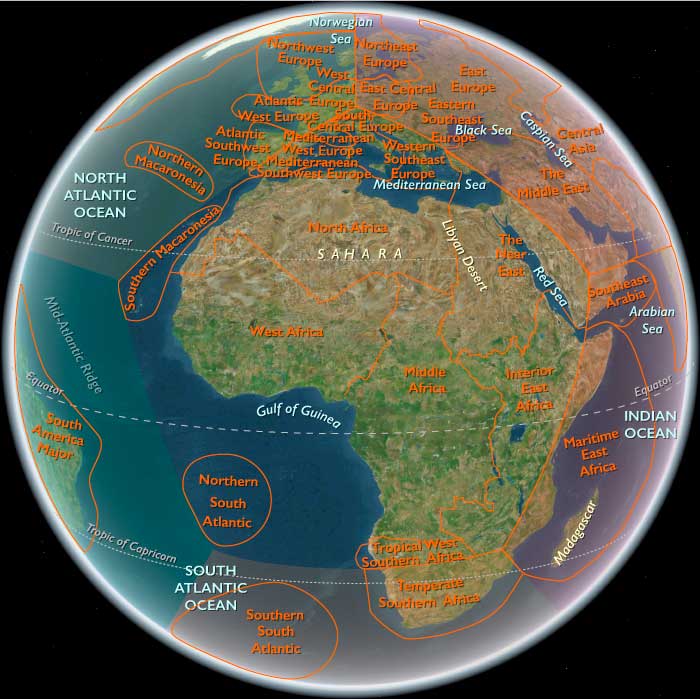
The Middle of The Earth
View →Related Events
Showing 10 events out of 12 total
Sparta, again financed by Persia in 392 BCE, blockades Athens.
Isocrates, a teacher of rhetoric and political philosophy, sets up his own school of rhetoric sround this time because Athens has no set curriculum for higher education (sophist teachers often travel), and proves to be not only an influential teacher, but a shrewd businessman.
It is the first permanent institution of higher education in the liberal arts.
Isocrates’ fees are unusually high, and he accepts no more than nine pupils at a time.
Many of them will go on to be philosophers, legislators and historians As a consequence, he amasses a considerable fortune.
According to Pliny the Elder (NH VII.30) he could sell a single oration for twenty talents.
Isocrates' program of rhetorical education stresses the ability to use language to address practical problems, and he refers to his teachings as more of a philosophy as opposed to rhetoric.
He emphasizes that students need three things to learn: a natural aptitude that is inborn, knowledge training granted by teachers, and textbooks and applied practices designed by educators.
He also stresses civic education, training students to serve the state.
Students practice composing and delivering speeches on various subjects.
He considers natural ability and practice to be more important than rules or principles of rhetoric.
Rather than delineating static rules, Isocrates stresses "fitness for the occasion," or kairos (the rhetor's ability to adapt to changing circumstances and situations).
Isocrates' school is to last for over fifty years and teach the basis of liberal arts education as we know it today, including oratory, composition, history, citizenship, culture and morality.
Agesilaus of Sparta continues to fight the Athenian coalition near Corinth, where the entrenched Iphicrates puts his peltasts to skillful use in 390, nearly annihilating a battalion of Spartan hoplites.
Amyntas III of Macedon seeks Spartan aid against the growing threat of Olynthus, seat of the Chalcidian League, and the Spartans eagerly respond.
That Olynthus is backed by Athens and Thebes, rivals to Sparta for the control of Greece, provides them with an additional incentive to break up this growing power in the north.
Amyntas thus concludes a treaty with the Spartans, who assist him in reducing Olynthus (379).
He also enters into a league with Jason of Pherae, and assiduously cultivates the friendship of Athens.
Aat a Panhellenic congress of the Lacedaemonian allies in 371 BCE, he votes in support of the Athenians' claim and joins other Greeks in voting to help Athens to recover possession of Amphipolis.
With Olynthus defeated, Amyntas is now able to conclude a treaty with Athens and keep the timber revenues for himself.
Amyntas ships the timber to the house of the Athenian Timotheus, in the Piraeus.
By his wife, Eurydice, he has three sons: Alexander II, Perdiccas III and the youngest of whom is the famous Philip II of Macedon.
Amyntas dies at an advanced age, leaving his throne to his eldest son, Alexander, who is very young in 371 when he ascends to the throne.
This causes immediate problems for the new king as enemies to the dynasty resume war.
Alexander is simultaneously faced with an Illyrian invasion from the northwest and an attack from the east by the pretender Pausanias.
Pausanias quickly captures several cities and threatens the queen mother, who is at the palace in Pella with her young sons.
Alexander defeats his enemies with the help of the Athenian general Iphicrates, who had been sailing along the Macedonian coast on the way to recapture Amphipolis.
Iphicrates had served the Persians as a mercenary commander after the Corinthian War, then returned to Athens.
His expedition in 373 to relieve Corcyra of a Spartan siege is successful.
Cotys, king of Thrace, opposes Ariobarzanes of Phrygia, and his ally, the Athenians, on their revolt from Persian rule.
He goes to war with the Athenians soon after for the possession of the Thracian Chersonese.
Athens, now that she cannot trust Iphicrates to protect her interests, organizes a rebellion against Cotys, led by his treasurer Miltokythes.
Iphicrates, having retired to Thrace, fights also for the Thracian king against Athens: with the help of Charidemus, a Greek mercenary leader from Euboea who had served under Iphicrates at Amphipolis, he bribes the Athenian military and naval commanders to suppress the rebellion.
Charidemus, captured by the Athenians, is taken into their service and receives their citizenship, but in 362, he is discharged.
After participating in the revolt of satraps in Persia, he again joins Cotys, and returns to Athens in 361 with a treaty from Cotys, proclaiming him an ally.
Cotys has successfully retained his kingdom.
By 359 BCE, Cotys controls the whole Chersonese peninsula.
During the same year he makes an alliance with the new Macedonian king, Philip II.
In 358 BCE, he is murdered by two of Plato’s students from Aenus, Python and Heraclides.
Thought previously as advisers to the King, they murdered him during a feast in his palace, under the pretext that he had wronged their father.
Upon their return to Athens, they are proclaimed honorary citizens and rewarded with gold wreaths.
On Cotys' murder, Charidemus becomes guardian to the dead king's young son, Cersobleptes, in conjunction with Berisades and Amadocus II, who are probably his brothers.
He is very young at this time, and the whole management of his affairs is assumed by Charidemus, who is connected by marriage with the royal family.
The area controlled by Cersobleptes is east of the river Hebrus.
The Odrysian empire splits itself in three smaller kingdoms, of which this one, with the capital at Seuthopolis, is to survive the longest.
Athens had restated an old claim to Amphipolis not long after the peace of 371, and added a claim to the Chersonese; in 368, it sends its general Iphicrates to Amphipolis, which resists Athenian attempts to regain control.
Alexander II of Macedon had successfully gained control of Larissa and several other cities but, betraying a promise he had made, had put garrisons in them, provoking a hostile reaction from Thebes, the leading military power in Greece at this time.
The Theban general Pelopidas, after driving the Macedonians from Thessaly, now neutralizes Alexander by favoring the ambitions of Alexander's brother-in-law Ptolemy of Aloros, and forces Alexander to abandon his alliance with Athens in favor of Thebes.
As part of this new alliance, Alexander is compelled to hand over hostages, including his younger brother Philip.
At the instigation of Ptolemy, Alexander is assassinated during a festival.
Although Alexander's brother Perdiccas III becomes the next king, he is under age, and Ptolemy is appointed regent.
Perdiccas kills Ptolemy in 365 BCE and assumes control of Macedon’s government.
Of the reign of Perdiccas we have very little information, knowing only that he was at one time engaged in hostilities with Athens on account of Amphipolis, and that he was distinguished for his patronage of men of letters.
Among these, we are told that Euphraeus, a disciple of Plato, rose to so high a place in his favor as completely to govern the young king, and exclude from his society all but philosophers and geometers.
He also served as Theorodokos (sacred envoy-receivers, whose duty is to host and assist the Theoroi, or "viewers" before Panhellenic Games and Festivals) in the Epidaurian Panhellenic games of about 365 BCE.
Iphicrates, like Timotheus, fails in attempts from 367 BCE to 364 BCE to recover Amphipolis.
Perdiccas tries to reconquer upper Macedonia from the Illyrian Bardylis in 360 BCE, but the expedition ends in disaster, with the king killed in a catastrophic battle.
Philip, originally appointed regent for his infant nephew Amyntas IV, the son of Perdiccas, soon manages to take the kingdom for himself, ascending the throne in 359 as Philip II.
The Illyrians continue to raid from the northwest, the Paeonians from the north, and foreign powers continues to support two claimants to the throne other than Philip, a man of exceptional energy, diplomatic skill, and ruthlessness.
Philip's military skills and expansionist vision of Macedonian greatness bring him early success.
He first has to reestablish a situation which had been greatly worsened by the defeat against the Illyrians, Macedon's permanent enemies.
The Illyrians prepare to close in; the Paeonians, forced northward by the growth of Macedon, are raiding from the north, the Thracians have sacked and invaded the eastern regions of the country, while the Athenians have landed at Methoni on the coast, a contingent under a Macedonian pretender called Argeus.
Using diplomacy, Philip pushes back the Paeonians and Thracians promising tributes, and crushes the three thousand Athenian hoplites.
Bardyllis is killed in battle after Philip rejects his offer of peace based on retaining conquered lands.
Momentarily free from his opponents, Philip concentrates on strengthening his internal position and, above all, his army, introducing more rigorous training and employing mercenaries.
His most important innovation is doubtless the introduction of the phalanx infantry corps, armed with the famous sarissa, an exceedingly long spear, at this time the most important army corps in Macedonia.
This enables him to inflict defeats on the Illyrians and other northern enemies such as Paeonia, which he invades in 358.