Jean-Andoche Junot
French general during the Revolutionary and Napoleonic Wars
Years: 1771 - 1813
Jean-Andoche Junot, 1st Duke of Abrantès (September 24, 1771 – July 29, 1813) is a French general during the Revolutionary and Napoleonic Wars.

Related Events
Filter results
Showing 10 events out of 32 total
The Franco-Spanish Invasion of Portugal and the Flight of the Royal Family (1807)
With Napoleon crowned Emperor in 1804, his war against Britain resumed with renewed intensity. Britain responded by declaring a naval blockade of France, aiming to cripple French trade and economy. In retaliation, Napoleon ordered all European nations to sever ties with Britain, seeking to isolate it economically.
Portugal’s Neutrality and Napoleon’s Ultimatum
- Portugal, historically allied with Britain, attempted to remain neutral, balancing between French demands and British pressure.
- Napoleon ordered Portugal to close its ports to British ships, but the Portuguese government sought a way to comply without severing ties with its oldest ally.
- This compromise position angered Napoleon, who decided that Portugal must be invaded and partitioned.
The Treaty of Fontainebleau (October 1807) – The Plan to Divide Portugal
In October 1807, Napoleon signed a secret treaty with Spain at Fontainebleau, laying out a plan to invade and partition Portugal:
- One-third of Portugal would go to France.
- One-third would be annexed to Spain.
- One-third would be given to Manuel de Godoy, Spain’s chief minister, as a personal reward for his loyalty to Napoleon.
This agreement cemented Spain’s role as a French ally in the coming invasion.
The Franco-Spanish Invasion (November 1807)
- On November 17, 1807, a Franco-Spanish army under General Andoche Junot crossed the Portuguese border and marched on Lisbon.
- The British, unable to defend their ally, could do little to prevent the fall of Portugal.
- With Lisbon defenseless, Prince Regent João (the future King João VI) and the Portuguese royal family decided to flee to Brazil, ensuring the continuity of the Portuguese monarchy overseas.
- On November 27, 1807, Junot’s army entered Lisbon and took control, marking the first French occupation of Portugal.
The Portuguese Monarchy in Exile – A Unique Response
The flight of the Portuguese royal family to Brazil was unprecedented in European history. Unlike other monarchs who had been toppled by Napoleon, the Portuguese rulers retained their sovereignty by relocating their government to Rio de Janeiro.
This decision not only preserved the Portuguese Empire but also led to the eventual transformation of Brazil into an independent kingdom, shaping the country’s future.
Consequences – The Napoleonic Wars Arrive in Iberia
The occupation of Portugal marked the beginning of the Peninsular War (1807–1814), one of the most brutal and complex conflicts of the Napoleonic Wars. Within months, Napoleon would turn on Spain as well, leading to open rebellion and British intervention, changing the course of the war in Western Europe.
Napoleon believed Portugal had been subdued, but in reality, the war was just beginning.
The Second French Invasion of Portugal (March–May 1809) and Wellington’s Counteroffensive
In March 1809, Marshal Nicolas Soult led a renewed French invasion of Portugal, advancing from Galicia in the north. This marked Napoleon’s second attempt to subjugate Portugal, following the failed occupation of 1807–1808.
The French Advance – Soult Captures Porto
- Soult’s army crossed into Portugal from Galicia, quickly occupying Chaves.
- The French then advanced toward Porto, Portugal’s second-largest city.
- On March 29, 1809, Soult captured Porto, forcing a chaotic Portuguese retreat across the Douro River.
Wellington Returns – The British-Portuguese Counteroffensive
- In April 1809, Sir Arthur Wellesley (later Duke of Wellington) arrived in Portugal to take full command of the British-Portuguese forces.
- Recognizing that Soult’s army was vulnerable, Wellington launched a rapid counteroffensive, forcing the French to retreat northward.
- By May 12, 1809, Wellington executed a brilliant crossing of the Douro River, retaking Porto and sending Soult into full retreat.
- The French, cut off from their supply lines, abandoned much of their artillery and baggage as they fled back into Galicia.
Victory at Talavera and Wellington’s Rise (July 27–28, 1809)
- After driving Soult out of Portugal, Wellington turned his attention to Spanish territory, joining forces with the Spanish army.
- On July 27–28, 1809, the British and Spanish armies defeated Marshal Victor’s French forces at the Battle of Talavera in central Spain.
- Despite suffering heavy casualties, this victory marked Wellington’s first major battlefield success in Spain, solidifying his reputation as the leading Allied general in the Peninsular War.
- In recognition of his achievements, Wellesley was elevated to the rank of Duke of Wellington.
Conclusion – The French Are Driven from Portugal Again
The successful defense of Portugal in 1809 marked a turning point in the Peninsular War:
- Portugal remained secure under British and Portuguese control, despite repeated French invasions.
- The Anglo-Portuguese army was now a disciplined and effective force, ready to support the Spanish resistance.
- Wellington emerged as the dominant Allied commander, setting the stage for future victories against Napoleon’s forces in the Iberian Peninsula.
This campaign reaffirmed Portugal’s resilience and Britain’s commitment to defeating Napoleon in Iberia, leading toward the final liberation of Spain and Portugal in 1813–1814.
Portuguese Rebellion and the Liberation from French Occupation (1808–1809)
The French occupation of Portugal, imposed after Junot’s invasion in 1807, soon sparked widespread rebellion among the Portuguese population. Local provisional juntas were organized in several cities, leading to an armed resistance movement supported by the British.
The Porto Junta and the Organization of Resistance
- The junta in Porto became the leading authority among the various Portuguese resistance groups, with other local juntas pledging allegiance to it.
- With British support, the Porto junta began to assemble an army, preparing to challenge French rule.
Victory at Lourinhã and the Convention of Sintra (August 1808)
- On August 21, 1808, Portuguese and British forces decisively defeated a strong French force at Lourinhã.
- This defeat forced the French to negotiate, leading to the Convention of Sintra, signed in August 1808.
- The treaty provided for the complete evacuation of French forces under General Andoche Junot from Portugal.
- The Portuguese juntas assumed control of the government, restoring local governance in place of French rule.
Reorganizing the Portuguese Army – Beresford’s Appointment (January 1809)
- With Portugal liberated from the first French occupation, the country needed a strong military force to prevent further invasions.
- In January 1809, the prince regent João VI, still governing from Brazil, appointed British officer William Carr Beresford as marshal and commander-in-chief of the Portuguese army.
- Beresford undertook extensive military reforms, transforming the undisciplined and weakened Portuguese forces into an effective fighting force, which would later play a crucial role in defeating Napoleon’s armies in Iberia.
Conclusion – Portugal Resists French Domination
The rebellions against French rule, the victory at Lourinhã, and the intervention of British forces ensured that Portugal remained free of direct French control. However, the war was far from over, and Portugal would soon face another invasion by Napoleon’s armies in 1809, prompting further British and Portuguese military collaboration to defend the nation.
Napoleon Targets Portugal – The Prelude to the Invasion (1807)
Following the Treaties of Tilsit (July 1807), which ended the War of the Fourth Coalition, Napoleon turned his attention to Portugal, frustrated by its continued economic and military ties to Britain.
Reasons for Napoleon’s Hostility Toward Portugal
- Portugal was Britain’s oldest ally in Europe, maintaining diplomatic and economic relations despite Napoleon’s demands.
- British trade with Brazil was expanding, helping Britain offset the economic impact of the Continental System.
- The Royal Navy frequently used Lisbon’s port, making Portugal a strategic asset for British naval operations.
- Napoleon sought to seize Portugal’s navy, bolstering French maritime strength.
- Prince Regent João of Braganza (ruling for Queen Maria I) refused to fully comply with the Continental System, keeping British trade open.
- The conquest of Portugal would serve as a stepping stone for Napoleon’s intervention in Spain, where he sought to extend French control.
Napoleon’s Ultimatum to Portugal (July–September 1807)
- On July 19, 1807, Napoleon ordered his Portuguese ambassador to deliver an ultimatum:
Portugal must close its ports to Britain by September 1, or face invasion.
- On August 2, Napoleon formally created the 1st Corps of the Gironde Army of Observation, placing General Jean-Andoche Junot in command.
- Shortly after, Portugal’s shipping in French ports was placed under embargo, signaling economic retaliation.
- On September 23, Napoleon publicly threatened to depose the Braganza dynasty, directly warning the Portuguese minister in France.
The Road to Invasion
Despite French pressure, Portugal hesitated, attempting to balance its long-standing alliance with Britain while avoiding war with France. However, Napoleon had already decided on conquest, viewing Portugal as an easy target that would serve as a gateway to military intervention in Spain.
Within weeks, his army would cross into Iberia, setting in motion the invasion of Portugal (November 1807) and the beginning of the Peninsular War.
Portugal’s Struggle to Maintain Neutrality (1807) – The Ultimatum from France and Spain
Despite claiming neutrality in the Napoleonic Wars, Portugal continued to uphold its commercial treaties with Britain, its oldest ally in Europe. This defiance infuriated Napoleon, who sought to eliminate British trade and naval access to Iberian ports as part of his Continental System.
The French and Spanish Ultimatum (August 12, 1807)
On August 12, 1807, the French and Spanish ambassadors in Lisbon delivered an ultimatum to Prince Regent João of Braganza, demanding that Portugal:
- Declare war on Great Britain.
- Place its fleet under the control of France and Spain.
- Seize all British goods and trade in Portuguese ports.
- Arrest all British subjects residing in Portugal.
Portugal’s Attempted Compromise
Faced with immense pressure, João sought a compromise to avoid direct confrontation with France while preserving relations with Britain:
- He agreed to sever diplomatic ties with Britain.
- He closed Portuguese ports to British ships.
- However, he refused to seize British merchants or confiscate their goods.
This partial compliance was not enough for Napoleon, who viewed Portugal’s actions as insufficient and deceptive.
Diplomatic Breakdown – France and Spain Withdraw Their Ambassadors
- On September 30, 1807, in protest of Portugal’s reluctance to fully comply, the French and Spanish ambassadors demanded their passports and left the country.
- This act signaled the collapse of diplomatic negotiations and made French military intervention inevitable.
The Path to War and Invasion
With Portugal failing to meet Napoleon’s full demands, France and Spain prepared for military action.
- Napoleon had already ordered General Jean-Andoche Junot to lead an invasion force into Portugal.
- The secret Treaty of Fontainebleau (October 1807) between France and Spain outlined plans to invade and partition Portugal, with the Braganza dynasty to be removed from power.
By November 1807, French troops would cross the Portuguese border, launching the first French invasion of Portugal and setting the stage for the Peninsular War (1808–1814).
The Secret Treaty of Fontainebleau (October 1807) – The Franco-Spanish Plan to Partition Portugal
As French forces under General Jean-Andoche Junot began crossing the Bidasoa River into Spain on October 12, 1807, a secret treaty between France and Spain was being finalized.
On October 27, 1807, Napoleon's Marshal of the Palace, Géraud Duroc, and Eugenio Izquierdo, an agent of Spanish Prime Minister Manuel de Godoy, signed the Treaty of Fontainebleau. This agreement outlined the partition of Portugal, aiming to divide the country into three separate entities under French and Spanish control.
The Proposed Partition of Portugal
- The Kingdom of Northern Lusitania
- This new kingdom, centered around Oporto (Porto) and northern Portugal, was to be ruled by Charles Louis of Etruria (the deposed King of Etruria and grandson of Charles IV of Spain).
- The Principality of the Algarves
- The southern portion of Portugal, including the Algarve, would be granted to Godoy, Napoleon’s Spanish ally, as a personal principality.
- The French-Administered Lisbon Region
- The central and most crucial part of Portugal, including Lisbon, would be placed under direct French administration, effectively making it a French colony.
Napoleon’s True Intentions – A Stepping Stone for Spanish Occupation
Despite this formal agreement, Napoleon likely had no real intention of honoring the treaty’s provisions. Instead, his true goal was to:
- Use Portugal as a pretext to introduce large French forces into Spain.
- Facilitate the subsequent takeover of Spain itself, undermining King Charles IV and his unpopular minister Godoy.
- Consolidate French dominance over the entire Iberian Peninsula, turning Spain into a puppet state.
Conclusion – The Treaty’s Role in the Peninsular War
The Treaty of Fontainebleau provided the justification for the first French invasion of Portugal in November 1807, but it also laid the groundwork for the French occupation of Spain in 1808, which would soon spark a massive Spanish uprising and lead to the Peninsular War (1808–1814).
While Portugal was the immediate target, the real victim of Napoleon’s strategy would be Spain itself, which would fall into chaos after Napoleon’s betrayal of the Spanish monarchy in 1808.
The French Invasion of Portugal – Junot’s Forced March (November 1807)
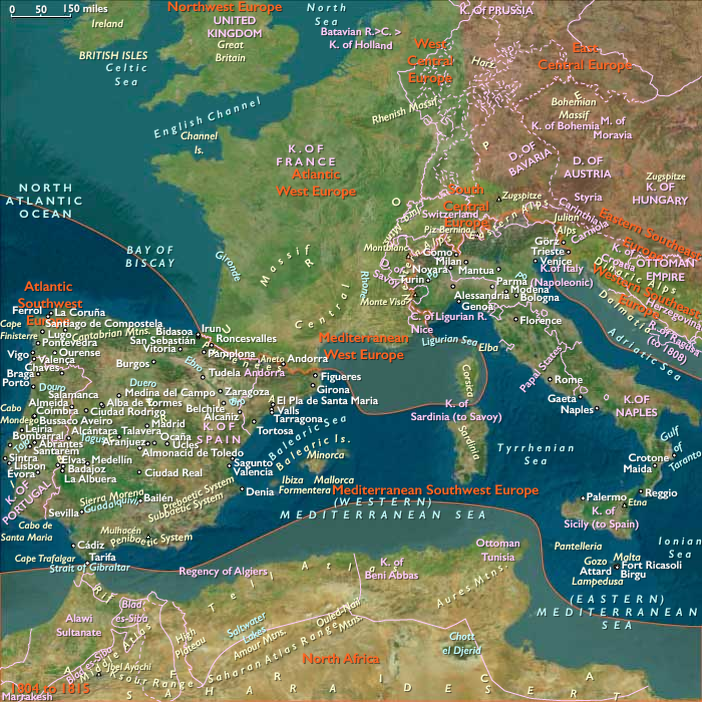
By November 12, 1807, General Jean-Andoche Junot’s corps had reached Salamanca in western Spain, after marching approximately 300 miles (483 km) in 25 days. His forces were part of Napoleon’s planned occupation of Portugal, as agreed upon in the secret Treaty of Fontainebleau (October 1807) between France and Spain.
French Reconnaissance of Spanish Fortifications
- Unbeknownst to their Spanish allies, French engineers were secretly surveying fortresses and strategic locations along the route.
- This covert intelligence-gathering suggested that Napoleon’s ambitions extended beyond Portugal, likely foreshadowing the eventual French betrayal of Spain in 1808.
Napoleon’s New Orders – A Faster Invasion Route
- On November 12, Junot received urgent new orders from Napoleon, directing him to accelerate the invasion.
- Instead of following the normal invasion route—a 200-mile march via Almeida and Coimbra—Napoleon ordered Junot to take a shorter route west from Alcántara along the Tagus Valley, covering only 120 miles (193 km) to Lisbon.
- The decision was driven by Napoleon’s growing urgency, fearing:
- A potential British intervention in Portugal.
- Portuguese resistance, which could delay the invasion.
A Poorly Chosen Route – A Strategic Miscalculation
Although Napoleon’s new plan shortened the invasion distance, it created severe logistical challenges:
- The Tagus Valley route was sparsely populated, offering little food or shelter for the French army.
- The poor roads and rugged terrain slowed progress, exhausting the troops.
- Junot’s corps was already fatigued from the rapid advance through Spain—forcing them to continue at a punishing pace.
Conclusion – A Risky Gamble for Speed
Napoleon’s decision to prioritize speed over logistics put Junot’s army at risk, forcing them to advance through harsh terrain with minimal resources. Although the French would reach Lisbon, they arrived weakened, undersupplied, and in no condition to face a British-led counteroffensive.
This logistical failure would ultimately contribute to the unraveling of French control in Portugal, as Junot’s weakened army would struggle to maintain its occupation once British and Portuguese resistance emerged.
Junot’s Grueling March to Lisbon – The Perils of the Tagus Valley Route (November 1807)
Following Napoleon’s order to accelerate the invasion of Portugal, General Jean-Andoche Junot led his army south from Ciudad Rodrigo, marching toward Alcántara via the Perales Pass. This journey, intended to shorten the invasion route, instead became a logistical disaster.
The Devastating March Through the Perales Pass
- The march lasted five days in cold rain, making the rough terrain even more treacherous.
- The route was steep, filled with hills and ravines, and lacked adequate food or shelter for the army.
- The attrition was catastrophic:
- Half of the army’s horses died, rendering cavalry and transport ineffective.
- One-quarter of Junot’s soldiers straggled, too exhausted or sick to keep up.
- The artillery was nearly abandoned, with only six cannons remaining.
By the time the French forces reached Alcántara, they were severely weakened—but Junot still had a long way to Lisbon.
Junot Replenishes Supplies – At Spain’s Expense
Upon arriving at Alcántara, Junot:
- Seized ammunition and provisions from the Spanish garrison guarding the bridge over the Tagus.
- Commandeered supplies meant for Spanish troops, reinforcing the growing tension between France and Spain, which Napoleon would later exploit to justify French intervention in Spanish affairs.
Final Push to Lisbon – November 19, 1807
Despite the army’s dire condition, Junot set out for Lisbon on November 19, 1807, pressing ahead as Napoleon demanded a swift occupation of Portugal.
The French were close to their objective, but the logistical toll of the march had left them severely weakened, setting the stage for further difficulties in maintaining control of the country once Lisbon was occupied.
Junot’s Army Disintegrates on the March to Lisbon (November 1807)
As difficult as the roads had been on the Spanish side, the terrain in Portugal proved even worse. Napoleon’s demand for speed had forced Junot’s army into a logistical nightmare, as they struggled along the Tagus Valley route, which was nothing more than a rough track through a desolate, rocky wilderness.
The Perils of the Portuguese Roads
- The Tagus Valley route lacked proper infrastructure, making movement slow and exhausting.
- Castelo Branco was the only significant town, offering little in the way of supplies or shelter.
- The relentless rain turned the path into muddy, treacherous terrain, further slowing the march.
The Army Breaks Down
- The advance guard limped into Abrantes on November 23, exhausted and barely holding formation.
- By November 26, the rear of the corps had caught up, but the army was in disastrous condition:
- Only four Spanish horse artillery pieces remained—the rest of the guns had been abandoned.
- Half of the army had become stragglers or marauders, searching desperately for food and shelter.
Junot’s Forces on the Brink of Collapse
What had begun as a powerful invasion force was now a battered, starving, and ill-equipped army. Though Lisbon was within reach, Junot’s troops were in no condition to fight, setting the stage for severe challenges in occupying and holding Portugal once they reached their destination.
Junot at Abrantes – Portugal’s Last Attempt at Negotiation (November 1807)
Upon reaching Abrantes on November 23, 1807, General Jean-Andoche Junot was met by an emissary from the Prince Regent João of Braganza, who was desperately attempting to avoid a full-scale French occupation.
Portugal’s Offer of Submission
- The Prince Regent’s representative offered to submit to French demands, agreeing to several degrading terms.
- By this point, Portugal was defenseless, with its military in disarray and its rulers preparing to flee.
- Despite this attempt at appeasement, Junot continued his advance, knowing that Napoleon expected complete occupation, not mere submission.
Junot’s Final Push to Lisbon
- Understanding that his army was severely weakened, Junot reorganized his remaining forces.
- He formed four battalions from his best remaining men, leaving the stragglers and exhausted troops behind.
- With Lisbon still 75 miles (121 km) away, Junot pressed forward, determined to seize the Portuguese capital before British forces could intervene.
A Decisive Moment in the French Invasion
Junot’s advance on Lisbon marked the final stage of the French invasion of Portugal. Though his army was in tatters, the Portuguese government’s failure to mount resistance ensured that Lisbon would soon fall—leading to the first French occupation of Portugal and the flight of the Portuguese royal family to Brazil.