
Johann Peter Salomon
German violinist, composer, conductor and musical impresario
1745 CE to 1815 CE
Johann Peter Salomon (February 20, 1745 [baptized] – November 28, 1815) is a German violinist, composer, conductor and musical impresario.
World
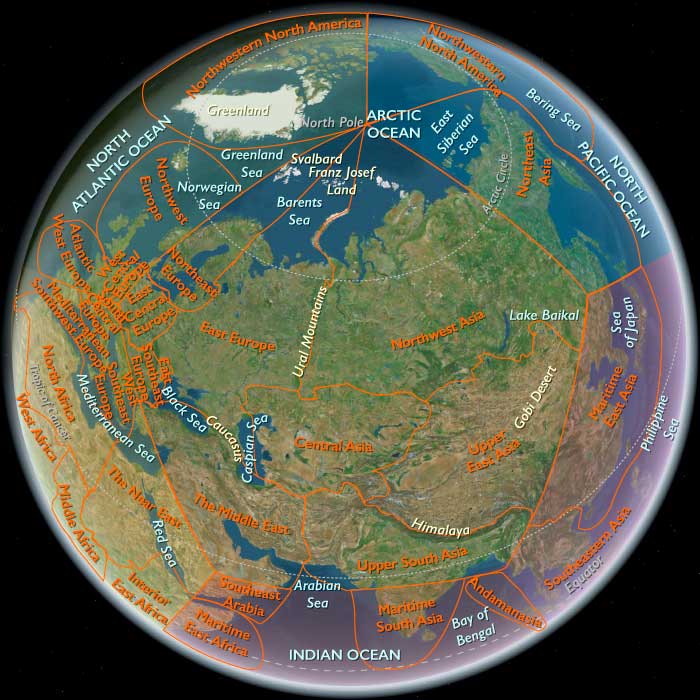
The Great Crossroads
View →Related Events
Active Filters
Refine Results
Showing 1 events out of 1 total
Mozart completes his Symphony No. 41 in C major, K. 551, on August 10, 1788.
The longest and last symphony that he composes, it is regarded by many critics as among the greatest symphonies in classical music.
Nicknamed the Jupiter Symphony, this name stems not from Mozart but rather is likely coined by the impresario Johann Peter Salomon.
The symphony is scored for flute, two oboes, two bassoons, two horns in C, two trumpets in C, timpani in C and G, and strings.
Symphony No. 41 is the last of a set of three that Mozart has composed in rapid succession during the summer of 1788.
No. 39 had been completed on June 26 and the No. 40 on July 25.
Around the same time as he composes the three symphonies, Mozart is writing his piano trios in E major (K. 542), and C major (K. 548), his piano sonata No. 16 in C (K. 545)—the so-called Sonata facile—and a violin sonatina K. 547.
It is not known whether Symphony No. 41 was ever performed in the composer's lifetime.
The Symphony will garner approbation from critics, theorists, composers and biographers and will come to be viewed as a canonized masterwork, known for its fugue and its overall structure, which exudes clarity.
According to Franz Mozart, Wolfgang's younger son, the symphony is given the name Jupiter by Johann Peter Salomon, who had settled in London around 1781.
The reason for the name is not known with certainty, but it can be inferred with considerable confidence.
The celebrated finale of the symphony is a re-working, albeit a majestic one, of the opening movement of Carl Ditters's symphony in D, Der Sturz Phaëtons (The Fall of Phaëton) of 1785.
In these days of classical education, members of the Philharmonic Society, of which Salomon is a founding member, will have known that the planet that the ancient Greeks called "Phaët(h)on" is the same planet that the ancient Romans called "Jupiter."
Thus the majestic nickname is also an ironically humorous one.
The name does not appear to have entered general circulation until nearly twenty years after Ditters's death in 1799.
Salomon died in 1815, and he will have coined the name before that, so it may have circulated within informed musical circles for a considerable time before it became public.
The longest and last symphony that he composes, it is regarded by many critics as among the greatest symphonies in classical music.
Nicknamed the Jupiter Symphony, this name stems not from Mozart but rather is likely coined by the impresario Johann Peter Salomon.
The symphony is scored for flute, two oboes, two bassoons, two horns in C, two trumpets in C, timpani in C and G, and strings.
Symphony No. 41 is the last of a set of three that Mozart has composed in rapid succession during the summer of 1788.
No. 39 had been completed on June 26 and the No. 40 on July 25.
Around the same time as he composes the three symphonies, Mozart is writing his piano trios in E major (K. 542), and C major (K. 548), his piano sonata No. 16 in C (K. 545)—the so-called Sonata facile—and a violin sonatina K. 547.
It is not known whether Symphony No. 41 was ever performed in the composer's lifetime.
The Symphony will garner approbation from critics, theorists, composers and biographers and will come to be viewed as a canonized masterwork, known for its fugue and its overall structure, which exudes clarity.
According to Franz Mozart, Wolfgang's younger son, the symphony is given the name Jupiter by Johann Peter Salomon, who had settled in London around 1781.
The reason for the name is not known with certainty, but it can be inferred with considerable confidence.
The celebrated finale of the symphony is a re-working, albeit a majestic one, of the opening movement of Carl Ditters's symphony in D, Der Sturz Phaëtons (The Fall of Phaëton) of 1785.
In these days of classical education, members of the Philharmonic Society, of which Salomon is a founding member, will have known that the planet that the ancient Greeks called "Phaët(h)on" is the same planet that the ancient Romans called "Jupiter."
Thus the majestic nickname is also an ironically humorous one.
The name does not appear to have entered general circulation until nearly twenty years after Ditters's death in 1799.
Salomon died in 1815, and he will have coined the name before that, so it may have circulated within informed musical circles for a considerable time before it became public.