The Second Utrecht Civil War and the Battle of Westbroek (1481)
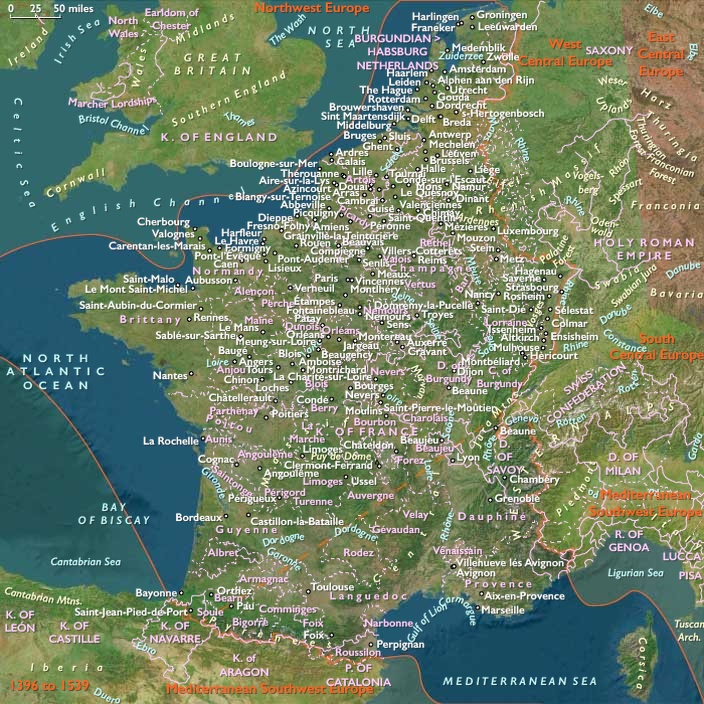
The unexpected death of Duke Charles the Bold of Burgundy in 1477 had dramatically destabilized Burgundian rule in the Netherlands, unleashing latent anti-Burgundian sentiment throughout the region. In the Prince-Bishopric of Utrecht, tensions erupted into open conflict between the pro-Burgundian forces loyal to Bishop David of Burgundyand anti-Burgundian factions, led by the charismatic and defiant Viscount Jan III van Montfoort. This volatile situation, intersecting with broader conflicts in neighboring Holland, quickly escalated into the violent Second Utrecht Civil War (1481–1483).
Context: Anti-Burgundian Unrest
When the youthful and politically inexperienced Mary of Burgundy succeeded her father Charles in 1477, opposition to Burgundian authority surged throughout the Netherlands. In Utrecht, anti-Burgundian forces, spearheaded by the energetic and fiercely independent Jan van Montfoort, swiftly challenged the authority of Bishop David of Burgundy, forcing him to withdraw with his supporters to his castle at Wijk bij Duurstede. Montfoort effectively assumed control in Utrecht, establishing an explicitly anti-Burgundian government aligned with the Hook Party, whose influence extended into neighboring Holland.
Regional Dynamics: The Hooks and Cods in Holland
Simultaneously, a related civil conflict unfolded in Holland, where the anti-Burgundian Hook Party, under Reinier van Broeckhuysen, briefly seized control of the strategically vital city of Leiden in 1481, but was ultimately forced to retreat in the face of Habsburg military strength. Van Broeckhuysen and his followers sought refuge in Utrecht, joining forces with Montfoort. This alliance made Utrecht the center of a renewed regional conflict, directly challenging the authority of the Burgundian heirs, the Habsburgs.
Escalation and the Battle of Westbroek (December 26, 1481)
By late 1481, war became inevitable. Archduke Maximilian I, husband to Mary of Burgundy, dispatched an army commanded by Joost van Lalaing, numbering approximately four to five thousand soldiers from Holland, into the heart of the rebellious prince-bishopric. On December 26, 1481, this force reached the village of Westbroek, where they inflicted brutal retaliation upon local inhabitants, burning the village completely and killing indiscriminately.
News of this atrocity provoked a furious reaction from Utrecht’s residents, who formed a hastily assembled, largely untrained mob intent on revenge. However, confronted by the overwhelming numbers and disciplined military formation of the Habsburg forces at Westbroek, the poorly organized Utrecht militia panicked and fled. Pursuing Holland troops mercilessly slaughtered the fleeing Utrechters; approximately fifteen hundred citizens were reportedly killed in the ensuing massacre.
Consequences and Significance
The massacre at Westbroek intensified the already bitter conflict, significantly shaping the course of the Second Utrecht Civil War. The event exemplified the brutality of warfare in this region, highlighting the uncompromising nature of the struggle between local autonomy and external Habsburg authority. The incident reinforced anti-Burgundian resolve, uniting local populations behind Montfoort’s determined resistance, but simultaneously demonstrated the overwhelming military might of Habsburg forces.
Long-term Historical Impact
The Second Utrecht Civil War, exemplified by the Battle of Westbroek, underscored the violent transition from medieval feudal conflicts to early modern struggles for centralized control and regional independence. The decisive use of force by Maximilian’s troops reflected Habsburg determination to maintain control over their Burgundian inheritance. Ultimately, Utrecht’s resistance foreshadowed broader future conflicts in the region, including the prolonged struggles against Habsburg centralization culminating later in the Dutch Revolt of the sixteenth century.
Thus, the tragic events at Westbroek in late 1481 vividly illustrate the intersection of local, regional, and dynastic conflicts shaping late medieval Atlantic West Europe, and mark a key moment in the complex political and military transition toward the early modern European state system.