
José Plácido Caamaño
12th President of Ecuador
1837 CE to 1900 CE
José María Plácido Caamaño y Gómez-Cornejo (October 5, 1837 – December 31, 1900) is President of Ecuador from November 23, 1883 to July 1, 1888.
World
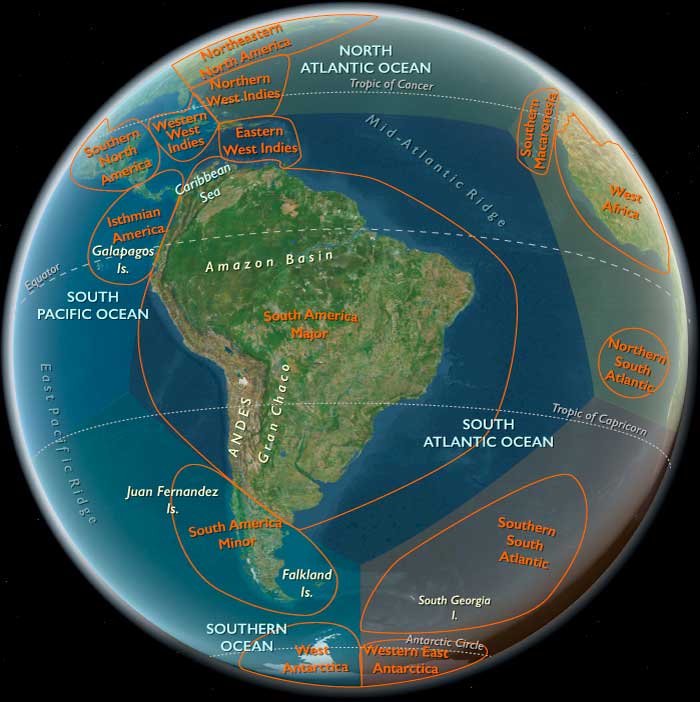
South America and The Eastern Isles
View →Related Events
Showing 3 events out of 3 total
An attempt had been made to assassinate Ecuadorian president José María Plácido Caamaño in 1886, and he had narrowly escaped death by throwing himself into a river.
Under his administration telegraph lines, railways, an institute of sciences, several Colleges, and many new schools are established Ecuador.
It will take the Liberals twenty years ater the murder of Ecuador’s Conservative president García Moreno in 1875 to consolidate their strength sufficiently to assume control of the government in Quito, during which time five different presidents will govern.
The first, Antonio Borrero, had tried valiantly to return the nation to the rule of law, but, after only ten months in office, he had been overthrown by the only military dictator of the period, Ignacio de Veintemilla, who had assumed the presidency on September 8, 1876.
Although he had come to power with the help of the old Liberal General Urbina, Veintemilla had evolved into a populist military dictator rather than a politician with any party or ideological affiliation.
He was extremely popular with his troops and had been able to woo the masses with employment on public works programs and large-scale public festivals and dances during holiday periods.
In office until January 1883, Veintemilla enjoyed a period of relative prosperity resulting primarily from increased maritime activity while Peru, Bolivia, and Chile were mired in the War of the Pacific.
José María Plácido Caamaño had studied of law and theology in the seminary of his native Guayaquil, and had been educated in Quito.
Subsequently he was mayor of Guayaquil, and chief of the custom-house service.
He is a member of the Progresistas, a liberal Catholic party.
Banished in 1882, Caamaño had gone to Lima, organized a revolutionary expedition with which he left Callao on April 14, 1883, and landed in Ecuadorian territory three days afterward.
He had organized a division and joined the forces that were besieging Guayaquil about the middle of May.
The place was taken by storm by the combined forces under Caamaño, Sarasti, Alfaro, and Salazar.
The Progresistas had thus come to power.
A provisional government had been appointed until the national convention could meet, and on October 1883 Caamaño had been elected president ad interim; he was finally proclaimed him President of the Republic on February 17, 1884.
José Maria Placido Caamaño, a Conservative, serves as Ecuador's president until 1888, and he remains a powerful figure during the administrations of the duly elected Progressive Party (Partido Progresista) presidents who follow him, Antonio Flores Jijon and Luis Cordero Crespo.
Flores, who is the son of President Juan José Flores, intends progressivism to represent a compromise position between liberalism and conservatism.
The Progressive program calls for support for the Roman Catholic Church, rule by law, and an end to dictatorship and military rule.
Although neither Caamaño, Flores, nor Cordero is able to curtail the growing animosity between Conservatives and Liberals, their periods in office are, for the most part, characterized by relative political stability and prosperity.
The latter results more from favorable international circumstances for cocoa exports than from astute government policy making.
Ecuador's President Cordero, midway through his term in office, falls victim in 1895 to scandal and charges of "selling the flag" over an agreement made with Chile.
Cordero allows the warship Esmeralda, which Chile is selling to Japan, to fly the Ecuadorian flag briefly in order to protect Chile's neutrality in the conflict between Japan and China.
Bribes are apparently involved and, tremendously weakened by the scandal and also challenged by the outbreak of several military rebellions, the president resigns in April.
In June the Liberals seize power in Guayaquil in the name of their most popular caudillo, General Jose Eloy Alfaro Delgado.
Three months later, "the old battler" (a name Alfaro had earned during his armed struggle against García Moreno) returns after a decade of exile in Central America and marches triumphantly into Quito.
It is the end of Ecuador's brief experiment with progressivism and the beginning of three stormy decades of rule by the Radical Liberal Party (Partido Liberal Radical—PLR), commonly referred to as the Liberal Party (Partido Liberal).