
Juan Carlos I
King of Spain
1938 CE to 2215 CE
Juan Carlos I (Juan Carlos Alfonso Víctor María de Borbón y Borbón, born January 5, 1938) is a member of the Spanish royal family who reigns as King of Spain from November 1975 until his abdication in June 2014.
Juan Carlos is the grandson of Alfonso XIII, the last king of Spain before the abolition of the monarchy in 1931 and the subsequent declaration of the Second Spanish Republic.
Juan Carlos is born in Rome, Italy, during his family's exile.
Generalísimo Francisco Franco takes over the government of Spain after his victory in the Spanish Civil War in 1939, yet in 1947 Spain's status as a monarchy is affirmed and a law is passed allowing Franco to choose his successor.
Juan Carlos's father, Juan, is the third son of King Alfonso, who had renounced his claims to the throne in January 1941.
Juan is seen by Franco to be too liberal and in 1969 is bypassed in favor of Juan Carlos as Franco's successor as head of state.
Juan Carlos had spent his early years in Italy and came to Spain in 1947 to continue his studies.
After completing his secondary education in 1955, he began his military training and entered the General Military Academy at Zaragoza.
Later, he attended the Naval Military School, the General Academy of the Air, and finished his tertiary education at the University of Madrid
1962, Juan Carlos married Princess Sophia of Greece and Denmark in Athens.
The couple have two daughters and a son together: Elena, Cristina, and Felipe. Due to Franco's declining health, Juan Carlos first begins periodically acting as Spain's head of state in the summer of 1974.
Franco dies in November the following year and Juan Carlos becomes king on November 22, 1975, two days after Franco's death, the first reigning monarch since 1931; although his exiled father does not formally renounce his claims to the throne in favor of his son until 1977.
Expected to continue Franco's legacy, Juan Carlos, however, soon after his accession introduces reforms to dismantle the Francoist regime and begin the Spanish transition to democracy.
This leads to the approval of the Spanish Constitution of 1978 in a referendum, which re-establishes a constitutional monarchy.
In 1981, Juan Carlos plays a major role in preventing a coup that attempts to revert Spain to Francoist government in the King's name.
In 2008, he is considered the most popular leader in all Ibero-America.
Hailed for his role in Spain's transition to democracy, the King and the monarchy's reputation begin to suffer after controversies surrounding his family arose, exacerbated by an elephant-hunting trip he undertakes during a time of financial crisis in Spain.
In 2014, Juan Carlos, citing personal reasons, abdicates in favor of his son, who accedes to the throne as Felipe VI.
World
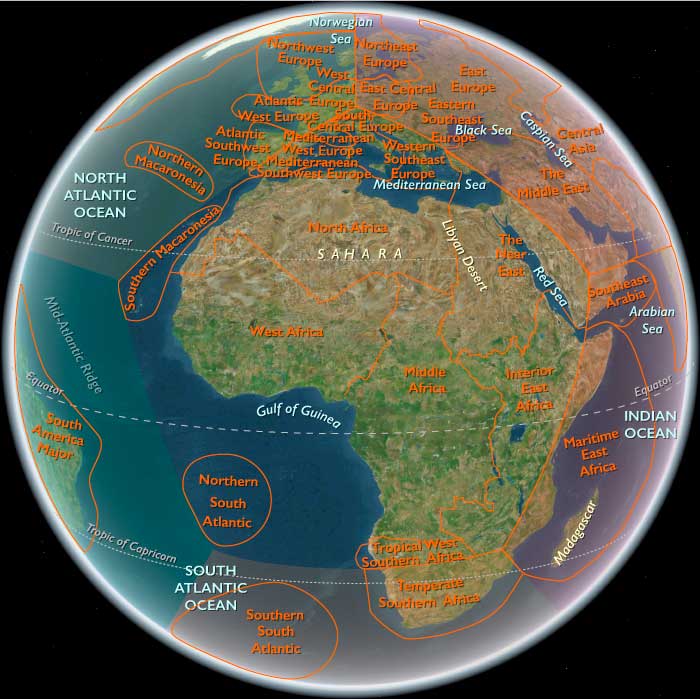
The Middle of The Earth
View →Related Events
Showing 3 events out of 3 total
Mediterranean Southwest Europe (1972–1983 CE): Democratic Consolidation, European Integration, and Social Challenges
Between 1972 and 1983 CE, Mediterranean Southwest Europe—encompassing the Italian Peninsula, southern and eastern Spain, southern Portugal, Andorra, the Balearic Islands, Sicily, Sardinia, and Malta—undergoes a critical phase of democratic consolidation, intensified European integration, and significant social transformations.
Italy: Terrorism, Political Resilience, and European Integration
Italy faces profound internal challenges during this era, particularly from domestic terrorism, most notably by extremist groups such as the Red Brigades. The kidnapping and assassination of former Prime Minister Aldo Moro in 1978 deeply shocks the nation, exposing the fragility of public security and political stability. Despite these significant disturbances, Italy successfully maintains its democratic institutions and continues its active engagement within the European Economic Community (EEC), bolstering economic growth and integration.
Spain: End of Franco’s Regime and Democratic Transition
Spain witnesses the end of General Francisco Franco's long-standing dictatorship following his death in 1975. King Juan Carlos I swiftly initiates Spain's transition to democracy, appointing reformist Prime Minister Adolfo Suárez, who oversees the dismantling of authoritarian structures and the drafting of a democratic constitution. This period of rapid political change culminates in the electoral victory of the Spanish Socialist Workers' Party, led by Felipe González, in 1982, solidifying Spain’s transformation into a stable, democratic, and European-oriented state.
Portugal: Carnation Revolution and Path to Europe
Portugal experiences dramatic political change with the Carnation Revolution of 1974, which peacefully ends the authoritarian Estado Novo regime. Following the revolution, Portugal swiftly transitions to democracy, withdraws from its costly African colonial wars, and initiates economic and political reforms. These efforts lay the groundwork for Portugal’s accession to the European Economic Community, marking a decisive shift towards European integration and modernization.
Malta: Strengthened Independence and European Ties
Under Prime Minister Dom Mintoff (1971–1984), Malta asserts its neutrality, removing British military bases by 1979. Mintoff’s government seeks closer economic and political alignment with Europe and the Non-Aligned Movement. Malta continues economic diversification efforts, particularly in tourism and manufacturing, establishing the foundations for future European economic integration.
Andorra: Stability, Tourism, and Economic Growth
Andorra maintains its historical political stability and continues incremental modernization, significantly expanding its tourism industry and retail trade. The principality’s neutral status and governance structure support steady economic growth and increased living standards, further integrating its economy within the broader European market.
Regional Integration and Democratic Stability
This era (1972–1983) is marked by a profound consolidation of democracy, significant strides in European integration, and effective responses to challenging social issues across Mediterranean Southwest Europe. Italy demonstrates resilience despite internal violence; Spain and Portugal successfully transition from authoritarianism to vibrant democracies with strong European orientations; Malta solidifies its independence and European alignment; and Andorra achieves consistent economic growth through tourism and stable governance.
These developments collectively lay the groundwork for further economic integration and political stability in the subsequent decades.
Atlantic Southwest Europe (1972–1983): Democratic Transitions and Regional Resurgence
Between 1972 and 1983, Atlantic Southwest Europe—including northern and central Portugal (Lisbon, Porto, Braga), Galicia, Asturias, Cantabria, northern León and Castile, northern Navarre, northern Rioja, and the Basque Country—experienced profound political, social, and cultural transformations. This era marked the collapse of long-standing authoritarian regimes in Portugal and Spain, followed by rapid democratic transitions, intensified regional autonomy movements, economic modernization, and renewed cultural vibrancy.
Political and Military Developments
End of Authoritarianism in Portugal (1974)
-
Portugal’s Carnation Revolution on April 25, 1974, peacefully toppled the Estado Novo, ending over four decades of dictatorship. The revolution was led by military officers supported by widespread civilian participation.
-
Democratic reforms rapidly ensued, including the establishment of a provisional government, democratic elections in 1975, and the new Portuguese Constitution of 1976, securing fundamental civil rights, political pluralism, and significant regional autonomy.
Spain's Democratic Transition (1975–1978)
-
After Francisco Franco's death in November 1975, Spain commenced its transition toward democracy under King Juan Carlos I and Prime Minister Adolfo Suárez. Northern regions—particularly the Basque Country and Galicia—played pivotal roles advocating regional autonomy and cultural recognition.
-
Spain’s democratic Constitution of 1978 established a parliamentary democracy and recognized regional autonomy, leading to the creation of autonomous communities, including Galicia (1981), Asturias, Cantabria, Navarre, Rioja, and notably the Basque Autonomous Community (1979).
Basque Autonomy and ETA Violence
-
The Basque Country obtained significant autonomy in 1979, recognizing Basque language, culture, education, and self-government. However, political tensions persisted due to violence from ETA (Euskadi Ta Askatasuna), which intensified its armed struggle throughout the 1970s and early 1980s.
-
ETA’s assassination of Spanish Prime Minister Luis Carrero Blanco in 1973 significantly influenced Spain’s political trajectory, hastening the eventual transition to democracy.
Economic Developments: Modernization and Challenges
Economic Instability and Recovery (1972–1979)
-
Portugal and Spain initially struggled economically during their democratic transitions. High inflation, unemployment, and instability following authoritarian collapse marked early transition years, notably in industrial centers such as Bilbao, Porto, Vigo, and Lisbon.
-
Northern Spain’s industrial sectors, particularly steel, shipbuilding, mining, and textiles in Galicia, Asturias, Cantabria, and the Basque region, faced restructuring, strikes, and worker activism as these industries adjusted to global competition and democratic labor rights.
European Integration and Economic Restructuring (1980–1983)
-
Both Portugal and Spain pursued closer integration with European institutions. Portugal joined the European Economic Community (EEC) negotiations in 1977, finalizing accession by 1986. Spain similarly began accession negotiations in earnest in 1979.
-
Significant economic restructuring commenced, focusing on modernization, privatization, infrastructure investment, and economic liberalization. Urban centers—Bilbao, Santander, Porto, and Lisbon—became key focal points for foreign investment, tourism, and service-oriented economic growth.
Social and Urban Transformations
Rapid Urbanization and Infrastructure Development
-
Cities like Porto, Lisbon, Bilbao, Santander, and Vigo experienced rapid growth, urban renewal, and significant infrastructure improvements, supported by government investment, international aid, and European funding initiatives.
-
Urbanization accelerated social change, expanding the middle class, improving educational opportunities, and raising living standards, although rural areas in Galicia and inland northern Portugal lagged economically, prompting continued emigration.
Social Movements and Increased Civil Rights
-
Widespread social mobilization accompanied the democratic transitions, with active movements advocating for labor rights, women’s rights, educational reforms, and environmental conservation, significantly influencing policy in Lisbon, Porto, and Bilbao.
-
Labor unions gained prominence, notably in the Basque Country and Galicia, securing improved working conditions and increased social protections, although labor unrest sometimes led to strikes and social tensions.
Cultural and Regional Developments
Revival of Regional Identities and Languages
-
Democratic transitions fostered cultural revival and regional identities. Galicia notably emphasized revitalizing the Galician language (galego), literature, and cultural heritage, institutionalizing it officially through autonomous governance in 1981.
-
The Basque Country strengthened cultural institutions promoting Basque (Euskara), educational reforms, and increased media presence, revitalizing a strong regional cultural identity despite lingering violence.
Flourishing of Artistic Expression and Media
-
Artistic and cultural freedoms flourished in the newly democratic environments, with significant cultural activity in literature, film, music, and visual arts emerging from Lisbon, Porto, Bilbao, and Santiago de Compostela.
-
National and regional media expansion supported cultural diversification, political pluralism, and lively public discourse, contributing significantly to democratization and regional identities.
Legacy and Significance
Between 1972 and 1983, Atlantic Southwest Europe underwent monumental shifts:
-
Authoritarian regimes collapsed, replaced by stable democratic institutions and constitutional frameworks ensuring civil rights, political freedoms, and regional autonomy.
-
Economic modernization, European integration, and infrastructure development paved the way for sustained economic growth and prosperity, despite initial transitional difficulties.
-
Social movements profoundly reshaped the cultural and political landscape, securing lasting advances in civil rights, gender equality, labor protections, and cultural expression.
-
Regional identities and cultures experienced a powerful renaissance, shaping the political and cultural trajectory of Galicia, the Basque Country, northern Portugal, and other northern regions in subsequent decades.
This critical period laid the foundations for contemporary democratic societies, integrating regional autonomy, economic modernization, cultural diversity, and lasting political stability across Atlantic Southwest Europe.
Mediterranean Southwest Europe (1996–2007 CE): Eurozone Integration, Economic Modernization, and Political Renewal
Between 1996 and 2007 CE, Mediterranean Southwest Europe—encompassing the Italian Peninsula, southern and eastern Spain, southern Portugal, Andorra, the Balearic Islands, Sicily, Sardinia, and Malta—undergoes a transformative period marked by deeper European integration, economic modernization, political renewal, and evolving social dynamics.
Italy: Eurozone Integration and Political Realignment
Italy enters the Eurozone in 1999, adopting the euro as its currency and fully integrating into the European monetary framework. This major economic milestone drives fiscal reforms aimed at reducing public debt and fostering growth. Politically, Italy experiences significant changes with the rise of new political alliances, notably under Prime Minister Romano Prodi and later Silvio Berlusconi, whose administrations focus on market-oriented reforms, deregulation, and privatization, despite ongoing political controversy and corruption allegations.
Spain: Economic Growth and Social Reform
Spain experiences sustained economic prosperity, supported by expansive infrastructure investments and robust tourism growth, especially in the southern and eastern regions and the Balearic Islands. Prime Minister José María Aznar (1996–2004) leads significant economic liberalization efforts and fiscal discipline that accelerate Spain's convergence with its European neighbors. His successor, Prime Minister José Luis Rodríguez Zapatero (2004–2011), emphasizes progressive social reforms, including gender equality, same-sex marriage legalization, and expanded civil liberties, reinforcing Spain’s reputation as a socially liberal democracy.
Portugal: Stability and Socioeconomic Advancement
Portugal continues economic modernization under Prime Ministers António Guterres and José Manuel Durão Barroso, benefiting from sustained European Union investments. Infrastructure projects, including extensive highway networks and modernization of the national railway, support economic growth and connectivity. Portugal joins the Eurozone in 1999, stabilizing its currency and promoting investment. Politically, the country enjoys stability and democratic maturity, despite ongoing economic challenges related to productivity and competitiveness.
Malta: EU Membership and Economic Diversification
Malta achieves a significant milestone by joining the European Union in 2004, followed by adopting the euro in 2008. Under Prime Minister Eddie Fenech Adami and later Lawrence Gonzi, Malta actively reforms its economy, diversifying beyond traditional tourism into finance, manufacturing, and information technology sectors. Infrastructure improvements and enhanced international connectivity position Malta as a robust EU member state, benefiting from increased foreign investment and regional integration.
Andorra: Enhanced Integration and Economic Diversification
Andorra advances its economic diversification, enhancing its tourism industry and developing financial services as integral parts of its economic strategy. Improved transport infrastructure and strengthened international agreements, especially with the EU, support continued economic growth and stability. Political modernization continues, further aligning Andorran governance with European norms and ensuring political stability through gradual reform.
Regional Growth, European Integration, and Democratic Resilience
From 1996 to 2007, Mediterranean Southwest Europe achieves substantial integration into the European economic system, highlighted by Italy, Spain, and Portugal's adoption of the euro and Malta's EU accession. Political systems across the region demonstrate democratic resilience and adaptability, responding effectively to economic and social challenges. Progressive social policies, economic diversification, and strategic investments solidify the region’s economic and democratic foundations, ensuring sustained stability and growth into the early twenty-first century.