Louis Joseph de Bourbon, Duke of Vendôme
French military commander
Years: 1654 - 1712
Louis Joseph de Bourbon, Duke of Vendôme (Louis Joseph; 1 July 1654 – 11 June 1712) is a French military commander during the War of the Grand Alliance and War of the Spanish Succession, Marshal of France.

Related Events
Filter results
Showing 10 events out of 10 total
The War of the Spanish Succession is in its fourth year by 1704.
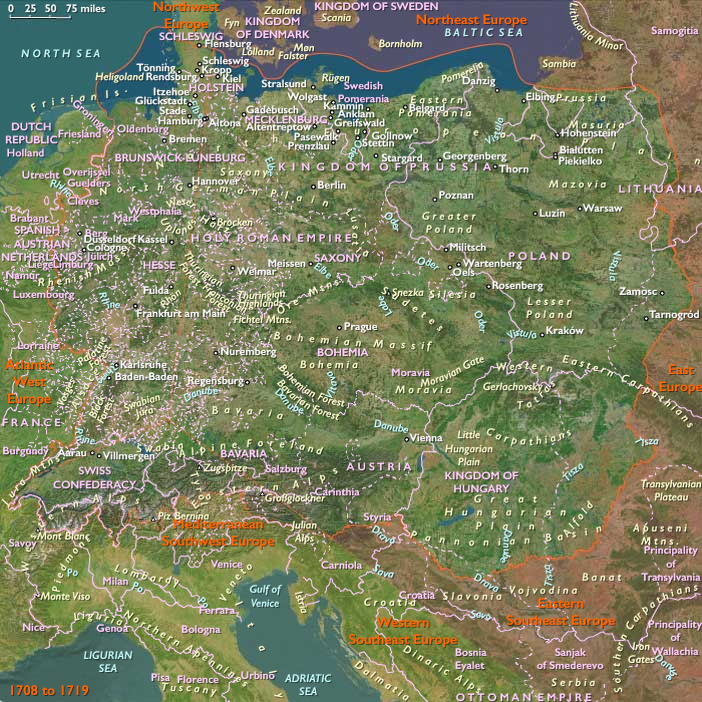
The previous year had been one of success for France and her allies, most particularly on the Danube, where Marshal Villars and the Elector of Bavaria had created a direct threat to Vienna, the Habsburg capital.
Vienna had been saved by dissension between the two commanders, leading to the brilliant Villars being replaced by the less dynamic Marshal Marsin.
Nevertheless, the threat is still real by 1704: Rákóczi's Hungarian revolt is already threatening the Empire's eastern approaches, and Marshal Vendôme's forces threatened an invasion from northern Italy.
In the courts of Versailles and Madrid, Vienna's fall is confidently anticipated, an event which will almost certainly lead to the collapse of the Grand Alliance.
To isolate the Danube from any Allied intervention, Marshal Villeroy's forty-six thousand troops are expected to pin the seventy thousand Dutch and English troops around Maastricht in the Low Countries, while General de Coigny protects Alsace against surprise with a further corps.
The only forces immediately available for Vienna's defense are Prince Louis of Baden's force of thirty-six thousand stationed in the Lines of Stollhofen to watch Marshal Tallard at Strasbourg; there is also a weak force of ten thousand men under Field Marshal Count Limburg Styrum observing Ulm.
Both the Imperial Austrian Ambassador in London, Count Wratislaw, and the Duke of Marlborough realize the implications of the situation on the Danube.
The Dutch, however, who cling to their troops for their country's protection, are against any adventurous military operation as far south as the Danube and will never willingly permit any major weakening of the forces in the Spanish Netherlands.
Marlborough, realizing the only way to ignore Dutch wishes is by the use of secrecy and guile, sets out to deceive his Dutch allies by pretending to simply move his troops to the Moselle—a plan approved of by The Hague—but once there, he will slip the Dutch leash and link up with Austrian forces in southern Germany.
Marlborough and Eugene had separated again, following the Battle of Blenheim, with the former going to the Low Countries, and the latter to Italy.
Little progress is made in 1705 by either France or the Allies in any theater.
While Marlborough's attempted invasion of France down the Moselle comes to naught, and although he manages to wrong-foot Villeroy and break through the Lines of Brabant, he is unable to bring the French commander to battle.
Villars and Louis of Baden maneuver indecisively on the Rhine, and the story is much the same for Vendôme and Eugene in Italy.
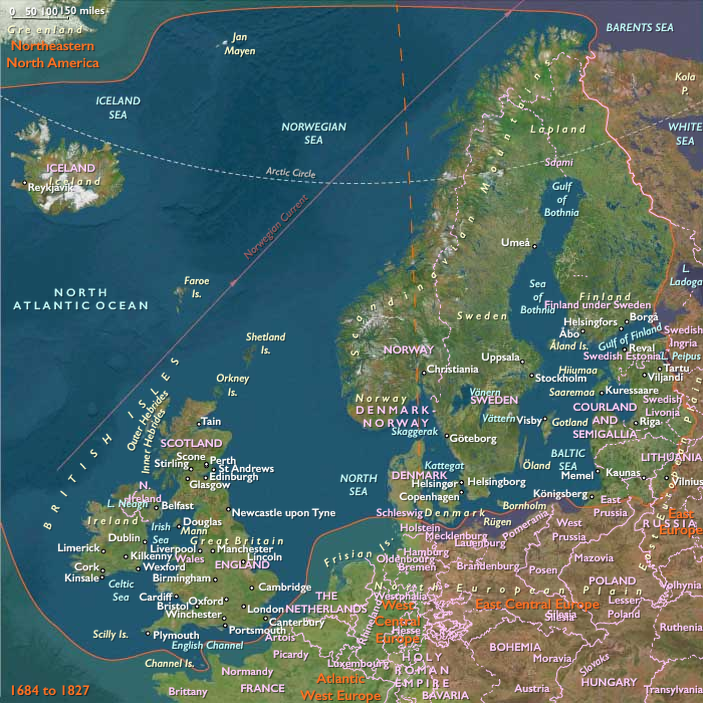
The stalemate is broken in 1706, as Marlborough drives the French out of most of the Spanish Netherlands, decisively defeating troops under Villeroy in the Battle of Ramillies in May and following up with the conquest of Antwerp and Dunkirk.
Prince Eugene also meets with success; in September, following the departure of Vendôme to shore up the shattered army in the Netherlands, he and the Duke of Savoy inflict a heavy loss on the French under Orleans and Marsin at the Battle of Turin, driving them out of Italy by the end of the year.
The allies in the ongoing War of the Spanish Succession under the command of John Churchill, 1st Duke of Marlborough, score a victory against the French at the Battle of Oudenarde.
British forces capture Lille on October 12, 1708, after a two-month siege, although the citadel will continue to hold out for another six weeks.
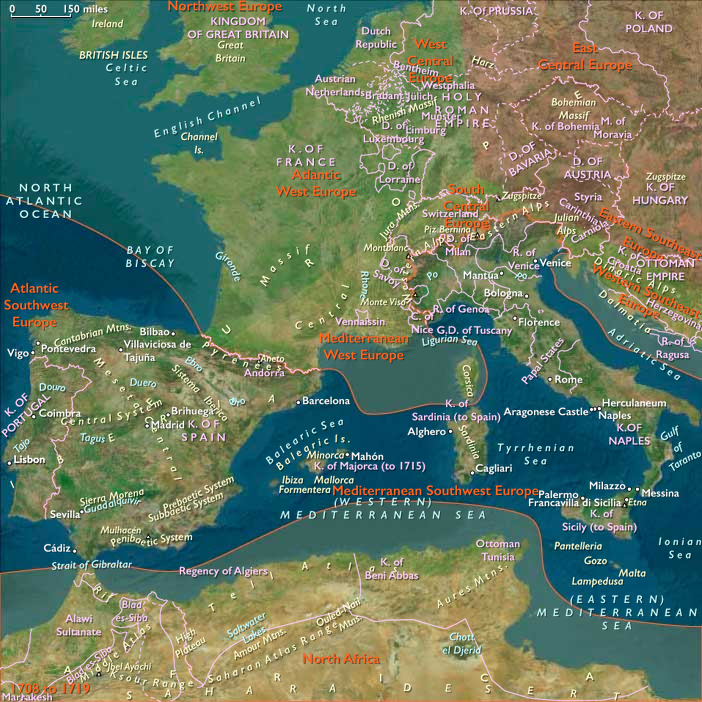
Guido Starhemberg, who had in 1708 been appointed Supreme commander of the Austrians in Spain, succeeds in conquering Madrid in 1710 together with General James Stanhope, after the victories of Almenar and Saragossa.
Philip V, having abandoned Madrid on September 9, had gone to Valladolid.
Archduke Charles, entering a very hostile and almost empty Madrid on September 28, had commented: "This city is a desert!”
The invasion of 1710 has proved to be a repetition of the invasion of 1706: the Alliance's twenty-three thousand men, reduced by a loss of two thousand in the actions at Almenara and Saragossa, by constant skirmishes with the guerrilleros, and by disease, are unequal to the task of holding their conquests and occupying the two Castiles.
The Portuguese are unable to offer help.
The Bourbon army is rapidly refitted and reorganized by French general Joseph, duc de Vendôme, who is lent to Philip V's service by the latter's grandfather, the Sun King.
Spanish volunteers and regular units are joined by the Irish brigade and by French troops secretly directed to enter Spanish service.
The dangerous strategic situation and the lack of support by the people of Madrid for the Habsburg pretender forces the Alliance to evacuates the city on November 9 and embark on a retreat to Catalonia.
The Archduke, eaving behind the main body of the army, advances with a guard of two thousand cavalry, hurrying back to Barcelona.
The rest of the army marches in two detachments, the division being imposed on them by difficulty of foraging.
Starhemberg marches ahead with the main body of twelve thousand men, a day's march ahead of the British troops, five thousand men under Lord Stanhope.
This division of forces invites disaster in the presence of the duc de Vendôme, a capable and resourceful leader, who pursues the retreating British army with a speed perhaps never equaled in such a season and in such a country.
The middle-aged Frenchman leads his Franco-Spanish army day and night.
In typical Vendôme style, he swims, at the head of his cavalry, the flooded Henares and in a few days overtakes Stanhope, who is at Brihuega with the left wing of the Grand Alliance army.
Stanhope has barely enough time to send off a messenger to the center of the army, which is some leagues from Brihuega, before Vendôme is upon him on the evening of December 8.
The town is invested the next morning on every side.
Blasting the walls of Brihuega with heavy cannon, a mine is sprung under one of the gates.
The British keep up a terrible fire until their powder is spent, then fight desperately against overwhelming odds as Vendôme's men storm the city with bayonets fixed and begin to take the town by bloody close quarters fighting, street by street.
The British set fire to the buildings that their assailants had taken, but in vain.
The British general sees that further resistance will produce only a useless carnage.
He concludes a capitulation and his army becomes prisoners of war on honorable terms.
Vendôme has scarcely signed the capitulation when he learns that Staremberg is marching to the relief of Stanhope, unaware that he has capitulated.
The two meet on December 10 n the bloody battle of Villaviciosa, for which Philip V of Spain and the Archduke Charles both claim victory, but the number of dead and wounded, the pieces of artillery and other weapons abandoned by the Allied army, and the strategic consequences in the war, confirm the decisive victory obtained by Philip of Spain.
Starhemberg is compelled to continue his retreat, harassed at every step by the Spanish cavalry.
Starhemberg’s army is reduced to six thousand or seven thousand men by January 6 when he reaches Barcelona, almost the only place in Spain that still recognizes the authority of Archduke Charles.
The battle for the Spanish throne is finally secured for Philip V of Spain, when Archduke Charles leaves Spain in April 1711, to become Holy Roman Emperor, after the death of his older brother.