Maarten Tromp
Dutch naval officer and admiral
Years: 1598 - 1653
Maarten Harpertszoon Tromp (23 April 1598 – 10 August 1653) is an officer and later admiral in the Dutch navy.
His first name is also spelled as Maerten.

Related Events
Filter results
Showing 9 events out of 9 total
The naval Battle of the Downs, which takes place on October 31, 1639 (New style), during the Eighty Years' War, is a decisive defeat of the Spanish by the United Provinces, commanded by Lieutenant-Admiral Maarten Tromp.
The Spanish fleet, commanded by Admiral Antonio de Oquendo, had sought refuge in neutral English waters.
Agitation among the Dutch merchants had further increased by George Ayscue's capture in early 1652 of twenty-seven Dutch ships trading with the royalist colony of Barbados in contravention of an embargo imposed by the Commonwealth.
British privateers between October 1651 and July 1652 capture over a hundred other Dutch ships.
Moreover, the death of Dutch stadtholder William II, who had favored an expansion of the army at the expense of the navy, has led to a change in the defense policy of the United Provinces towards protecting the great trading concerns of Amsterdam and Rotterdam.
Accordingly, the States-General had decided on March 3, 1652 to expand the fleet by hiring and equipping one hundred and fifty merchant ships as ships of war to allow effective convoying against British hostile actions.
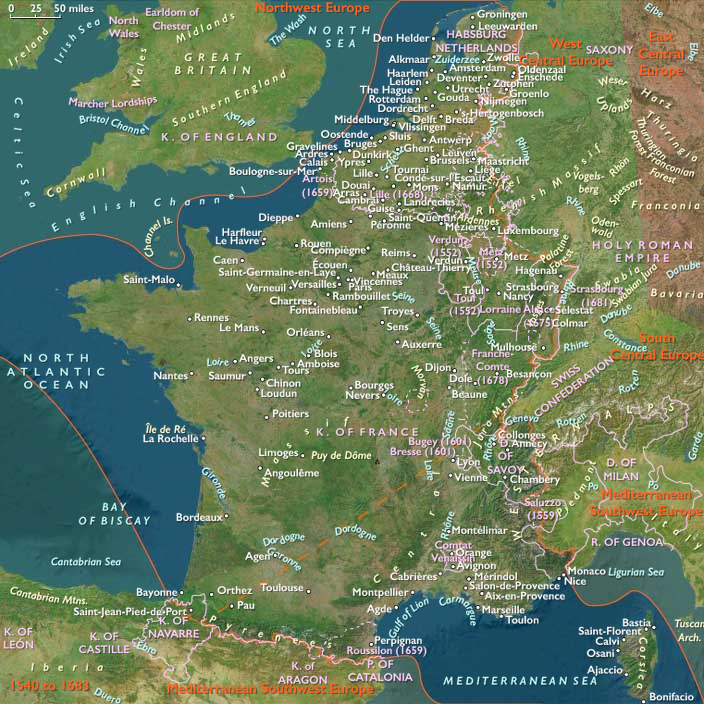
The news of this decision had reached London on March 12, 1652 and the Commonwealth too began to prepare for war, but as both nations were unready, war might have been delayed if not for an unfortunate encounter on May 29, 1652 between the fleets of Dutch Lieutenant-Admiral Maarten Tromp and General at Sea Robert Blake in the English Channel near Dover.
An ordinance of Cromwell requires all foreign fleets in the North Sea or the Channel to dip their flag in salute, reviving an ancient right the English had long insisted on, but when Tromp was tardy to comply, Blake had opened fire, starting the brief Battle of Goodwin Sands, in which Tromp lost two ships but escorted his convoy to safety.
The States of Holland had sent their highest official, the Grand Pensionary Adriaan Pauw, to London in a last desperate attempt to prevent war, but in vain: English demands have become so extreme that no self-respecting state can meet them.
War is declared on July 10, 1652, by the English Parliament.
The Dutch diplomats realize what is at stake: one of the departing ambassadors says, "The English are about to attack a mountain of gold; we are about to attack a mountain of iron."
The Dutch Orangists are jubilant however; they expect that either victory or defeat will bring them to power.
The first months of the war see attacks by the English against the convoys of the Dutch.
Blake is sent with sixty ships to disrupt Dutch fishing in the North Sea and Dutch trade with the Baltic, leaving Ayscue with a small force to guard the Channel.
Ayscue on July 12, 1652, intercepts a Dutch convoy returning from Portugal, capturing seven merchantmen and destroying three.
Tromp gathers a fleet of ninety-six ships to attack Ayscue but winds from the south keep him in the North Sea.
Turning north to pursue Blake, ...
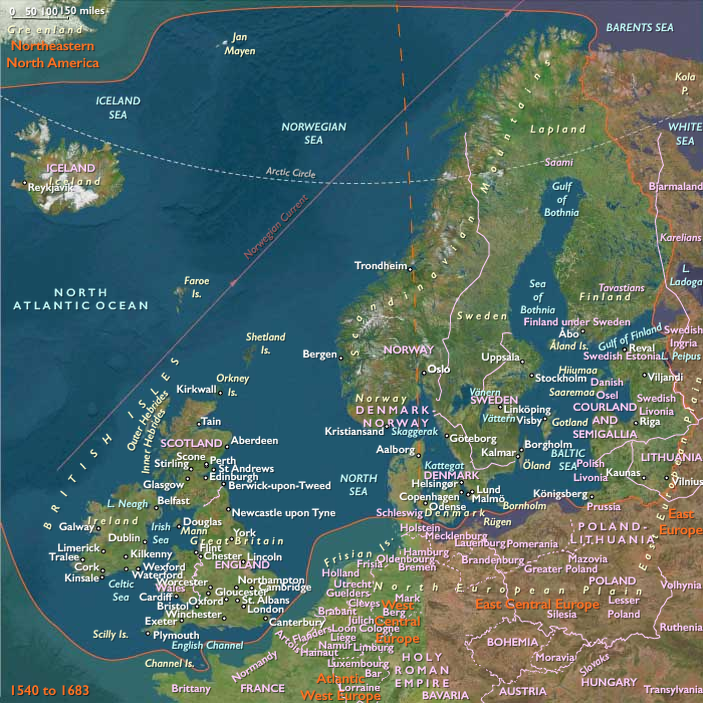
...Tromp catches up with the English fleet off the Shetland Islands but a storm scatters his ships and there is no battle.
Tromp had also been suspended after the failure at the Shetlands, and Vice-Admiral Witte de With had been given command.
The Dutch convoys being at the time safe from English attack, De With sees an opportunity to concentrate his forces and gain control of the seas.
At the Battle of the Kentish Knock on October 8, 1652, the Dutch attack the English fleet near the shoal called the Kentish Knock in the North Sea, about thirty kilometers from the mouth of the River Thames, but are beaten back with a high number of casualties.
The English Parliament, mistakenly believing the Dutch to be near defeat after the battle of the Kentish Knock, has sent away twenty ships to strengthen the position in the Mediterranean.
This division of forces had left Blake with only forty-two men of war by November, while the Dutch are making every effort to reinforce their fleet, and this leads to an English defeat by Tromp in the Battle of Dungeness in December.
The costly Battle of Scheveningen in August is the final military action of the war.
The Dutch desperately try to break the English blockade; after heavy fighting with much damage to both sides, the defeated Dutch retreat to the island of Texel but the English have to abandon the blockade.
Tromp is killed early in the battle, a blow to morale, which increases the Dutch desire to end the war.
A fleet of more than a hundred ships of the United Provinces, commanded by Lieutenant-Admiral Jacob van Wassenaer Obdam, on June 13 attacks an English fleet of equal size commanded by James Stewart, Duke of York, forty miles east of the port of Lowestoft in Suffolk, England.
The Dutch are desperate to prevent a second English blockade of their ports after the first had been broken off by the English only for lack of supplies.
The leading Dutch politician, Johan de Witt, has ordered Van Wassenaer to attack the English aggressively during a period of stable eastern winds which would have given the Dutch the weather gage.
Van Wassenaer however, perhaps feeling that his fleet is still too inferior in training and fire power to really challenge the English in full battle, postpones the fight till the wind turns in order to seek a minor confrontation in a defensive leeward position from which he could disengage quickly and return without openly disobeying orders.
His attitude costs him a sixth of his fleet and his life.
During the duel between the Dutch flagship Eendracht and the Royal Charles commanded by the Duke of York, James is nearly killed by a Dutch chain-shot decapitating several of his courtiers.
Around three in the afternoon the duel between Royal Charles and Eendracht ends abruptly when Eendracht explodes, killing van Wassenaer Obdam and all but five of the crew.
Kortenaer is second in command; though fatally wounded, he hadn't died yet and the other Admirals are unaware of his condition.
For hours the Dutch fleet is therefore without effective command.
After Eendracht had exploded, the English immediately became more aggressive, while many Dutch captains faltered: some Dutch ships already fled a little later, followed by Kortenaer's ship Groot Hollandia now commanded by Stinstra.
By evening, most of the Dutch fleet is in full flight, save for forty ships or so under Vice-Admiral Cornelis Tromp and Lieutenant-Admiral Johan Evertsen, both having assumed command (showing the utter confusion on the Dutch side), who make possible an escape and cover the flight, thus preventing complete catastrophe, though sixteen more ships are lost.
The English lose only one ship, the captured Great Charity.
The outcome of the battle is partially caused by an inequality in firepower, but the Dutch have already embarked on an ambitious expansion program, building many heavier ships.
The Dutch having inflicted considerable damage on the British fleet in the Four Days Battle, de Witt orders de Ruyter to carry out a plan that has been prepared for over a year: to land in the Medway to destroy the British fleet while it is being repaired in the Chatham dockyards.
For this purpose, ten fluyt ships (an inexpensive Dutch type of sailing vessel originally designed as a dedicated cargo vessel) and one that can be built in large numbers carry twenty-seven hundred man of the newly created Dutch Marine Corps, one of the first in history to be specialized in amphibious landings.
Also, de Ruyter is to combine his fleet with the French one.
The French, however, don't show up and bad weather prevents the landing.
De Ruyter has to limit his actions to a blockade of the Thames.
He observes on the 1st of August that the British fleet is leaving port—earlier than expected.
Next, a storm drives the Dutch fleet back to the Flemish coast.
De Ruyter on July 3 again crosses the North Sea, leaving behind the troop ships.
The St. James Day Battle (also known as the St. James' Day Fight, the Battle of the North Foreland and the Battle of Orfordness) takes place on July 25, 1666—St. James' day in the Julian calendar currently in use in England (August 4, 1666 in the Gregorian calendar).
The English fleet is commanded jointly by Rupert and Monck; the fleet of the United Provinces is commanded by de Ruyter.
The battle is known in The Netherlands as the Two Days' Battle.
The battle is a clear English victory, though the separate clash of the two rears is a victory for Tromp.
Dutch casualties are enormous, estimated immediately after the battle at about five thousand men, compared with three hundred British killed; later, more precise information will show that only about twelve hundred of these have been killed or seriously wounded.
However, the Dutch only lose two ships: de Ruyter had been successful at saving almost the complete van, only Sneek and Tholen have struck their flag, and they can quickly repair the damage.
The twin disasters of the Great Plague of London and the Great Fire of London, however, combined with his financial mismanagement, have left Charles II without the funds to continue the war.
In fact, he had had only enough reserves for this one last battle.