Magnus VI of Norway
King of Norway
Years: 1238 - 1280
Magnus Haakonsson (1 May 1238 – 9 May 1280), known as Magnus the Lawmender, is the King of Norway from 1263 to 1280.
His greatest achievement is his modernization and nationaliation of the Norwegian law-code, which is what gives him his epithet.
He is the first Norwegian monarch who is known to have used an ordinal number, although he counts himself as IV instead of the modern VI.

Related Events
Filter results
Showing 9 events out of 9 total
The fifty-nine-year-old Haakon, called the Old, retreats to the Orkney Islands and, electing to winter in the Bishop's Palace at Kirkwall, falls ill. On his deathbed, Haakon declares that he only knows of one son who is still alive, Magnus, who subsequently succeeds him as King Magnus VI following Haakon’s death on December 17.
Magnus, if he does not already, will soon come to consider peace with the Scots more important than holding on to the Norwegian possessions off western Scotland and in the Irish Sea.
Eventually to be known as the Lawmender, Magnus had two years earlier married the Danish princess Ingeborg, the daughter of the late Danish king Erik Plogpenning, after she was practically abducted by Haakon's men from the monastery in which she was living.
The struggle to claim Ingeborg's inheritance from her murdered father will soon involve Norway in intermittent conflicts with Denmark for decades to come.
The chieftains of the eastern part of Iceland become the last to pledge fealty to the Norwegian king, bringing a more complete end to the Icelandic Commonwealth and the Icelandic civil war.
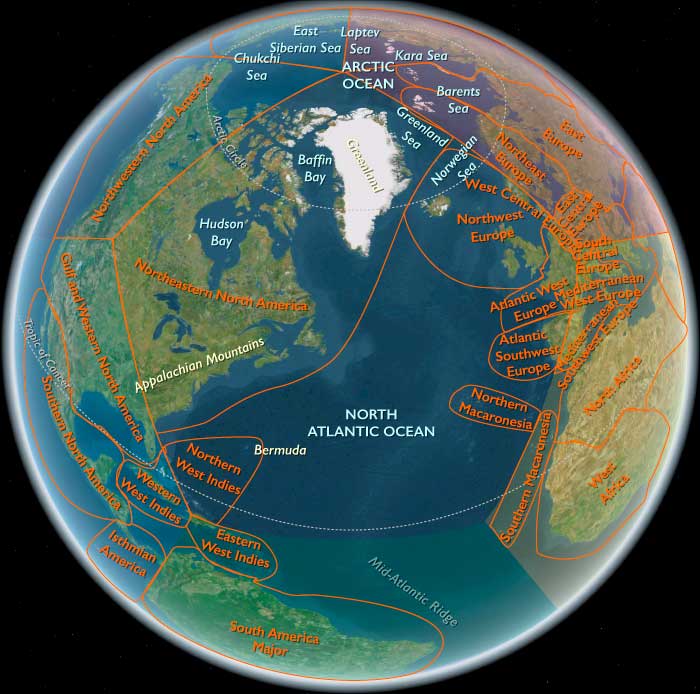
Northwest Europe (1264–1275 CE): Baronial Conflicts and Monarchical Consolidation
England: Baronial Revolt and Royal Restoration
The political instability initiated by the Provisions of Oxford escalated into open rebellion. Simon de Montfort secured a major victory at the Battle of Lewes in 1264, capturing King Henry III and taking effective control of England. Montfort's brief rule significantly expanded parliamentary involvement, notably convening the first parliament in 1265 that included representatives of commoners. However, his triumph was short-lived; Prince Edward decisively defeated Montfort at the Battle of Evesham in 1265, killing him and restoring royal supremacy. Henry III regained authority, though Edward assumed increasing prominence in governance, gradually restoring stability.
Scotland: Territorial Integration and Stability
Under Alexander III, Scotland experienced relative peace and territorial expansion. Alexander successfully negotiated the return of the Hebrides and Isle of Man from Norway in the Treaty of Perth (1266), consolidating Scottish sovereignty over these strategically significant territories. His marriage alliances and diplomatic initiatives helped ensure domestic stability and facilitated Scotland’s economic prosperity and integration.
Ireland: Norman Authority and Gaelic Resistance
Ireland continued experiencing tension between Norman settlers and Gaelic clans. While Normans held significant territories, notably around Dublin, Cork, and Waterford, powerful Gaelic families in regions like Connacht and Ulster maintained staunch resistance. Frequent skirmishes highlighted persistent fragmentation, with neither side gaining decisive advantage.
Denmark: Stabilization under Eric V
Following prolonged internal strife, Eric V Klipping (r. 1259–1286) gradually stabilized Denmark, asserting stronger royal authority despite ongoing tensions with nobility and ecclesiastical figures. His reign marked a partial recovery from preceding civil discord, though tensions with the church remained pronounced.
Norway: Treaty of Perth and Maritime Consolidation
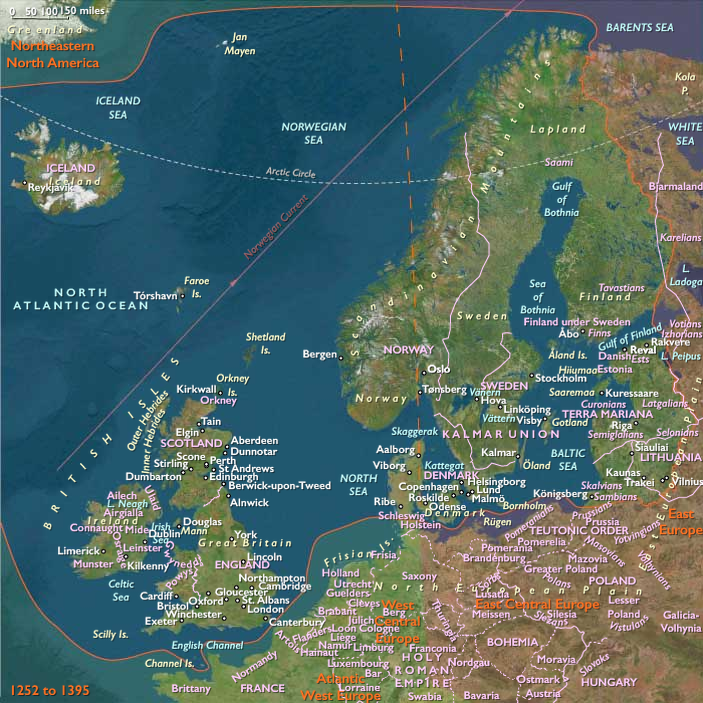
Norway's territorial ambitions in the western Scottish Isles ended with Håkon IV’s death in 1263, shortly after a costly campaign culminating in the indecisive Battle of Largs. His successor, Magnus VI Lagabøte (r. 1263–1280), concluded the Treaty of Perth (1266) with Scotland, ceding the Hebrides and Isle of Man to the Scottish crown. Magnus focused inward, modernizing Norwegian legal codes and solidifying central governance.
Iceland: Cultural Resilience and Literary Production
Icelandic literary culture thrived despite Norway’s increasing influence. The Althing persisted as a core institution, providing governance continuity. Icelandic sagas continued to flourish, documenting historic and legendary narratives that shaped Iceland’s unique cultural heritage and intellectual life.
Economic Networks and Urban Expansion
Trade networks continued expanding significantly, boosting urban centers such as London, Bruges, Bergen, and Dublin. Robust commerce in wool, fish, timber, and luxury items like spices fueled regional economic growth, enhancing both infrastructure and cultural exchange across Northwest Europe.
Religious and Scholarly Developments
The influence of the Dominican and Franciscan orders continued to grow, with their friars deeply engaged in preaching, education, and intellectual endeavors throughout Northwest Europe. Scholasticism, enriched by figures like Roger Bacon, flourished, promoting philosophical inquiry and fostering significant educational reforms across the region.
Legacy of the Era
By 1275 CE, Northwest Europe had witnessed substantial political and territorial reconfigurations, laying foundations for stronger central monarchies and enhanced governance structures. The restoration of royal power in England, territorial consolidation in Scotland, Norway’s strategic realignment, ongoing Gaelic-Norman tensions in Ireland, Denmark’s stabilization, and Iceland’s cultural resilience collectively underscored the transformative momentum shaping the region’s future.
The Hebrides and the Isle of Man had become Norwegian territory during centuries when both Scotland and Norway were still forming themselves as coherent nation-states, and Norwegian control had been formalized in 1098, when Edgar of Scotland signed the islands over to Magnus III of Norway.
In Norwegian terms, the islands were the Sudreys, meaning Southern Isles.
The Battle of Largs in 1263 is often claimed as a great Scottish victory, but the Norwegian forces, led by King Haakon IV, were not fully committed to battle and the result was inconclusive.
Haakon had planned to renew military action the following summer, but he died in Orkney during the winter.
His successor, King Magnus VI, had sued for peace and secured the Treaty of Perth, ending the lingering war with Scotland, arranging for his sons to marry the daughters of Scotland’s King Alexander III and selling to the Scots the disputed Isle of Man and the Hebrides for a lump sum of four thousand marks and an annuity of one hundred marks.
The annuity will be actually paid during subsequent decades.
Scotland also confirms Norwegian sovereignty over Shetland and Orkney.
Magnus VI, after settling the war with Scotland, has concerned himself with the revision of his country’s laws.
He introduces his general code of laws in 1274, replacing local legal systems with a unified code for the entire kingdom.
The code strengthens the position of the monarch by treating crime not as a private matter but as an offense against king and country.
Magnus, who also promulgates municipal laws and accepts an independent status for the church, comes to be called Magnus Lagaboter (Magnus the Law-Mender).
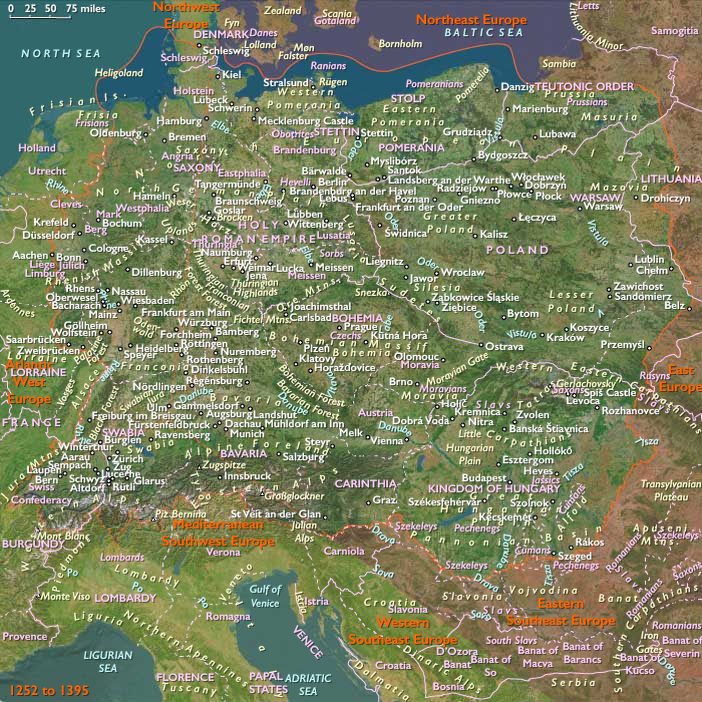
Northwest Europe (1276–1287 CE): Consolidation, Conflict, and Cultural Flourishing
England: Transition and Welsh Conquest
Edward I (r. 1272–1307) ascended firmly to the throne after the death of Henry III in 1272 (formally crowned in 1274). Known as the "Hammer of the Scots" and a powerful consolidator of royal authority, Edward vigorously pursued legal reforms and administrative centralization. His reign also witnessed aggressive military campaigns into Wales, culminating in the defeat of the last independent Welsh prince, Llywelyn ap Gruffudd, in 1282. Following the decisive Battle of Orewin Bridge, Wales was effectively annexed, and in 1284, the Statute of Rhuddlan formalized the integration of Wales into the English crown, significantly expanding Edward's domain.
Scotland: Stability and Succession Concerns
Under Alexander III, Scotland continued its period of stability and relative prosperity. However, Alexander's untimely death in 1286, after a tragic riding accident, plunged Scotland into a succession crisis. The lack of a direct adult heir precipitated uncertainty, setting the stage for subsequent tensions and the involvement of Edward I in Scottish affairs.
Ireland: Norman Dominance and Gaelic Resistance
Norman control remained robust in eastern and southern Ireland, particularly around major urban centers like Dublin, Waterford, and Limerick. Nonetheless, powerful Gaelic lords in Ulster and Connacht persisted in resisting Norman expansion. Continuous skirmishes reinforced a status quo of fragmented territorial authority, preventing full Norman consolidation.
Denmark: Continued Royal Consolidation
Eric V Klipping maintained efforts to stabilize Denmark, although his reign remained challenged by internal disputes, particularly with noble and ecclesiastical factions. Despite these tensions, his policies generally strengthened royal governance and legal administration, laying groundwork for future stability.
Norway: Magnus VI's Legal and Administrative Reforms
Magnus VI Lagabøte (r. 1263–1280) continued his notable reign, known primarily for significant legal reforms. His modernization and codification of Norwegian laws culminated in the creation of the Magnus Lagabøte's Landslov (National Code), enacted around 1276, significantly centralizing royal authority and enhancing administrative uniformity across Norway.
Iceland: Continued Cultural Flourishing
Despite Norway’s increasing influence, Iceland’s cultural production remained vibrant. The traditional Althing continued to function, symbolizing Icelandic resilience and autonomy within the Norwegian sphere. Literary activities, particularly saga-writing, thrived, further enriching Iceland’s unique intellectual legacy. The Icelandic poem known as Njal's Saga, composed between about 1230 and 1290, both glorified and repudiated Iceland’s Saga Age (870–1050), offering an idealized recreation of the Sturlung Age (1100–1280), during which it was written. Similarly, the Völsunga saga, a legendary narrative composed in the late thirteenth century, retold parts of the "Edda" and integrated motifs and characters common with the "Nibelungenlied," weaving supernatural elements into its tale.
Economic Growth and Urban Development
Economic expansion continued unabated, driven by vigorous trade across the North Sea and Baltic regions. Major urban centers—London, Bergen, Bruges, and Dublin—saw significant infrastructural growth. Trade in wool, timber, fish, and luxury goods such as spices and fine cloth bolstered regional prosperity and facilitated greater intercultural interactions.
Religious and Intellectual Trends
The influence of mendicant orders—the Dominicans and Franciscans—remained prominent in urban and rural communities. Their efforts in preaching, charity, and education reinforced religious devotion and intellectual inquiry. Figures like Roger Bacon, who continued to foster advancements in scholasticism, science, and philosophy, had been significantly influenced by the earlier English philosopher and theologian Robert Grosseteste, whose translations and commentaries on Aristotle deeply shaped scholastic thought.
Literary Developments
The Middle English romance Havelok the Dane, composed between 1280 and 1290, gained popularity during this period. Notable for its exploration of ideal kingship, detailed depiction of working-class life, and interest in legal practices, it exemplified the growing literary sophistication of the era.
Legacy of the Era
By 1287 CE, Northwest Europe had witnessed substantial shifts: England’s dramatic conquest of Wales, Scotland’s looming succession crisis, ongoing Gaelic-Norman tensions in Ireland, Norway’s significant legal reforms, Denmark’s gradual stabilization, and Iceland’s continued cultural resilience. These developments collectively marked a definitive step toward the centralized monarchies and distinctive regional identities characteristic of later medieval Europe.
The Norwegian royal succession is an important and prickly matter, the last of the civil wars, fought for decades over disputed successions to the throne, having finally ended only in 1240.
In 1273, Magnus had given his eldest son, five-year-old Eirik, the name of king, and his younger brother Håkon the title of duke, thus making unequivocally clear what the royal succession would be.
Although Magnus is by all accounts a personally very pious king, his work with the law-codes brings him into conflict with the archbishop, who resists temporal authority over the church, and seeks to preserve the church's influence over the kingdom.
The Tønsberg Concord (Sættargjerden in Tønsberg) signed in 1277 between King Magnus and Jon Raude, Archbishop of Nidaros, confirms certain privileges of the clergy, the freedom of episcopal elections and similar matters.
The church preserves considerable independence in judicial matters, but gives up its old claim that the Norwegian kingdom is a fief under the ultimate authority of the Catholic Church.
In cultural terms, Magnus continues his father's policy of introducing European courtly culture to Norway.
In 1277 he replaces the old Norse titles lendmann and skutilsvein with the European titles baron and riddar (knight), at the same time giving them certain extra privileges and the right to be addressed as lord (herra).
Magnus is probably also the first Norwegian king to have named himself using an ordinal number—he calls himself "Magnus IV" (he did not count Magnus Haraldsson (II) and Magnus Sigurdsson (IV)).
King Magnus, immediately after the death of father, had commissioned the Icelander Sturla Pórdarson to write his father's saga, or biography.
He had in 1278 commissioned the same man to write his own saga.
The Saga of Magnus the lawmender (Magnúss saga lagabœtis) thus becomes the last of the medieval Norwegian kings' sagas; unfortunately only a short fragment of it has been preserved.
Magnus falls ill in Bergen in the spring of 1280 and dies on May 9.
He had already planned to have his son Eirik crowned at midsummer as co-ruler, instead Eirik now takes over as sole king at the age of twelve.
Real power falls to a circle of advisors, prominent among them Magnus' queen Ingeborg.
Magnus is remembered as a good ruler, who ruled by law rather than by the sword.
Some modern historians have considered him a weak king, for giving up the Hebrides and giving in to demands of the church, but others consider these wise policies, sparing the kingdom unnecessary and unfruitful wars abroad, while preserving stability at home.
Magnus is buried in the church of the Franciscan monastery in Bergen, which has since the sixteenth century been the Bergen Cathedral (Bergen Domkirke).
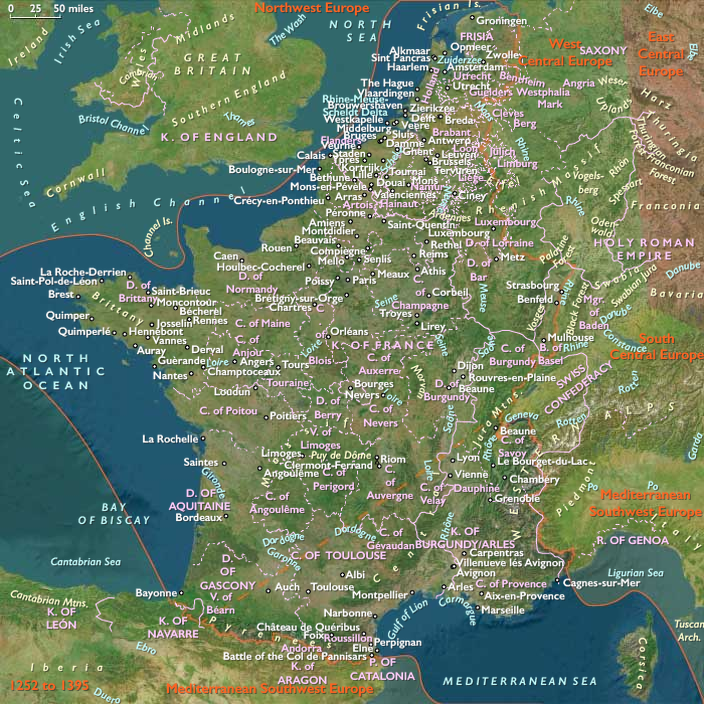
Northwest Europe (1288–1299 CE): Succession, Warfare, and Legal Innovation
England: Continued Consolidation and Scottish Intervention
Edward I continued to strengthen his dominion, increasingly asserting influence over Scotland following the Scottish succession crisis after Alexander III's death. In 1290, the death of Margaret, Maid of Norway, Alexander's granddaughter and last heir, left Scotland without a direct ruler, prompting Edward I to arbitrate among competing Scottish nobles in the Great Cause (1291–1292). Edward selected John Balliol as King of Scots, but his heavy-handed interference led to widespread Scottish resentment and rebellion, culminating in open conflict and Edward's invasion of Scotland in 1296. Edward decisively defeated Scottish forces at the Battle of Dunbar, captured Edinburgh, and temporarily subdued Scotland, seizing the symbolic Stone of Scone.
Scotland: Crisis and National Resistance
The period after 1288 was dominated by Scotland's succession crisis, foreign intervention, and resistance. After Edward's conquest and subjugation of Scotland in 1296, William Wallace emerged as a leader of national resistance, famously defeating English forces at the Battle of Stirling Bridge in 1297. However, Wallace's subsequent defeat at the Battle of Falkirk in 1298 restored temporary English dominance, prolonging the struggle for Scottish independence.
Ireland: Persistent Gaelic-Norman Rivalries
Norman influence remained dominant around major coastal towns, while the Gaelic Irish persistently resisted Norman expansion in Ulster and Connacht. This period was marked by continuous clashes, reinforcing the pattern of fragmented control and limiting effective Norman centralization.
Denmark: Turmoil and Royal Intrigue
The reign of Eric V Klipping ended abruptly when he was assassinated in 1286, plunging Denmark into internal conflict. His successor, Eric VI Menved, took the throne amid accusations and political intrigue, dealing with prolonged internal rebellions and disputes with neighboring principalities throughout the decade. Nonetheless, he strove to strengthen royal authority and stability through legal reforms and administrative consolidation.
Norway: Haakon V and Continued Legal Advances
Following the death of Magnus VI Lagabøte in 1280, Norway transitioned through the brief reign of Eric II Magnusson (1280–1299), and subsequently his brother Haakon V. Haakon continued Magnus's emphasis on strengthening royal authority and administrative structures, furthering the establishment of a robust and centralized monarchy.
Iceland: Cultural and Political Resilience
Despite continued Norwegian dominance, Icelandic intellectual and literary traditions flourished. The Althing, though influenced by external powers, continued to function as a crucial institution, embodying Iceland's cultural resilience and autonomy. Saga literature, including the widespread circulation of works like Njal's Saga and the Völsunga saga, remained central to Icelandic identity and cultural expression.
Economic and Urban Development
Economic growth persisted across Northwest Europe, driven by dynamic trade in wool, timber, and luxury goods. Major cities—London, Bruges, Bergen, and Dublin—continued their infrastructural and commercial expansion, serving as thriving hubs of trade and cultural exchange.
Religious and Scholarly Influence
The influence of mendicant orders like the Dominicans and Franciscans remained strong, enhancing educational and religious life. Intellectual activity continued, building upon the earlier contributions of Roger Bacon and Robert Grosseteste, with scholastic traditions influencing emerging academic communities across Northwest Europe.
Literary and Cultural Flourishing
The popularity of Middle English romances such as Havelok the Dane signaled ongoing literary development, emphasizing themes of ideal kingship, social justice, and the lived experiences of everyday people, reflecting a complex and increasingly sophisticated literary culture.
Legacy of the Era
By 1299 CE, Northwest Europe had experienced significant developments: the turbulent conquest and rebellion in Scotland, the continuing Gaelic resistance in Ireland, internal strife in Denmark, the enduring Norwegian commitment to legal centralization, and Iceland’s robust cultural legacy. Collectively, these factors underscored the ongoing transformation toward powerful, centralized states and distinct national identities, setting the stage for later medieval developments.