
Mahmud al-Kashgari
uslim Uyghur scholar and lexicographer of Turkic languages from Kashgar
1005 CE to 1102 CE
Mahmud ibn Hussayn ibn Muhammad al-Kashgari is an 11th-century Muslim Uyghur scholar and lexicographer of Turkic languages from Kashgar.
His father, Hussayn, was the mayor of Barsgan, a town in eastern-southern part of Issyk Kul lake (nowadays village of Barskoon in Northern Kyrgyzstan's Issyk Kul region) and related to the Qara-Khanid ruling dynasty.
Some modern writers allege that his mother, Bibi Rābiy'a al-Basrī, was of Arab origin.
World
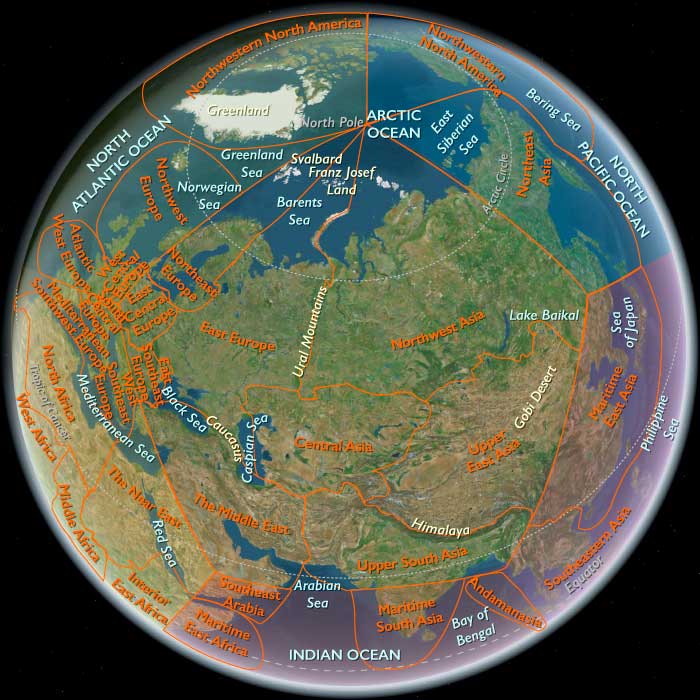
The Great Crossroads
View →Related Events
Showing 1 events out of 1 total
Mahmud al-Kashgari, having studied the Turkic languages of his time, in 1072-74 writes the first comprehensive dictionary of Turkic languages, the Dīwānu l-Luġat al-Turk (Arabic: "Compendium of the languages of the Turks").
It is intended for use by the Caliphs of Baghdad, the new, Arabic allies of the Turks.
Mahmud Kashgari's comprehensive dictionary, later edited by the Turkish historian, Ali Amiri, contains specimens of old Turkic poetry in the typical form of quatrains, representing all the principal genres: epic, pastoral, didactic, lyric, and elegiac.
His book also includes the first known map of the areas inhabited by Turkic-speaking peoples.
This map is housed at the National Library in Istanbul.
He advocates monolingualism and the linguistic purism of the Turkic languages, and holds a belief in the superiority of nomadic people.
Most of his Turkic-speaking contemporaries, however, are bilingual in Tajik, which is the prestige language of Central Asia, as well as its indigenous language before forced Turkification.
One of al-Kashgari's most famous poems relates to the Turko-Islamic conquest of the Buddhist, Tocharian Kingdom of Khotan, which existed for over a thousand years in the region of present Xinjiang, China, until it was conquered by Muslim invaders in 1006: We came down on them like a flood! We went out among their cities! We tore down the idol-temples, We shat on the Buddha's head! (Elverskog, Johan (2010). Buddhism and Islam on the Silk Road. University of Pennsylvania Press. p. 95.)