Atlantic West Europe (1732–1743): Economic Stability, Enlightenment Progress, and Diplomatic Realignment
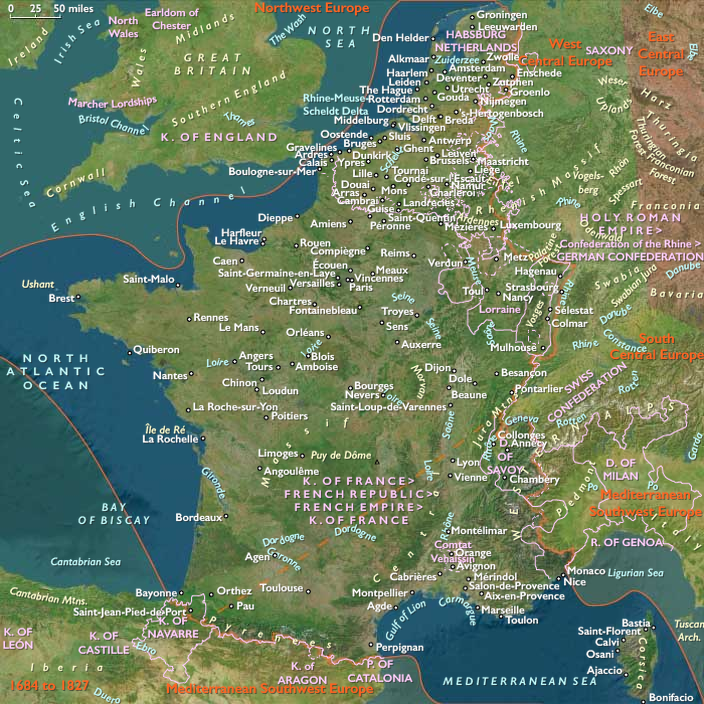
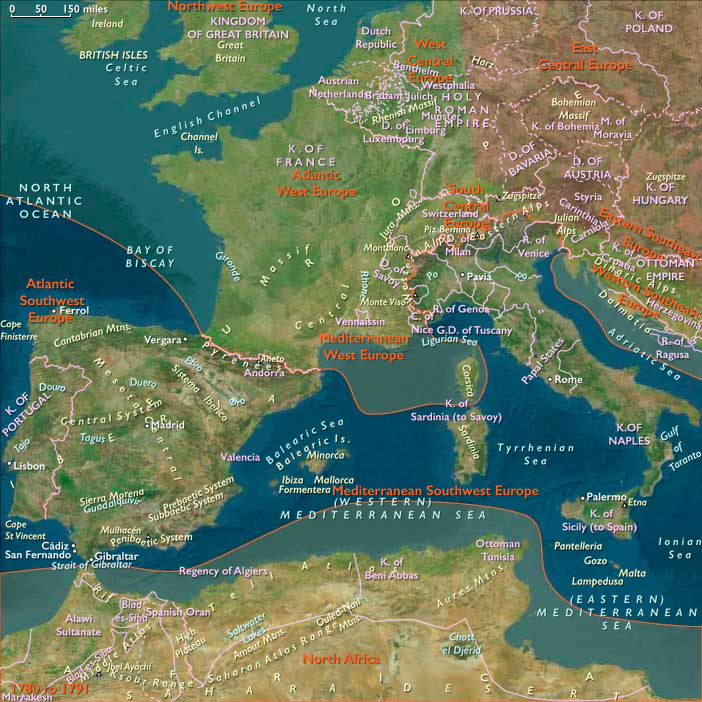
Between 1732 and 1743, Atlantic West Europe—including northern France, the Low Countries (Belgium, Netherlands, Luxembourg), and regions facing the Atlantic and English Channel—experienced sustained economic recovery, strengthened diplomatic realignments, continued Enlightenment advancements, and vibrant cultural productivity. This period marked a gradual stabilization after earlier financial shocks and laid critical foundations for future political shifts and intellectual revolutions.
Political and Military Developments
Stability Under Louis XV and the Habsburgs
-
In France, Louis XV (r.1715–1774) continued his peaceful rule, stabilizing internal governance despite growing criticism of court extravagance and administrative inefficiency. His influential chief minister, Cardinal Fleury (1726–1743), managed diplomatic affairs skillfully, maintaining general European peace while avoiding costly wars.
-
The Austrian Netherlands under Maria Theresa’s rule (1740–1780) maintained internal stability and administrative efficiency. The region prospered economically and culturally, despite ongoing diplomatic tensions related to the War of the Austrian Succession (beginning in 1740).
The War of the Austrian Succession (1740–1748)
-
The death of Emperor Charles VI in 1740 triggered succession disputes across Europe, leading to the War of the Austrian Succession (1740–1748). Though this conflict primarily impacted central Europe initially, Atlantic West Europe was drawn into diplomatic realignments and military preparations.
-
France aligned against Maria Theresa's Austrian claims, allying initially with Prussia under Frederick II. Military preparations in northern France and the Low Countries intensified, though direct fighting remained limited at this stage.
Economic Developments: Stability and Growth
Continued Recovery and Prosperity
-
After the financial instability of the early 1720s, Atlantic West Europe experienced notable economic stability. French cities like Bordeaux, Nantes, and La Rochelle thrived, driven by expanding Atlantic commerce in wine, sugar, and manufactured goods.
-
Antwerp, Amsterdam, and Brussels saw renewed trade vigor, bolstered by maritime commerce, colonial products, and strong financial institutions that regained trust after earlier crises.
Industrial Innovation and Expansion
-
Textile manufacturing in Flanders and Brabant continued to expand significantly, becoming highly efficient and increasingly mechanized. These developments positioned the region as a leading center of European textile production.
-
Shipbuilding and maritime industries along the Atlantic coast, particularly in French port cities and Dutch maritime towns, flourished, fueling broader economic prosperity and maritime dominance.
Agricultural Advancements
-
Agricultural reforms and innovations continued to spread across northern France and the Low Countries, enhancing productivity and stabilizing regional economies. Improved crop rotations, drainage methods, and livestock breeding yielded higher agricultural output, reducing periodic famines.
Intellectual and Cultural Developments
Enlightenment Ideals and Intellectual Progress
-
Enlightenment thought reached new heights. In France, figures such as Voltaire published pivotal works (Letters Concerning the English Nation, 1733), critiquing French absolutism and promoting ideals of freedom, reason, and tolerance.
-
The Low Countries became prominent intellectual hubs, with Amsterdam and Leiden continuing to attract leading thinkers, philosophers, and scientists from across Europe.
The Expansion of Scientific Inquiry
-
Scientific academies, including the Académie des Sciences in Paris and societies in Amsterdam and Brussels, sponsored research in mathematics, astronomy, chemistry, and medicine, significantly advancing European scientific knowledge.
-
Eminent scientists, including French mathematician Pierre Louis Maupertuis, significantly contributed to debates about Earth's shape through geodesic expeditions, underscoring the region’s intellectual vitality.
Religious Developments and Tolerance
Gradual Religious Moderation
-
Religious toleration continued gradual expansion, particularly in the Dutch Republic, where a relatively liberal atmosphere fostered intellectual openness. Calvinist orthodoxy softened somewhat, allowing freer exchanges of ideas.
-
In France, while formal Catholic dominance remained firm, intellectual circles increasingly criticized intolerance and superstition, advocating Enlightenment ideals of religious tolerance, as illustrated by Voltaire’s critical writings.
Cultural and Artistic Flourishing
Rococo Art and Architectural Grandeur
-
Rococo style remained culturally dominant, characterized by elaborate decoration, playful themes, and delicate aesthetics. Paris, Brussels, and Antwerp notably embraced this style, influencing architecture, interior decoration, painting, and sculpture.
-
French painters like François Boucher gained significant acclaim during this period, setting aesthetic standards for European art that emphasized opulence, elegance, and courtly sophistication.
Literary and Philosophical Influence
-
French literary circles thrived, fostering intense intellectual discourse within prominent Parisian salons hosted by figures such as Madame Geoffrin and Madame du Deffand, where Enlightenment ideals circulated widely.
-
The literary scene in the Low Countries similarly flourished, especially in Amsterdam and Brussels, featuring lively publishing and distribution networks promoting both local and international works.
Social and Urban Developments
Urban Expansion and Commercial Vitality
-
Port cities such as Amsterdam, Rotterdam, Bordeaux, and Nantes experienced significant urban expansion, reflecting prosperous maritime trade and economic buoyancy.
-
Increased wealth contributed to improved urban infrastructure, including the construction of public buildings, canals, and marketplaces, facilitating commerce and enhancing quality of life.
Rise of the Merchant Class and Social Shifts
-
The merchant and bourgeois classes in Atlantic cities became increasingly influential, gaining political leverage and fostering social mobility. Urban commercial elites invested in civic improvements, education, and cultural patronage, significantly shaping urban identities.
Continued Social Critique and Debate
-
Despite economic prosperity, Enlightenment intellectuals sharply critiqued societal inequities, aristocratic privilege, and governmental corruption. Public debates fostered awareness of social injustice, laying intellectual groundwork for future revolutionary sentiments.
Legacy and Historical Significance
The period 1732–1743 solidified the resilient economic and intellectual foundations of Atlantic West Europe, contributing decisively toward its subsequent historical trajectory:
-
Politically, this era demonstrated effective governance, diplomatic pragmatism, and preparedness for emerging European conflicts.
-
Economically, sustained recovery and industrial advancements reaffirmed the region’s economic prominence, laying groundwork for future prosperity and global commercial influence.
-
Intellectually, Enlightenment thought deepened its influence, setting crucial precedents for modern European society, politics, and culture.
-
Socially and culturally, the rise of urban merchant classes, vigorous artistic production, and intellectual vibrancy shaped urban identity and future societal developments.
Ultimately, this era reinforced Atlantic West Europe's enduring position as a leading cultural, intellectual, and economic powerhouse on the European and global stages.