Michiel de Ruyter
Dutch admiral
Years: 1620 - 1680
Michiel Adriaenszoon de Ruyter (24 March 1607 – 29 April 1676) is the most famous and one of the most skilled admirals in Dutch history.
De Ruyter is most famous for his role in the Anglo-Dutch Wars of the 17th century.
He fights the English and French in these wars and scores several major victories, the best known probably being the Raid on the Medway.
The pious De Ruyter is very much loved by his sailors and soldiers; from them comes his most significant nickname derived: Bestevaêr (older Dutch for 'grandfather'.)

Related Events
Filter results
Showing 10 events out of 20 total
Battle of Cape St. Vincent (1641): Dutch Victory Over the Spanish-Dunkirker Fleet
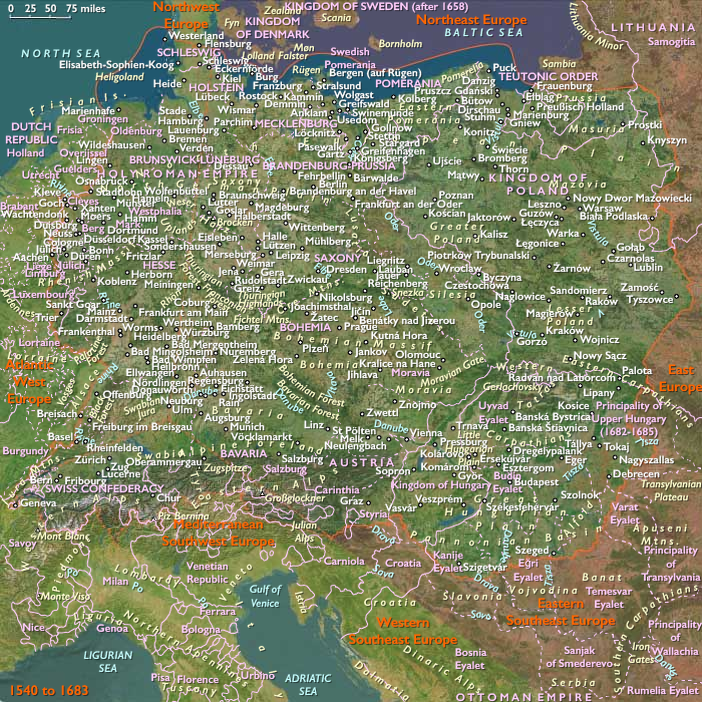
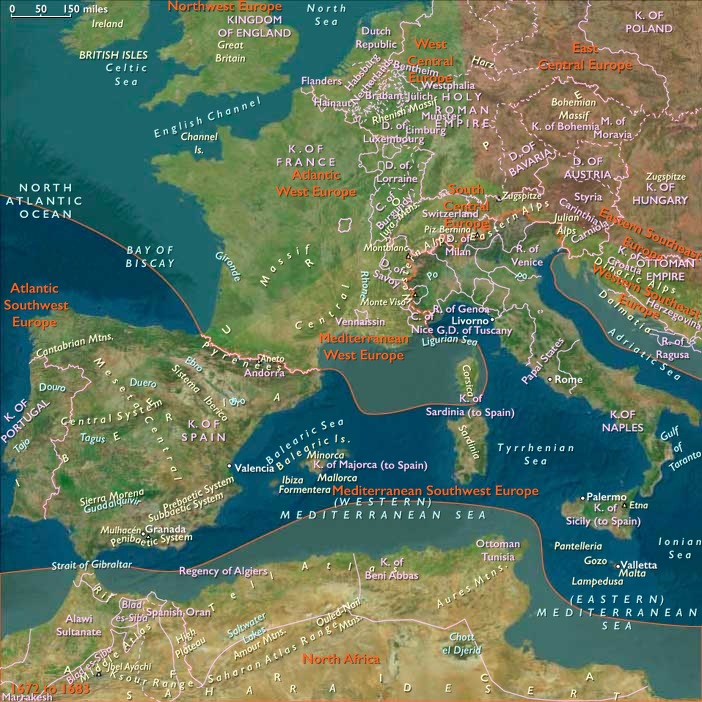
In 1641, during the Portuguese Restoration War (1640–1668), a Dutch fleet, with Michiel de Ruyter as third in command, defeated a Spanish-Dunkirker fleet in a naval battle off Cape St. Vincent, a strategic headland in the Algarve, southern Portugal. This Dutch victory further weakened Spanish naval power and reinforced Dutch and Portuguese efforts against Spain.
Context: The Dutch-Portuguese Alliance Against Spain
- After Portugal’s revolution against Spanish rule in 1640, the newly independent Portuguese monarchy under João IV sought allies to defend itself against Spanish retaliation.
- The Dutch Republic, already at war with Spain in the Eighty Years’ War (1568–1648), became a natural ally.
- The Dutch sought to secure their dominance in global trade by continuing their fight against Spanish and Portuguese forces in Europe, Africa, and the Americas.
The Battle of Cape St. Vincent (1641)
- A Dutch fleet engaged a Spanish-Dunkirker squadron off the coast of Cape St. Vincent, Portugal.
- Michiel de Ruyter, then a rising naval officer, was third in command during the battle.
- The Dutch successfully repelled the Spanish fleet, preventing them from reinforcing or protecting Spanish interests in Portugal and its Atlantic trade routes.
- The battle weakened Spain’s ability to control the seas around Portugal, further isolating its forces.
Aftermath and Impact
-
Strengthening the Dutch-Portuguese Alliance
- The Dutch victory helped secure Portugal’s independence, as Spain was forced to divert resources to multiple fronts.
- Portugal continued to receive Dutch naval assistance in its struggle against Spain.
-
Michiel de Ruyter’s Rise to Prominence
- This battle was one of the early successes of Michiel de Ruyter, who would later become one of the most legendary Dutch admirals.
- His experience in naval engagements against the Spanish helped shape his tactical brilliance in later battles.
-
Undermining Spanish Naval Power
- The loss weakened Spain’s naval presence in the region, further challenging its control over sea routes to the Americas and Asia.
- This was part of a larger decline of Spanish naval dominance, which would continue throughout the 17th century.
Conclusion: A Key Naval Victory in the Fight Against Spain
The Dutch victory at Cape St. Vincent in 1641 played a critical role in Portugal’s war for independence, while also contributing to the decline of Spanish sea power. It was one of the early moments in Michiel de Ruyter’s career, setting the stage for his future naval successes, and reinforcing the Dutch-Portuguese struggle against Spain’s fading global empire.
Ayscue attacks an outward-bound Dutch convoy, escorted by twenty-three men-of-war and six fire ships commanded by Vice-Commodore Michiel de Ruyter, on August 26, 1652, but is beaten back in the Battle of Plymouth and relieved of his command.
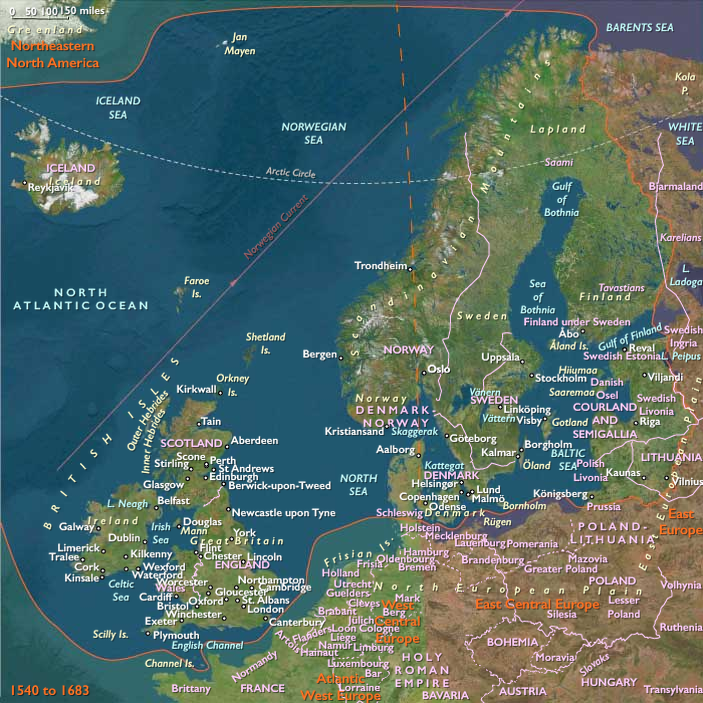
Frederick III, upon learning of the death of Charles X in February 1660, had immediately proclaimed the Treaty of Roskilde null and void.
This has caused great alarm to the Swedish mediators, but their French and English counterparts assure them that if Sweden were to yield their claim to Trøndelag but otherwise stick by the terms of Roskilde, France and England would assure a treaty under those conditions.
Denmark insists on the return of the Scanian lands, with the support of Brandenburg, Austria and Poland, but this time Holland does not agree with Denmark.
Aadmiral Michiel de Ruyter and his Dutch fleet are on March 8 ordered to leave the harbor of Landskrona, where he has bottled up the Swedish fleet.
Frederick yields, and the negotiations begin in earnest on March 24.
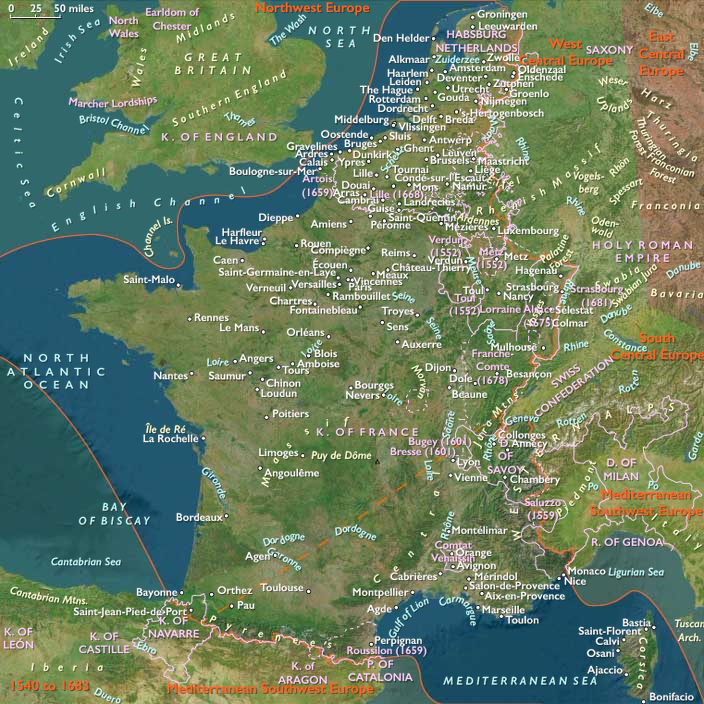
Michiel de Ruyter, Vice-Admiral of the admiralty of Amsterdam, clashes with the English in late 1664 off the West African coast, where both the English and Dutch have significant slave stations, retaking the Dutch possessions occupied by Robert Holmes and then crossing the Atlantic to raid the English colonies in America.
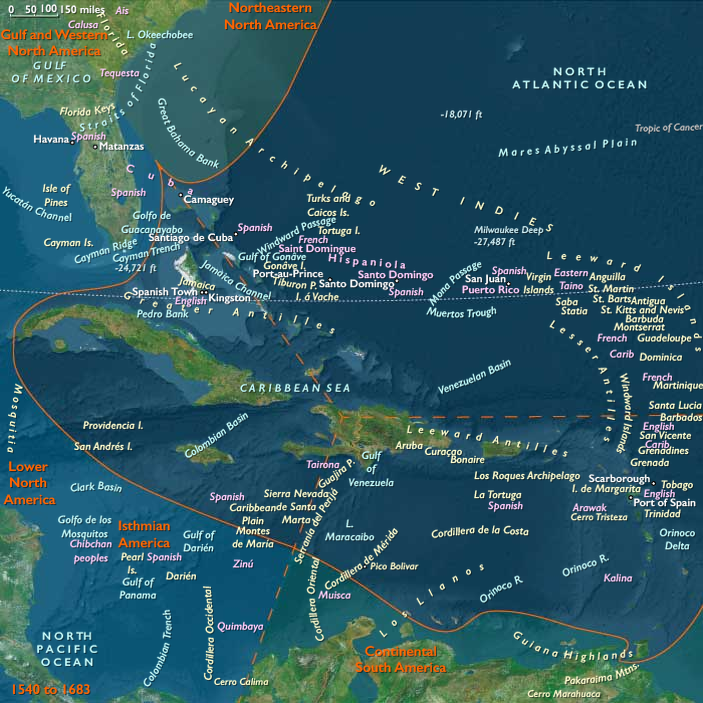
Dutch admiral Michiel de Ruyter, arriving off Barbados at the end of April 1665 aboard his flagship Spiegel, leads his fleet of thirteen vessels into Carlisle Bay, exchanging fire with the English batteries and destroying many of the vessels anchored there.
Unable to silence the English guns and having sustained considerable damage to his own vessels, ...
...de Ruyter retires to French Martinique for repairs.
Sailing north from Martinique, de Ruyter captures several English vessels and delivers supplies to the Dutch colony at Sint Eustatius, then heads north along the Atlantic coast.
De Ruyter learns on his return to The Netherlands that Van Wassenaer had been killed in the disastrous Battle of Lowestoft.
Many expect that Tromp's son Cornelis will now take command of the confederate fleet, especially Cornelis Tromp himself, who has already been given a temporary commission.
Tromp however is not acceptable to the regent regime of Johan de Witt because of his support of the Prince of Orange's cause.
De Ruyter's popularity has grown after his heroic return and, most importantly, his affiliation lies with the States-General and Johan de Witt in particular.
He therefore is made commander of the Dutch fleet on August 11, 1665, as Lieutenant-Admiral (a rank he at this time shares with six others) of the Amsterdam admiralty.
The Dutch Spice Fleet, laden with fabulous riches, had managed to return home safely after the Battle of Vågen.
The Dutch navy has been enormously expanded through the largest building program in its history.
Already in August 1665 the English fleet had again been challenged, though no large battles resulted.
The English in 1666 have become anxious to destroy the Dutch navy completely before it can grow too strong and are desperate to end the activity of Dutch raiders as a collapse of English trade threatens.
On learning that the French fleet intends to join the Dutch at Dunkirk, the English decide to prevent this by splitting their fleet.
Their main force will try to destroy the Dutch fleet first, while a squadron under Prince Rupert is sent to block the Strait of Dover against the French—who don't show up.
At the start of the battle the English fleet of fifty-six ships commanded by Monck, who also commands the Red Squadron, is outnumbered by the eighty-four-strong Dutch fleet commanded by de Ruyter.
The battle, fought from June 1 to 4 June 4 in the Julian or Old Style calendar used at this time in England (June 11 to 14, New Style) off the Flemish and English coast ends with a successful English disengagement after both fleets have expended most of their ammunition.
The Dutch have inflicted significant damage on the English fleet.
The English had gambled that the crews of the many new Dutch ships of the line would not have been fully trained yet but were deceived in their hopes: they have lost ten ships, with slightly over one thousand men killed including two Vice-Admirals, Sir Christopher Myngs and Sir William Berkeley, while about two thousand English have been taken prisoner.
Dutch losses are four ships destroyed by fire and over fifteen hundred and fifty men killed, including Lieutenant-Admiral Cornelis Evertsen, Vice-Admiral Abraham Van der Hulst and Rear-Admiral Frederik Stachouwer.
The Dutch having inflicted considerable damage on the British fleet in the Four Days Battle, de Witt orders de Ruyter to carry out a plan that has been prepared for over a year: to land in the Medway to destroy the British fleet while it is being repaired in the Chatham dockyards.
For this purpose, ten fluyt ships (an inexpensive Dutch type of sailing vessel originally designed as a dedicated cargo vessel) and one that can be built in large numbers carry twenty-seven hundred man of the newly created Dutch Marine Corps, one of the first in history to be specialized in amphibious landings.
Also, de Ruyter is to combine his fleet with the French one.
The French, however, don't show up and bad weather prevents the landing.
De Ruyter has to limit his actions to a blockade of the Thames.
He observes on the 1st of August that the British fleet is leaving port—earlier than expected.
Next, a storm drives the Dutch fleet back to the Flemish coast.
De Ruyter on July 3 again crosses the North Sea, leaving behind the troop ships.
The St. James Day Battle (also known as the St. James' Day Fight, the Battle of the North Foreland and the Battle of Orfordness) takes place on July 25, 1666—St. James' day in the Julian calendar currently in use in England (August 4, 1666 in the Gregorian calendar).
The English fleet is commanded jointly by Rupert and Monck; the fleet of the United Provinces is commanded by de Ruyter.
The battle is known in The Netherlands as the Two Days' Battle.
The battle is a clear English victory, though the separate clash of the two rears is a victory for Tromp.
Dutch casualties are enormous, estimated immediately after the battle at about five thousand men, compared with three hundred British killed; later, more precise information will show that only about twelve hundred of these have been killed or seriously wounded.
However, the Dutch only lose two ships: de Ruyter had been successful at saving almost the complete van, only Sneek and Tholen have struck their flag, and they can quickly repair the damage.
The twin disasters of the Great Plague of London and the Great Fire of London, however, combined with his financial mismanagement, have left Charles II without the funds to continue the war.
In fact, he had had only enough reserves for this one last battle.