
Muhammed V of Granada
Nasrid ruler of the Emirate of Granada
1338 CE to 1391 CE
Muhammed V (January 4, 1338 – January 16, 1391) is the eighth Nasrid ruler of the Emirate of Granada in Al-Andalus on the Iberian Peninsula.
Muhammad V is the eldest son and heir of Yusuf I by his slave Butayna, born on Sunday, January 4, 1338.
He also haa a younger full-blood sister, A'isha, two half brothers and five half-sisters.
He rulea between 1354–1359 and 1362–1391, and is best known for completing the royal palace of the Alhambra with the Palace of the Lions and the Mexuar, or Cuarto Dorado.
World
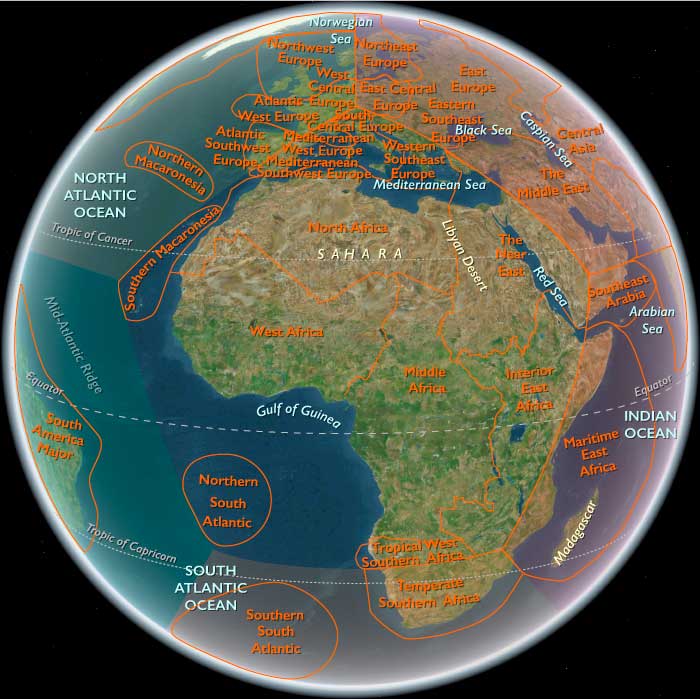
The Middle of The Earth
View →Related Events
Showing 4 events out of 4 total
Mediterranean Southwest Europe (1360–1371 CE): Dynastic Struggles, Mercenary Warfare, and Literary Advances
The era 1360–1371 CE in Mediterranean Southwest Europe is characterized by intricate dynastic struggles in Granada, the prominent role of mercenary forces in Italy, and significant literary and intellectual developments.
Dynastic Struggles in Granada
Muhammed V of Granada, having initially inherited the throne from Yusuf I, faces turbulent political challenges. Overthrown by his half-brother Ismail II in 1359, Muhammed seeks refuge with the Marinid Sultan of Fez, where he is exposed to influential architectural innovations. Ismail II is quickly overthrown and killed by his brother-in-law Abu Said (Muhammed VI) in 1360. Muhammed V capitalizes on political opportunities, ultimately regaining the throne in 1362 after Muhammed VI is lured to Seville by King Peter I of Castile (Pedro el Cruel) and assassinated. Muhammed V secures diplomatic ties through the marriage of his eldest son, Yusuf II, to the Marinid Sultan’s daughter and completes the construction of an important hospital in Granada in 1366. He employs the renowned scholar and diplomat Ibn Khaldun in negotiations with Pedro the Cruel.
Sir John Hawkwood and Mercenary Warfare in Italy
The cessation of Anglo-French hostilities in 1360 provides an opportunity for Sir John Hawkwood, an English soldier of fortune, to lead his mercenary force, the White Company, into Italy. Hawkwood’s background, obscured by legends, suggests humble beginnings in Essex, with experience gained through service in the early stages of the Hundred Years' War. By the 1360s, Hawkwood commands the White Company, engaging in various military actions across Italy. His forces fight under multiple banners, including those of Milan, Florence, Pisa, Perugia, and the papacy. Notable engagements include battles against the Green Count in Lanzo Torinese, conflicts with Milan, warfare between Pisa and Florence in 1364, and supporting Perugia against Papal forces in 1369. In 1370, Hawkwood aligns with Bernabò Visconti in a conflict involving Pisa, Florence, and other city-states.
Literary and Intellectual Advances: Boccaccio
Giovanni Boccaccio completes a decade-long project, his encyclopedic work On the Genealogy of the Gentile Gods, an influential mythological reference and vigorous defense of poetry. Boccaccio's shift in literary style during this period results from declining health, personal disappointments, and an evolving worldview, partly influenced by interactions with Petrarch. After a crisis of faith in 1362, during which he nearly destroys his literary works, Boccaccio is dissuaded by Petrarch. He retires to Certaldo in 1363, turning from imaginative literature to critical studies, biographies, and geographical works, notably producing the satirical and misogynistic work Il Corbaccio in 1365.
Castilian Civil War
The Castilian civil war from 1366 to 1369 emerges as part of the broader conflict between England and France, the Hundred Years' War. Primarily fought between King Peter I (Pedro el Cruel) and his illegitimate brother Henry of Trastámara, this conflict significantly influences regional politics and involves extensive fighting throughout the Kingdom of Castile and its coastal waters.
Legacy of the Era
The era 1360–1371 CE profoundly impacts Mediterranean Southwest Europe through political upheavals in Granada, the strategic deployment of mercenary forces in Italian warfare, and critical advancements in literature and intellectual thought. Collectively, these developments shape regional dynamics, influencing subsequent cultural, political, and military trajectories
Muhammed V of Granada had inherited the throne from Yusuf I but was overthrown in August 1359 by his half-brother Ismail II and sought protection with the Marinid sultan of Fez, where Muhammed had been inspired with fresh examples of architecture.
Ismail had been overthrown and murdered with his brother Qays less than a year later in 1360, by his brother-in-law, Abu Said, who ruled as Muhammed VI but is overthrown in turn by Muhammed V, who returns to the throne for another twenty-nine years.
During the three-year period of the reign of Muhammed VI, Muhammed V has been plotting his return to power.
A chance comes in 1362 when King Peter I of Castile (Pedro el Cruel) lures Muhammed VI to his kingdom.
There, in Seville, he is murdered and his head sent to Muhammed V as a gift upon his return to the throne.
As a gesture of good relations between him and the Marinids, the eldest son of Muhammed V, Yusuf II, marries a daughter of the Marinid Sultan.
His hospital in Granada is completed in 1366.
He employs the poet and diplomat Ibn Khaldun in negotiations with Pedro the Cruel.
The Moors retake Algeciras from Castile in 1368.
The city is destroyed on the orders of Muhammed V of Granada and will subsequently be abandoned.
The landscape architect of the paradisiacal Court of the Lions, created around 1377 in the Alhambra at Granada, emphasizing water, shade, and foliage, grafts the tradition of Roman gardens to the Persian pleasure park with spectacular results.
Architectural arcades, in the form of columnar trees of stone and elaborate vaults, enfold and shade the sunlit court, which is itself quartered by water channels, symbolic rivers of paradise that feed the four corners of the Earth with wine, milk, water, and honey.