
Narendra Modi
Indian politician who has served as the prime minister of India
1950 CE to 2057 CE
Narendra Damodardas Modi (born 17 September 1950) is an Indian politician who has served as the prime minister of India since 2014. Modi was the chief minister of Gujarat from 2001 to 2014 and is the member of parliament (MP) for Varanasi. He is a member of the Bharatiya Janata Party (BJP) and of the Rashtriya Swayamsevak Sangh (RSS), a right-wing Hindutva paramilitary volunteer organisation. He is the longest-serving prime minister outside the Indian National Congress.
Modi was born and raised in Vadnagar, Bombay State (present-day Gujarat), where he completed his secondary education. He was introduced to the RSS at the age of eight. Modi became a full-time worker for the RSS in Gujarat in 1971. The RSS assigned him to the BJP in 1985 and he rose through the party hierarchy, becoming general secretary in 1998. In 2001, Modi was appointed chief minister of Gujarat and elected to the legislative assembly soon after. His administration is considered complicit in the 2002 Gujarat riots, and has been criticized for its management of the crisis. According to official records, a little over 1,000 people were killed, three-quarters of whom were Muslim; independent sources estimated 2,000 deaths, mostly Muslim. A Special Investigation Team appointed by the Supreme Court of India in 2012 found no evidence to initiate prosecution proceedings against him. While his policies as chief minister were credited for encouraging economic growth, his administration was criticized for failing to significantly improve health, poverty and education indices in the state.
In the 2014 Indian general election, Modi led the BJP to a parliamentary majority, the first for a party since 1984. His administration increased direct foreign investment, and reduced spending on healthcare, education, and social-welfare programs. Modi began a high-profile sanitation campaign, and weakened or abolished environmental and labor laws. His demonetization of banknotes in 2016 and introduction of the Goods and Services Tax in 2017 sparked controversy. Modi's administration launched the 2019 Balakot airstrike against an alleged terrorist training camp in Pakistan. The airstrike failed, but the action had nationalist appeal. Modi's party won the 2019 general election which followed. In its second term, his administration revoked the special status of Jammu and Kashmir, and introduced the Citizenship Amendment Act, prompting widespread protests, and spurring the 2020 Delhi riots in which Muslims were brutalized and killed by Hindu mobs. Three controversial farm laws led to sit-ins by farmers across the country, eventually causing their formal repeal. Modi oversaw India's response to the COVID-19 pandemic, during which, according to the World Health Organization's estimates, 4.7 million Indians died. In the 2024 general election, Modi's party lost its majority in the lower house of Parliament and formed a government leading the National Democratic Alliance coalition. Following a terrorist attack in Indian-administered Jammu and Kashmir, Modi presided over the 2025 India–Pakistan conflict, which resulted in a ceasefire.
Under Modi's tenure, India has experienced democratic backsliding and has shifted towards an authoritarian style of government, with a cult of personality centered around him. As prime minister, he has received consistently high approval ratings within India. Modi has been described as engineering a political realignment towards right-wing politics. He remains a highly controversial figure domestically and internationally, over his Hindu nationalist beliefs and handling of the Gujarat riots, which have been cited as evidence of a majoritarian and exclusionary social agenda
World
The Great Crossroads
View →Related Events
Showing 1 events out of 1 total
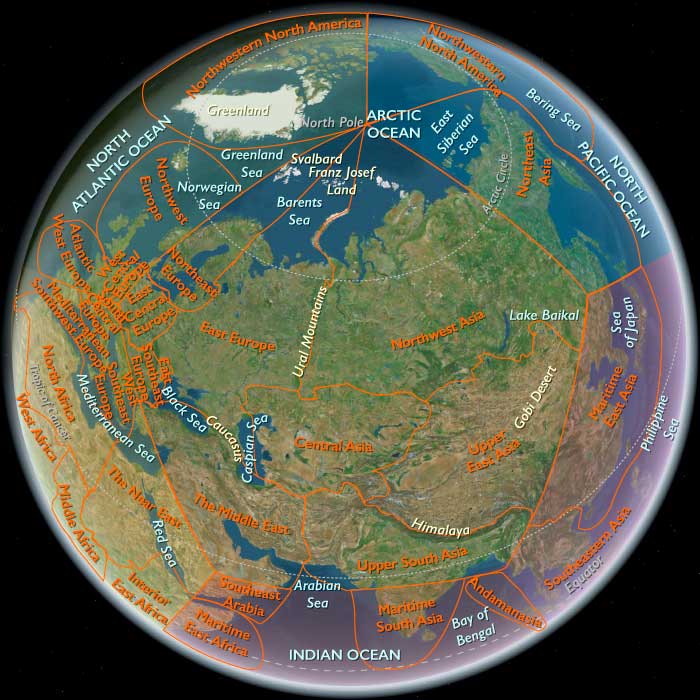
Upper South Asia (2008–2019 CE): Democratic Shifts, Geopolitical Struggles, and Regional Challenges
India: Economic Expansion and Nationalist Politics
India entered this era grappling with the aftermath of the 2008 Global Financial Crisis, responding with stimulus measures under Prime Minister Manmohan Singh’s government, which mitigated some economic distress. However, corruption scandals, including the 2G spectrum case (2010), eroded public trust, contributing to the historic electoral victory of the Bharatiya Janata Party (BJP) under Narendra Modi in 2014.
Modi championed initiatives such as Make in India, Digital India, and the implementation of a nationwide Goods and Services Tax (GST) in 2017. Politically, India experienced heightened nationalism and controversy surrounding communal tensions, particularly after the revocation of Article 370 in Jammu and Kashmir (2019), integrating it fully into India but prompting widespread debate and unrest.
Pakistan: Democratic Continuity and Political Turmoil
In Pakistan, the Pakistan Peoples Party (PPP) government under Asif Ali Zardari (2008–2013) struggled with economic instability, terrorism, and catastrophic flooding (2010). The subsequent 2013 elections brought Nawaz Sharif and his Pakistan Muslim League (N) to power, who pursued infrastructure development, notably through the China-Pakistan Economic Corridor (CPEC), part of China’s Belt and Road Initiative.
Sharif’s tenure ended abruptly after his disqualification over corruption allegations following the Panama Papers (2017). In 2018, former cricket icon Imran Khan’s Pakistan Tehreek-e-Insaf (PTI) won elections, pledging reforms and accountability amid significant economic and security challenges.
Afghanistan: Persistent Conflict and Political Instability
Afghanistan continued to endure chronic instability despite significant international intervention. President Hamid Karzai (2004–2014) gave way to Ashraf Ghani after disputed elections (2014). The Afghan government grappled with intensifying Taliban insurgency, widespread corruption, and persistent violence.
NATO formally ended combat operations in 2014, transitioning security responsibilities to Afghan forces. However, Taliban control and influence steadily expanded, prompting the beginning of formal peace negotiations between the Taliban and the United States in 2018–19, laying the foundation for future agreements.
Bangladesh: Economic Growth Amidst Authoritarian Trends
Bangladesh, under Prime Minister Sheikh Hasina’s Awami League, experienced rapid economic growth, driven largely by its textile industry and infrastructure investment. However, economic success was shadowed by increasing authoritarian governance, suppression of dissent, and accusations of electoral manipulation (2014, 2018 elections).
The Rohingya refugee crisis (2017), triggered by violence in Myanmar, strained Bangladesh’s humanitarian resources and international relations, as over 700,000 refugees fled into Bangladesh, creating a major humanitarian and diplomatic challenge.
Nepal: Democratic Stabilization and Reconstruction
Nepal solidified its transition to a secular, federal republic with the promulgation of a new constitution (2015). However, this was followed closely by the devastating April 2015 earthquake, requiring massive reconstruction efforts. The subsequent electoral victory of the communist coalition (2017) under K.P. Sharma Oli brought relative political stability and encouraged infrastructure development.
Bhutan: Strengthening Democratic Institutions
Bhutan consolidated its fledgling democracy, successfully holding peaceful elections in 2013 and 2018. Under King Jigme Khesar Namgyel Wangchuck, the nation continued emphasizing sustainable economic practices and its unique policy of Gross National Happiness (GNH), balancing modernization with cultural preservation.
Northwestern Myanmar: Intensified Conflicts and Humanitarian Crises
In Myanmar’s northwestern regions (Kachin, Sagaing, Chin, and especially northern Rakhine), ethnic conflicts intensified. Renewed clashes between the Myanmar military and groups such as the Kachin Independence Army (KIA) escalated after 2011. The 2017 Rohingya crisis, involving widespread persecution and displacement, severely impacted regional stability, leading to a mass exodus into Bangladesh and India.
Geopolitical Dynamics and Regional Relations
Tensions between India and Pakistan persisted, notably during the Mumbai attacks (2008), frequent border skirmishes along the Line of Control (LoC), and renewed crises following the Pulwama attack and subsequent Balakot airstrike (2019).
Chinese influence markedly expanded in the region through infrastructure projects, most notably via CPEC in Pakistan, reshaping geopolitical alignments and strategic calculus.
India’s enhanced regional diplomacy saw deeper engagement with ASEAN under its Act East policy, alongside persistent but periodically stalled initiatives within SAARC.
Technological and Cultural Transformation
Rapid technological proliferation reshaped Northern South Asia, with widespread adoption of mobile technology, digital communication, and economic digitization. India emerged prominently as a global IT hub, driving significant economic growth and digital innovation.
Socially, movements advocating women's rights and gender equality intensified, particularly in urban India and Bangladesh, in response to high-profile gender violence incidents and broader societal debates. The region also saw rapid urbanization, influencing youth culture and societal expectations.
Legacy of the Era
From 2008 to 2019, Upper South Asia witnessed significant shifts, marked by India's assertive economic expansion and nationalist realignment, Pakistan’s complex democratic trajectory, Afghanistan's ongoing conflict and negotiation efforts, Bangladesh’s economic rise and governance challenges, Nepal’s recovery from crisis, Bhutan’s steady democratic evolution, and Myanmar’s humanitarian crisis spilling over borders. These years profoundly reshaped the political landscape, influencing national identities, international relations, and socioeconomic structures, setting crucial precedents for future developments.