
Paul of Greece
King of Greece
1901 CE to 1964 CE
Paul (December 14, 1901 – March 6, 1964) reigns as King of Greece from 1947 until his death.
World
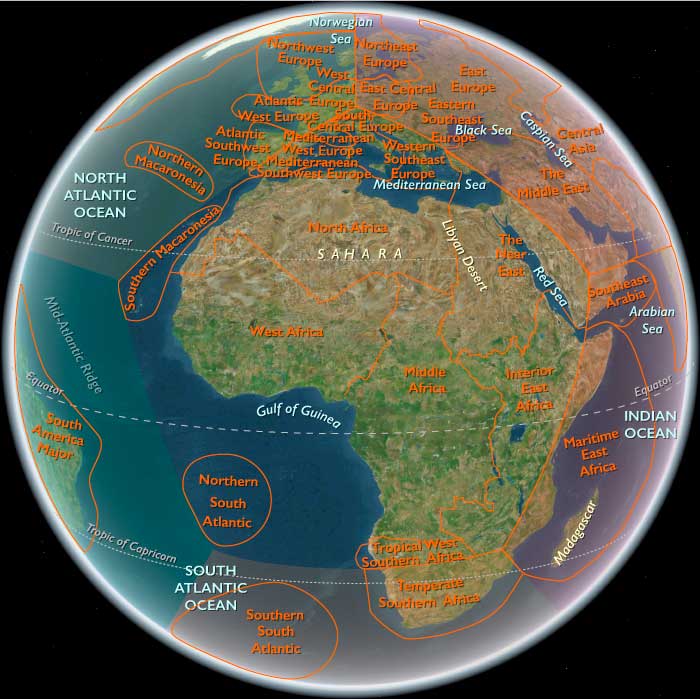
The Middle of The Earth
View →Related Events
Showing 5 events out of 5 total
A delegation from Cyprus had submitted a demand for enosis—union with Greece—to London after the Second World War.
The demand had been rejected but the British proposed a more liberal constitution and a ten-year program of social and economic development.
King Paul of Greece had declared in 1948 that Cyprus desired union with Greece.
In 1951, the Orthodox Church of Cyprus had presented a referendum according to which around a great majority of the Greek Cypriot population wanted the union.
The United Nations had accepted the Greek petition and enosis had then become an international issue.
Both Greece and Turkey had become members of NATO in 1952.
The British withdrawal from Egypt in that year had led to Cyprus becoming the new location for their Middle East Headquarters.
The Greek Cypriot demand for enosis, led by Archbishop Makarios, emerges with new force in the 1950s, when Greece begins to accord it support on the international scene.
This attempt to win world support alerts Turkey and alarms the Turkish Cypriots.
When international pressure does not suffice to make Britain respond as required, violence escalates with a campaign against the colonial power organized by EOKA (Ethniki Organosis Kyprion Agoniston).
Its leader, Colonel George Grivas, creates and directs an effective campaign beginning in 1955.
The first bombs are set off on April 1, followed by leaflets.
Attacks on police stations start on June 19.
The Governor proclaims a State of Emergency on November 26.
Greek Prime Minister Konstantinos Karamanlis, who had retained a parliamentary majority in elections held in 1958, has helped Greece make a dramatic economic recovery from the devastation of the Second World War and the ensuing civil war (1946–49).
With American aid, he has achieved rapid economic growth and greatly expanded Greece's fledgling industrial sector.
In foreign affairs, he has improved Greece's relations with Yugoslavia, but those with Turkey and Great Britain remain strained because of the issue of tensions between the ethnic Greek majority and the Turkish minority on Cyprus, which had remained under British rule.
In order to restore friendly relations with the NATO powers, Karamanlis decides to disentangle the awkward Cyprus problem by ...
...establishing, not the union with the Greek state sought by the overwhelming Greek-Cypriot majority, but an independent republic on the island, an action taken, with the agreement of Turkey and Great Britain, in 1960.
According to the terms of the treaties, ratified in Nicosia, the new republic will not participate in a political or economic union with any other state, nor will it be subject to partition.
Greece, Turkey, and Britain guarantee the independence, integrity, and security of the republic, and Greece and Turkey agree to respect the integrity of the areas remaining under British sovereignty, which include ...
...military bases at Akrotiri and ...
...Dhekélia.