
Per Teodor Cleve
Swedish chemist and geologist
1840 CE to 1905 CE
Per Teodor Cleve (10 February 1840 – 18 June 1905) is a Swedish chemist and geologist.
World
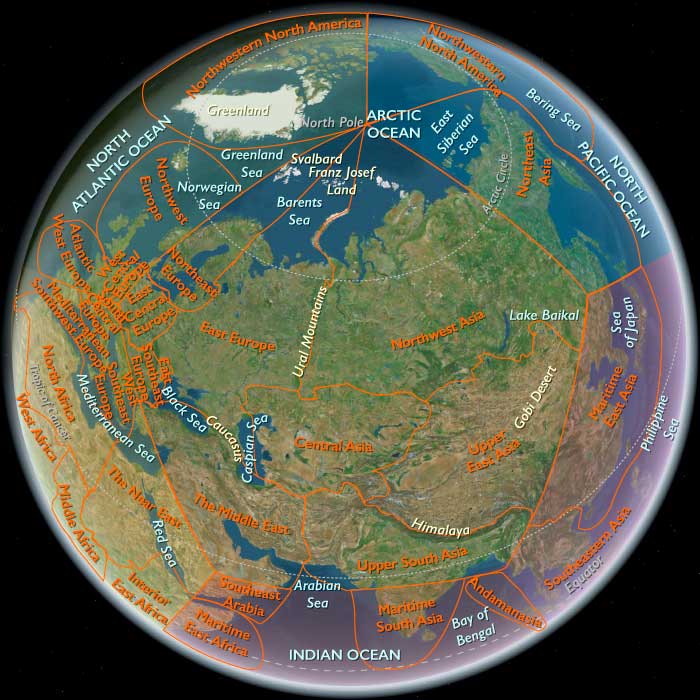
The Great Crossroads
View →Related Events
Showing 4 events out of 4 total
Holmium is discovered spectroscopically in 1878 by Swiss chemists Jacques-Louis Soret and Marc Delafontaine, and independently in 1879 by Swedish chemist Per Teodor Cleve, who separate it chemically from erbium and thulium.
Cleve names the element after Holmia, the Latinized form of Stockholm, his native city.
Lars Fredrik Nilson, while working on rare earths, employs spectroscopic analysis in 1879 to discover scandium's oxide, scandia (named for Scandinavia"), in the rare-earth minerals gadolinite and euxenite, which occur only in Scandinavia.
During this time he also studies the gas density of metals which make it possible to determine the valence of various metals.
Nilson was born in Skönberga parish in Östergötland, Sweden.
His father, Nikolaus, was a farmer.
The family had moved to Gotland when Lars Fredrik was young.
After graduating from school, Lars Fredrik had enrolled at Uppsala University, and there he studied the natural sciences.
His talent for chemistry drew attention from chemistry professor Lars Svanberg, who was a former student of Jöns Jakob Berzelius.
In 1874 Nilson had became associate professor of chemistry, and could now devote more time to research.
Swedish chemist Per Teodor Cleve identifies scandium with the hypothetical ekaboron later in 1879.
The agreement of its properties with those predicted by Dmitri Mendeleev help to bring about general scientific acceptance of Mendeleev's periodic table.
Also in 1879, Cleve discovers thulium, together with holmium, having separated the former chemically from the oxide thulia, which he names after Thule, the ancient Latin name for the most northerly land.Per Teodor Cleve concludes in 1882 that Mosander's didymia (from which are eventually isolated praseodymium and neodymium) is a complex earth, i.e., a mixture of several rare-earth oxides.