
Ramiro II of Aragon
King of Aragon
1075 CE to 1157 CE
Ramiro II (c. 1075 – 16 August 1157), called the Monk, is King of Aragon from 1134 until withdrawing from public life in 1137 (although he uses the royal title until his death).
He is the youngest son of Sancho Ramírez, King of Aragon and Navarre and Felicia of Roucy.
World
The Middle of The Earth
View →Related Events
Showing 5 events out of 5 total
Atlantic Southwest Europe (1132–1143 CE): Portuguese Independence, Castilian-Leonese Consolidation, and Galician Cultural Continuity
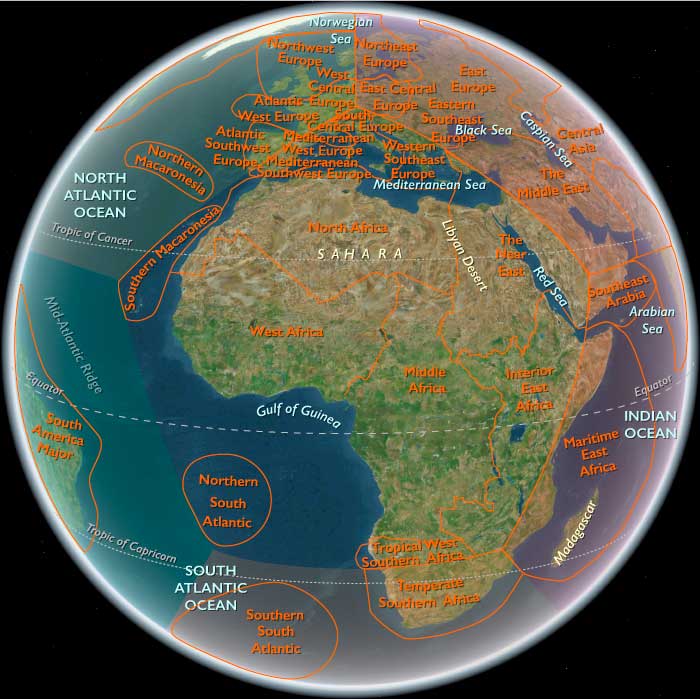
Between 1132 and 1143 CE, Atlantic Southwest Europe—including Galicia, northern and central Portugal, Asturias, Cantabria, and northern Spain south of the Franco-Spanish border (43.05548° N, 1.22924° W)—witnessed critical political realignments and the decisive emergence of distinct national and regional identities. Most notably, this era marked Portugal’s pivotal transition to political independence, culminating in the recognition of Afonso Henriques (1139–1185 CE) as the first King of Portugal following his decisive victory at the Battle of Ourique (1139 CE). Meanwhile, León-Castile stabilized politically under Alfonso VII (1126–1157 CE), decisively reinforcing Castilian and Leonese identities and territorial cohesion. In the north, Galicia continued to flourish culturally and economically, sustained by pilgrimage traditions and maritime commerce, while Aragón-Navarre, under the assertive rule of Alfonso I "the Battler" (1104–1134 CE) and subsequently his successor, Ramiro II (1134–1137 CE), navigated complex dynastic and territorial changes.
Political and Military Developments
Portuguese Independence and the Reign of Afonso Henriques
This era was transformative for Portugal. Following Countess Teresa’s deposition after the Battle of São Mamede (1128 CE), her son, Afonso Henriques, decisively established authority over the county. His military successes, notably his victory at the Battle of Ourique in 1139, decisively solidified his position, leading to his declaration as the first King of Portugal. In 1143, the Treaty of Zamora saw León-Castile formally recognizing Portuguese independence, definitively transitioning Portugal from autonomous county to independent kingdom.
Consolidation of Castilian and Leonese Stability under Alfonso VII
Following Queen Urraca’s death (1126 CE), Alfonso VII decisively stabilized León-Castile, strengthening internal governance structures, territorial administration, and frontier defenses. His proclamation as Imperator totius Hispaniae reinforced claims of supreme authority, bolstering Castilian and Leonese identities. Alfonso’s administrative cohesion decisively reinforced regional stability, political coherence, and frontier security.
Aragón-Navarre Succession and Territorial Shifts
After the death of Alfonso I "the Battler" (1134 CE), Aragón-Navarre experienced significant dynastic shifts. Alfonso’s successor, Ramiro II (1134–1137 CE), known as "the Monk," inherited a challenging political environment marked by internal instability. He ultimately passed power to his daughter, Petronilla, whose marriage to Ramon Berenguer IV, Count of Barcelona, decisively unified Aragón and Catalonia. Navarre separated, regaining independent governance under García Ramírez (1134–1150 CE), significantly altering Iberian territorial alignments.
Economic Developments
Regional Economic Stability and Growth
Agriculture remained robustly productive, significantly supported by advanced Moorish agricultural techniques and widespread adoption of improved irrigation and crop diversification. Economic prosperity was reinforced through vibrant mining industries (especially silver and gold in Galicia and Asturias), livestock husbandry, and flourishing artisanal crafts, decisively supporting regional stability and population growth.
Expanded Maritime and Pilgrimage Commerce
Portuguese coastal ports—particularly Braga, Porto, and Coimbra—expanded maritime trade networks, increasingly connecting with northern European markets. Galicia’s maritime commerce through ports like A Coruña also flourished, significantly reinforcing regional economic vitality. Santiago de Compostela’s pilgrimage continued driving robust economic activity, hospitality industries, and cultural exchanges, decisively shaping Galicia’s economic resilience and regional prominence.
Cultural and Religious Developments
Galician Cultural Continuity and Santiago’s Prominence
Galicia maintained its cultural and spiritual prominence, decisively supported by Santiago de Compostela’s continuing pilgrimage significance. Ecclesiastical institutions fostered substantial architectural investment, scholarly pursuits, and cultural activity, reinforcing Galicia’s distinctive cultural identity and resilience.
Monastic Scholarship and Cluniac Influence
Monastic communities continued vibrant intellectual traditions, manuscript preservation, agricultural innovation, and scholarly endeavors. Cluniac reform ideals remained influential, strengthening ecclesiastical discipline, liturgical uniformity, and closer ties with Rome, significantly shaping Iberian Christian identity.
Cultural Syncretism and Iberian Traditions
Orthodox Christianity continued integrating indigenous Celtic and Iberian cultural traditions, particularly evident in rural Galicia and northern Portugal. This cultural syncretism decisively reinforced distinctive regional identities, social cohesion, and cultural continuity.
Civic Identity and Governance
Emergence of Portuguese National Identity
Under King Afonso Henriques, Portuguese national identity decisively emerged. His effective governance significantly consolidated territorial integrity, administrative autonomy, and civic identity, laying enduring foundations for Portugal’s sovereignty and national cohesion.
Consolidated Castilian and Leonese Governance
Under Alfonso VII, León-Castile decisively stabilized, reinforcing clearly defined regional identities (Castilian and Leonese) within strengthened administrative structures. Territorial coherence, frontier governance, and regional civic identity significantly shaped Iberian political stability and territorial integrity.
Aragónese-Catalonian Unification and Navarrese Autonomy
Dynastic transitions after Alfonso I’s death reshaped Aragón and Navarre’s governance. Aragón unified with Catalonia through Petronilla’s marriage to Ramon Berenguer IV, significantly influencing regional governance stability. Navarre’s regained independence under García Ramírez decisively preserved its regional autonomy, governance stability, and distinct identity.
Notable Regional Groups and Settlements
-
Portuguese: Decisively established as a distinct national identity, under King Afonso Henriques, advancing decisively toward recognized independence and sovereignty.
-
Castilians and Leonese: Solidified as distinct regional identities, significantly shaping governance stability and territorial coherence under Alfonso VII’s rule.
-
Galicians: Continued flourishing culturally and economically, decisively reinforced by Santiago’s international pilgrimage prominence and maritime commerce.
-
Basques (Navarre): Maintained resilient governance stability, regional identity, and political coherence amid broader Iberian shifts, significantly shaping regional diplomacy and territorial autonomy.
Long-Term Significance and Legacy
Between 1132 and 1143 CE, Atlantic Southwest Europe:
-
Witnessed the definitive establishment of Portuguese independence under King Afonso Henriques, decisively reshaping regional identities, political structures, and Iberian geopolitics.
-
Achieved decisive stabilization and territorial cohesion within León-Castile under Alfonso VII, solidifying distinct Castilian and Leonese identities and administrative coherence.
-
Navigated complex dynastic transitions within Aragón-Navarre, significantly reshaping northern Iberian territorial boundaries and regional alliances.
-
Sustained robust economic prosperity, pilgrimage-driven commerce, cultural vitality, and local governance, significantly influencing the region’s medieval trajectory and historical legacy.
This critical era decisively shaped regional and national identities, territorial stability, and cultural resilience, profoundly influencing Atlantic Southwest Europe’s enduring medieval trajectory and historical significance.
Sancho Ramirez, King of Aragon, had placed his youngest son, Ramiro, as a child into the Benedictine monastery of Saint Pons de Thomières in the Viscounty of Béziers.
As a respected monk there he was elected abbot of the Castillian royal monastery of Santos Fecundo y Primitivo in Sahagún and later was abbot of the monastery of San Pedro el Viejo at Huesca.
Wanting to limit Ramiro's power within the Kingdom of Navarre-Aragon, his brother Alfonso the Battler had blocked his elections as bishop of Burgos and as bishop of Pamplona.
In 1134, he had been elected bishop of Barbastro-Roda when the childless death of his brother made him one of the candidates for succession to the crown.
Others put forward include Alfonso VII, king of Castile, who as a foreign king finds little support, and the choice of the Navarrese nobility, Pedro of Atarés, grandson of Sancho Ramírez, Count of Ribagorza, the illegitimate son of Ramiro I of Aragon.
At an assembly at Borja intended to resolve the succession, a misunderstanding alienates Pedro from his supporters, yet they are unwilling to accept the Aragonese-favored Ramiro, and in the end the kingdoms are divided.
In Navarre, García Ramírez, a scion of the pre-union royal family of Navarre and protégé of Alfonso VII, is chosen king, while in Aragon the choice falls on Ramiro, who suspends his monastic vows to take the crown.
Olegarius plays an important role in December 1134 when, at Zaragoza, he brokers a peace between Ramiro II of Aragon and Alfonso VII of Castile.
He had also negotiated the marriage alliances between Douce I, Countess of Provence and Ramon Berenguer III and of Petronila of Aragon to Ramon Berenguer IV.
The reign of Ramiro the Monk, as he is known, has been tumultuous.
At the beginning of his reign he had problems with his nobles, who thought he would be docile and easily steered to their wishes, but discovered him to be inflexible.
In order to produce an heir, he had married Agnes, daughter of Duke William IX, Duke of Aquitaine.
Once wed, his wife had borne a daughter, Petronilla, Ramon Berenguer IV had inherited the county of Barcelona from his father Ramon Berenguer III on August 19, 1131.
On August 11, 1137, at the age of about twenty-four, he is betrothed in Barbastro to the infant Petronilla of Aragon, who is just over a year old.
The counties of Provence and Barcelona had formed a union in 1134, around the same time the kingdom of Aragon had split from that of Navarre.
Ramiro, who seeks Barcelona's aid against Alfonso VII of Castile, withdraws from public life on November 13, 1137, leaving his kingdom to Petronilla and Ramon Berenguer, the latter in effect becoming ruler of Aragon, although he will never be king himself, instead commonly using the titles "Count of the Barcelonans and Prince of the Aragonians" (Comes Barcinonensis et Princeps Aragonensis), and occasionally those of "Marquis of Lleida and Tortosa" (after conquering these cities).
He will be the last Catalan ruler to use "Count" as his primary title; starting with his son Alfonso II of Aragon, the counts of Barcelona will style themselves, in the first place, as kings of Aragon.
The mercantile County of Barcelona will preserve considerable autonomy.