
Spyros Kyprianou
one of the most prominent politicians and barristers of modern Cyprus
1932 CE to 2002 CE
Spyros Achilleos Kyprianou (October 28, 1932 – March 12, 2002) is one of the most prominent politicians and barristers of modern Cyprus.
He serves as the second President of Cyprus from 1977 to 1988.
Spyrou Kyprianou Avenue in Nicosia is named after him posthumously.
World
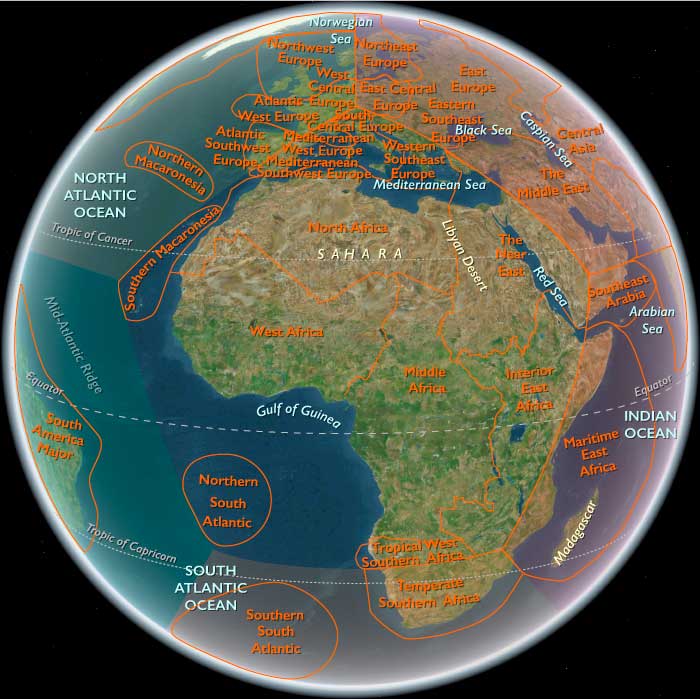
The Middle of The Earth
View →Related Events
Showing 7 events out of 7 total
Archbishop Makarios III and Rauf Denktash had agreed on acceptable guidelines for a bizonal federation in Cyprus early in 1977, dividing the island provisionally, but achieve no lasting, workable solution.
When Makarios died in August, Spyros Kyprianou, president of the House of Representatives, became acting president of the republic; he returns unopposed to this office in January 1978 for a five-year term.
Greek Cypriots have two older parties dating from before 1970, the Progressive Party of the Working People (Anorthotikon Komma Ergazomenou Laou—AKEL) and the United Democratic Union of Cyprus (Eniea Dimokratiki Enosis Kyprou— EDEK), generally called the Socialist Party EDEK (Socialistiko Komma EDEK), and some had formed after the events of 1974.
The two most important of these newer parties are the Democratic Party (Dimokratiko Komma—DIKO) and the Democratic Rally (Dimokratikos Synagermos—DISY).
Both of these parties are on the right, with DIKO headed by Spyros Kyprianou, who had replaced Makarios as president after the latter's death in 1977, and DISY led by veteran politician Glafkos Clerides.
power.
Spyros Kyprianou, president of Cyprus, is reelected in 1983; Turkish Cypriots take no part in the 1983 election.
Vassiliou will win election by promising to bring a new spirit to politics and break the deadlocked negotiations to end the island's division.
First they had to build a new state. In 1975 the "Turkish Federated State of Cyprus" was proclaimed.
In 1983, by means of a unilateral declaration of independence, Turkish Cypriots create the "Turkish Republic of Northern Cyprus" ("TRNC"), but by the early 1990s, only Turkey will have recognized it as a nation.
Rauf Denktash, who has been the political leader of the Turkish Cypriot community since the 1970s, had been elected president of the "TRNC."
A number of political parties are active in the area occupied by the "TRNC."
They include both left- and right-wing parties, which both support and oppos the settlement of mainland Turks on the island and the politics of partition.
The largest party, the National Unity Party (Ulusal Birlik Partisi—UBP), had been founded and is controlled by Denktash.
The UBP supports a resolutely separatist stance.
The second party of the "TRNC," the Communal Liberation Party (Toplumcu Kurtulush Partisi—TKP) advocates closer relations with the Greek Cypriot community.
The left-wing Republican Turkish Party (Cumhuriyetci Turk Partisi—CTP) is even more forthright
in its opposition to the government's policy of restricted relations with the Republic of Cyprus.
Two major compromises on the part of the Republic of Cyprus had occurred in the second half of the 1970s.
First, in 1977, four guidelines for future intercommunal talks had been accepted by both communities; their thrust was that Cyprus would become a bicommunal federal republic, a departure from the terms of the constitution of 1960.
Second, the ten-point agreement of 1979, achieved at a meeting between Kyprianou and Denktash, had worked out policies to ease further intercommunal talks.