Thomas Handasyd Perkins
Boston merchant
Years: 1764 - 1854
Colonel Thomas Handasyd Perkins, or T. H. Perkins (December 15, 1764 – January 11, 1854) is a wealthy Boston merchant and an archetypical Boston Brahmin.
Starting with bequests from his grandfather and father-in-law, he amasses a huge fortune.
As a young man he is a slave trader in Haiti, a Maritime Fur Trader, trading furs from the American Northwest to China, and then a major smuggler of Turkish opium into China.
Related Events
Filter results
Showing 9 events out of 9 total
Joseph Ingraham and Simon Metcalfe are other notable American maritime fur traders.
Thomas Handasyd Perkins is one of ten children born to James Perkins and Elizabeth Peck in and eighteen-year span.
When Perkins was twelve, he was in the crowd that had first heard the Declaration of Independence read to the citizens of Boston.
The family had planned to send Perkins to Harvard College, but he had no interest in a college education.
In 1779 he began working, and in 1785 when he turned twenty-one he became legally entitled to a small bequest that had been left to him by his grandfather Thomas Handasyd Peck, a Boston merchant who dealt largely in furs and hats.
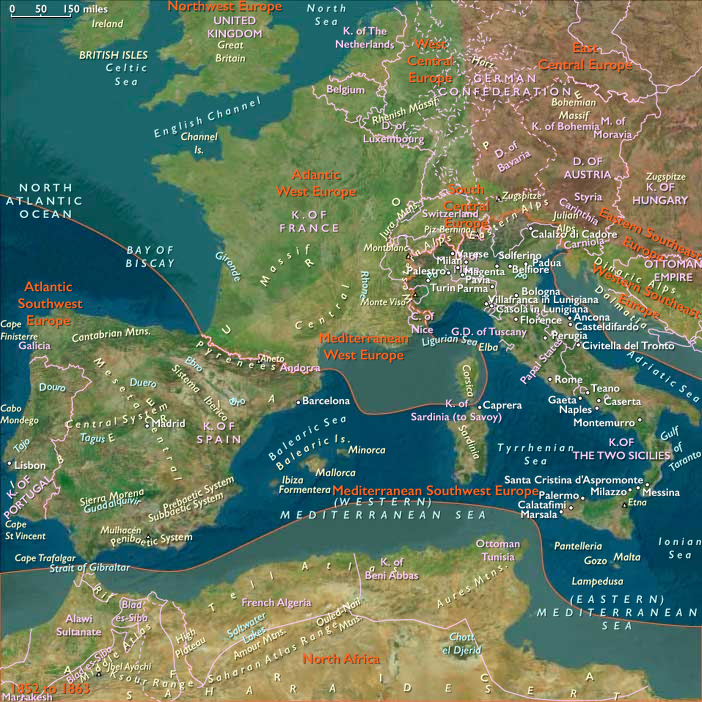
When China opened the port of Canton to foreign businesses in 1785, Perkins had become one of the first Boston merchants to engage in the China trade.
He had sailed on the Astrea to Canton in 1789 with a cargo including ginseng, cheese, lard, wine, and iron.
On the trip back, it carried tea and silk cloth.
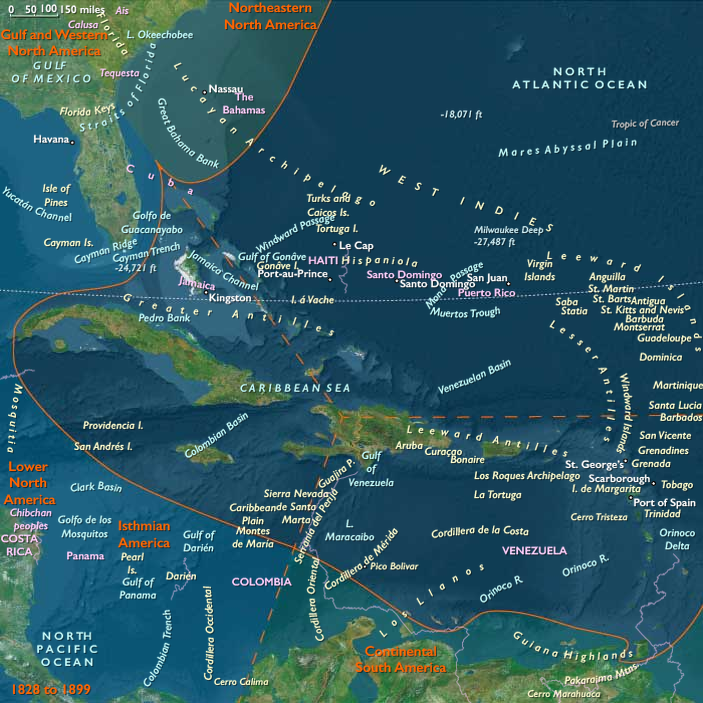
Perkins has engaged in the slave trade at Cap-Haïtien in Saint Domingue until its end in 1793.
William F. Sturgis was born in Barnstable, Massachusetts, to Hannah Mills and William E. Sturgis, a ship master and lineal descendant from Edward Sturgis of Yarmouth, Massachusetts, the first Sturgis in America (arrived 1630).
He had joined the counting house of his uncle Russell Sturgis (1750–1826) in 1796, and less than two years later had become connected with James and Thomas Handasyd Perkins's maritime fur trade between the Pacific Northwest coast and China.
Upon his father's death in 1797, he had gone to sea to support the family as assistant trader on the Eliza, then as chief mate of the Ulysses.
He had then served under Captain Charles Derby on the Caroline until Derby died and Sturgis took command.
The Caroline sails in 1804 from the Columbia River to Kaigahnee, just south of Prince of Wales Island, Alaska, the homeland of the Kaigani Haida people, from whom he acquires some twenty-five hundred sea otter skins that net seventy-three thousand and thirty-four dollars.
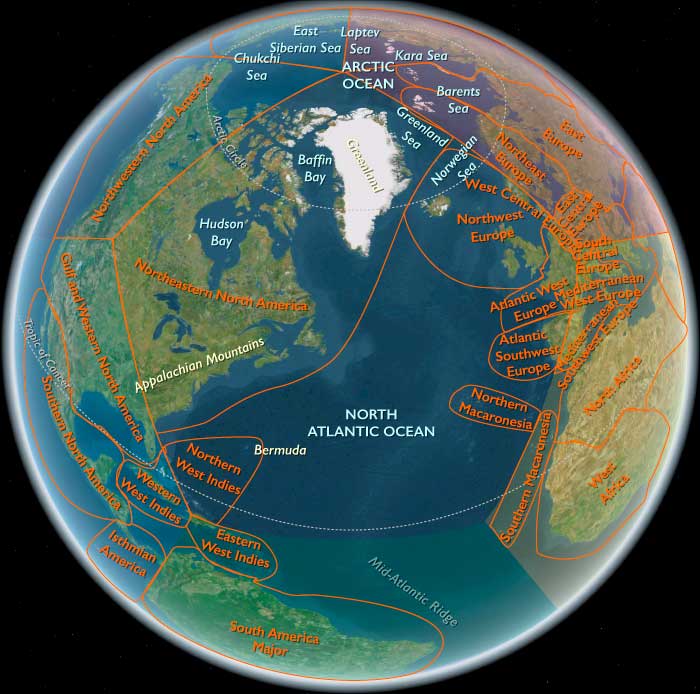
Northeastern North America
(1804 to 1815 CE): Exploration, Conflict, and Emerging National Identity
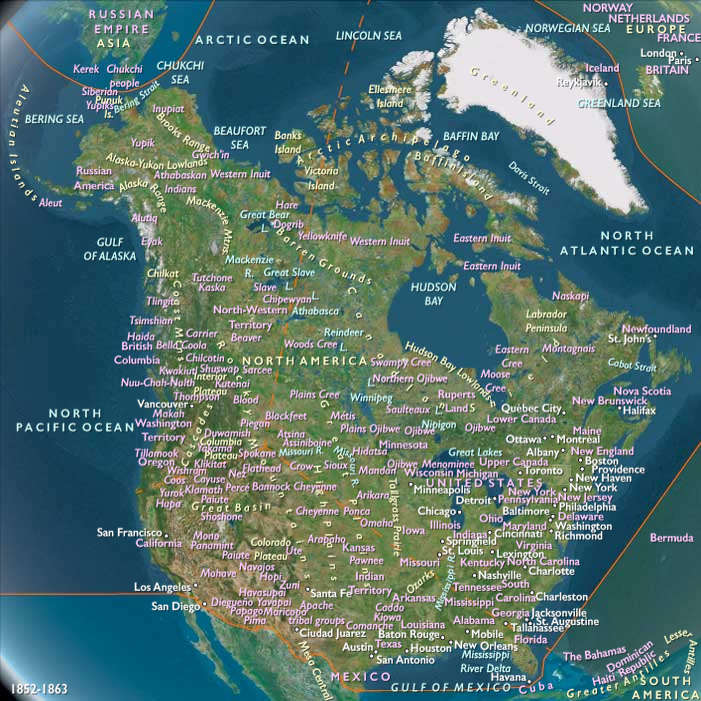
The years 1804 to 1815 in Northeastern North America marked an era of pivotal exploration, territorial expansion, intense conflicts, and significant developments shaping American national identity. During this period, Americans eagerly pursued westward expansion, leading to prolonged conflicts known as the American Indian Wars, while the Louisiana Purchase of 1803 nearly doubled the nation's size. Intensified slavery, frontier settlement, and evolving political landscapes also characterized this era, culminating in the War of 1812, a conflict that strengthened American nationalism despite its ambiguous conclusion.
Landmark Western Exploration
Lewis and Clark Expedition (1804–1806)
Following the Louisiana Purchase (1803), championed by the third U.S. president, Thomas Jefferson, the historic expedition led by Meriwether Lewis and William Clark, known as the Corps of Discovery, explored territories west of the Mississippi River. Their journey to the Pacific Ocean and back significantly expanded geographic and scientific understanding of the continent.
Zebulon Pike’s Explorations (1805–1807)
Explorer Zebulon Pike simultaneously conducted extensive explorations, mapping the Upper Mississippi River region and the southern parts of the newly acquired Louisiana Territory, enhancing U.S. knowledge of its expanding frontier.
Frontier Settlement and Westward Expansion
The Louisiana Purchase encouraged a vast wave of American settlers to push westward beyond the Appalachians. The frontier reached the Mississippi River by 1800, and new states such as Ohio (1803) were rapidly admitted into the Union. Settlements expanded into the Ohio Country, the Indiana Territory, and the lands of the lower Mississippi valley, particularly around St. Louis, which, after 1803, became a major gateway to the West. Americans enthusiastically pursued opportunities in new territories, sparking tensions and conflict with indigenous peoples.
In South Carolina, the antebellum economy flourished, particularly through cotton cultivation after Eli Whitney's invention of the cotton gin in 1793. Though nominally democratic, South Carolina remained tightly controlled by a powerful planter elite, with strict property and slaveholding requirements limiting political participation to wealthy landowners.
War of 1812 and Its Impacts
Causes and Conflicts
The U.S. declared war against Great Britain in 1812, motivated by grievances such as impressment of American sailors, trade restrictions, and Britain's support for Native American resistance. Prominent Federalist leaders, including Boston-based politician Harrison Gray Otis, strongly opposed the war, advocating states' rights at the Hartford Convention (1814).
Combat and Indigenous Alliances
Intense battles occurred along the Canadian-American frontier. Native leaders like Tecumseh allied with Britain, resisting American westward expansion until Tecumseh's defeat and death at the Battle of the Thames (1813). The war saw notable events such as the British burning of Washington D.C. (1814) and the failed British assault on Baltimore, immortalized by Francis Scott Key's poem "The Star-Spangled Banner."
Conclusion and National Identity
Ending in stalemate with the Treaty of Ghent (1814), the war nonetheless bolstered U.S. nationalism and confirmed the nation's resilience. The final American victory at the Battle of New Orleans (January 1815) elevated Andrew Jackson as a national hero.
Social, Economic, and Cultural Developments
Expansion of Slavery and Southern Economy
Despite the ideals of liberty proclaimed in the American Revolution, slavery expanded dramatically in the Deep South. Following the failed Gabriel’s Rebellion (1800) in Virginia, Southern planters imposed even harsher controls on enslaved people. By 1810, South Carolina had a large enslaved population—nearly half of its residents—essential for its thriving cotton economy. Powerful merchant families, such as the Boston-based Cabots and Perkins, continued amassing wealth through shipping and involvement in slave-related trade, exemplifying the complex intersections of commerce, slavery, and politics.
Religious Revival and Frontier Culture
The Second Great Awakening profoundly influenced frontier society, encouraging evangelical Protestant revivals, camp meetings, and increased participation in denominations like Baptists and Methodists. Large camp meetings, including the famous gathering at Cane Ridge, Kentucky (1801), energized religious life and social reform movements.
Jeffersonian Democracy and Early Political Developments
Thomas Jefferson, a leading advocate for individual liberty and separation of church and state, profoundly shaped U.S. politics in the early 1800s. Serving as president from 1801 to 1809, he oversaw the Louisiana Purchase, which significantly expanded the nation's territory. Despite advocating democratic ideals, Jefferson himself exemplified contradictions: he was an eloquent champion of freedom who remained economically reliant on enslaved labor at his plantation home, Monticello, and was likely father to several children with Sally Hemings, an enslaved African-American woman.
Jefferson and his successor, James Madison (1809–1817)—both clean-shaven like their predecessors, Washington and Adams—oversaw the complex diplomatic tensions and conflicts culminating in the War of 1812.
Domestic Turmoil and Conspiracy
During this era, internal U.S. affairs were unsettled. The Spanish withdrawal of the American “right of deposit” at New Orleans (1802) escalated tensions, fueling discussions of war. The controversial third vice-president, Aaron Burr, became embroiled in scandal, allegedly conspiring in 1805–1807 to foment secession in the western territories alongside General James Wilkinson. Although his conspiracy remains debated among historians, it highlighted the fragility of national unity during this period.
International Commerce and Opium Trade
Prominent American merchant families such as the Cabots of Boston continued to build fortunes through shipping, privateering, and participation in the Triangular Trade involving enslaved Africans. Samuel Cabot Jr., through marriage to Eliza Perkins, daughter of merchant king Colonel Thomas Perkins, expanded family wealth by engaging in controversial opium trade with China via British smugglers, highlighting the far-reaching commercial interests of prominent American families during this period.
Additionally, major institutions like Brown University began confronting the economic legacy of slavery, addressing their involvement in slave trading as well as their complex roles in the nation’s commercial and academic development.
Native American Realignment and the American Indian Wars
American eagerness for westward expansion led to escalating violence and displacement of indigenous peoples. During the War of 1812, some Native tribes allied with the British as a strategy against American expansion. However, the defeat of Native coalitions severely weakened resistance, enabling accelerated settler encroachment on indigenous territories. Tribes like the Mandan, Assiniboine, and Crow faced ongoing conflicts, devastating epidemics, and the pressures of expanding American settlements.
Legacy of the Era (1804–1815 CE)
From 1804 to 1815, Northeastern North America witnessed transformative developments shaping national identities, geopolitical alignments, and social structures. The era was defined by dramatic territorial growth through the Louisiana Purchase, intense frontier conflict, expanded slavery, profound religious awakenings, and political controversies. While the War of 1812 tested American resilience, it ultimately strengthened the nation's identity. Simultaneously, the persistence and expansion of slavery deepened social divisions that would have profound consequences for decades to follow.
John Cabot (b. 1680 in British Channel Isle of Jersey) and his son, Joseph Cabot (b. 1720 in Salem), had become highly successful merchants, operating a fleet of privateers carrying opium, rum, and slaves.
Shipping during the eighteenth century had been the lifeblood of most of Boston’s first families, who usually got their start with the help of merchant king Colonel Thomas Perkins.
Joseph’s sons, Joseph Cabot Jr. (b.1746 in Salem), George Cabot (b. 1752 in Salem), and Samuel Cabot (b. 1758 in Salem), had left Harvard to work their way through shipping, furthering the family fortune and becoming extraordinarily wealthy.
Two of the earliest U.S. Supreme Court cases, Bingham v. Cabot (1795) and Bingham v. Cabot (1798) had involved family shipping disputes.
Samuel Cabot had relocated to Boston in 1784.
From John Cabot's grandson, Samuel Cabot's side, Samuel Cabot Jr. (b. 1784 in Boston) has furthered the family fortune by combining the first family staples of working in shipping and marrying money.
In 1812, he marries Eliza Perkins, daughter of Colonel Thomas Perkins.
Samuel Cabot, Jr. attempts to purchase opium from the British, then smuggle it into China under the auspices of British smugglers.
Thomas Perkins and his brother James open a Mediterranean office in 1815 to buy Turkish opium for resale in China.
Northeastern North America
(1816 to 1827 CE): Expansion, Industrial Growth, and Rising Tensions
From 1816 to 1827, Northeastern North America experienced rapid territorial expansion, surging industrial and commercial activity, intensifying slavery, and escalating tensions with Indigenous peoples. Although the post-War of 1812 era appeared as a period of national unity—the so-called "Era of Good Feelings"—beneath the surface, profound sectional divisions deepened, driven by economic and cultural forces reshaping the continent.
Territorial Expansion and Military Incursions
Acquisition of Florida and the Gulf Coast
A series of aggressive U.S. military incursions into Spanish-held Florida, notably by General Andrew Jackson, culminated in Spain ceding Florida and Gulf Coast territories to the United States through the Adams-Onís Treaty (1819). This acquisition significantly enhanced American control along the southern frontier and eliminated a refuge for runaway slaves and hostile Indigenous groups.
Transportation Revolution and Infrastructure Development
Canals and the Rise of Steamboats
Expansion was greatly facilitated by revolutionary improvements in transportation. Steamboats now navigated major river systems, dramatically reducing travel times and fueling westward migration. The completion of the Erie Canal (1817–1825) linked New York City directly to the Great Lakes, stimulating unprecedented commercial growth. Similar projects, such as the Illinois and Michigan Canal (I&M), further integrated frontier economies with eastern markets, laying foundations for a unified national economy.
Early Railroads on the Horizon
Although still nascent in the 1820s, railroad construction would soon accelerate, promising even faster, cheaper, and more extensive transportation networks that would further transform the region’s economic landscape.
The Expansion of Slavery and the Cotton Economy
Cotton Boom and the Internal Slave Trade
Despite the 1808 federal prohibition of the international slave trade, the institution of slavery dramatically intensified due to the surging demand for cotton. After 1820, cotton cultivation exploded throughout the Deep South, particularly in the fertile Black Belt region. The cotton gin, invented earlier by Eli Whitney, made short-staple cotton profitable, significantly expanding slave labor.
With international slave imports banned, an internal slave market developed, selling enslaved persons from states such as Virginia and Maryland—where shifting agricultural practices had reduced labor needs—to rapidly expanding cotton plantations in the Deep South. Terms such as "breeding slaves," "child-bearing women," and "breeding period" emerged, reflecting an increasingly brutal commodification of enslaved people, driven by economic necessity and racial anxieties.
South Carolina’s Slave-Based Economy
South Carolina epitomized this expansion. By 1820, enslaved Africans made up nearly half the state’s population. The plantation elite solidified their power through stringent property and slave-ownership qualifications for political participation, reinforcing an economic and social hierarchy based explicitly on slavery.
The Asian and Maritime Fur Trade
American Involvement in Asian Markets
The lucrative Asian trade emerged as a crucial economic driver for the northeastern United States, especially for merchants based in Salem, Boston, Providence, New York, Philadelphia, and Baltimore. The maritime fur trade connected these ports to Asian markets such as Guangzhou (Canton), Kolkata (Calcutta), Chennai (Madras), Manila, Jakarta (Batavia), Mauritius, and Sumatra.
American merchants exported furs, rum, ammunition, ginseng, lumber, ice, salt, silver dollars, iron, tobacco, opium, and tar, while importing Asian commodities like silks, muslins, spices, cassia, porcelain, tea, sugar, and drugs.
Opium Trade and Wealth Accumulation
Bostonian entrepreneurs, including John Perkins Cushing (through his uncles’ firm, J. & T.H. Perkins), Samuel Russell (founder of Russell & Company, 1823), and John Jacob Astor, amassed immense wealth by smuggling Turkish opium into China, where its sale was prohibited. Protected by British naval strength, these American merchants entered this clandestine but lucrative trade, significantly influencing early American industrial capital accumulation.
Industrialization and Textile Manufacturing
Capital Shift: "From Wharf to Waterfall"
Profits from the declining maritime fur trade and Asian commerce provided capital that shifted from shipping ("wharf") to industrial textile production ("waterfall"). New England became the heart of the burgeoning textile industry, facilitated by ample waterpower. This industrialization reshaped the American economy, accelerating technological advancements and urban growth.
Demand for Cotton and Connection to Slavery
Textile manufacturing dramatically increased demand for Southern cotton, binding northern industrialists to southern slaveholders economically. This economic dependency reinforced slavery’s importance nationwide, deepening sectional divides over the institution and sowing the seeds of future conflict.
Frontier Expansion and Indigenous Conflict
Increased Westward Migration and Indigenous Displacement
American settlers poured westward into territories like Ohio, Indiana, Illinois, Kentucky, Tennessee, Missouri, and Alabama. This massive influx led to intensified conflict with Indigenous peoples, who fiercely resisted encroachment on their ancestral lands. Settlers often disregarded treaties, provoking confrontations that escalated violence and displacement.
Mandan, Hidatsa, and Plains Tribes
On the Northern Plains, Indigenous groups like the Mandan and Hidatsa suffered severely from epidemics, notably smallpox, dramatically reducing their populations and social cohesion. Meanwhile, tribes such as the Crow, Assiniboine, Sioux, Blackfeet, and Arikara engaged in fierce competition over territory, resources, and horse herds, reshaping tribal alliances and conflicts.
Social, Religious, and Cultural Developments
Second Great Awakening and Reform Movements
The Second Great Awakening (1790–1840) continued to thrive, especially in frontier regions. Revivalist meetings, such as the famous Cane Ridge Revival of 1801, spread evangelical Christianity widely, energizing reform movements including abolitionism, women’s rights, temperance, and education reform.
Emergence of Temperance Societies
Temperance advocates, responding to rising alcoholism and associated social problems, founded numerous societies urging moderation or abstinence, reflecting a growing concern for moral reform and social improvement.
Political Dynamics and National Identity
Era of Good Feelings and National Unity
Despite the period’s superficial harmony under President James Monroe (1817–1825), unresolved conflicts simmered beneath national unity. The Monroe Doctrine (1823) asserted U.S. dominance over Western Hemisphere affairs, reflecting growing confidence in American national identity and foreign policy aspirations.
Andrew Jackson and Populist Politics
General Andrew Jackson’s military successes, particularly in the First Seminole War and his broader aggressive frontier policies, increased his popularity among western settlers. His emergence foreshadowed a populist, frontier-oriented political realignment soon to challenge eastern elites.
The Legacy of this Era (1816–1827 CE)
Between 1816 and 1827, Northeastern North America underwent transformative change, marked by territorial expansion, accelerating industrial growth, intensified slavery, and escalating tensions over Indigenous displacement. The acquisition of new territories, the explosive growth of the cotton economy, and burgeoning industrialization—financed in part by the lucrative yet morally complex Asian opium and maritime fur trades—redefined American society.
Yet beneath apparent national unity lay deepening sectional tensions and moral contradictions, particularly over slavery. The era set the stage for intensifying conflicts as the United States continued its relentless westward push, ultimately shaping the course of its future development and sectional divisions for decades to come.
Thomas Handasyd Perkins is also a major industrial investor within Massachusetts.
He owns the Granite Railway, the first commercial American railroad, which has been built to carry granite from Quincy quarries to Charlestown for construction of the Bunker Hill Monument and other city buildings in Boston.
He also holds significant holdings in the Elliot textile mills in Newton, the mills at Holyoke and Lowell, New England canals and railroads, and lead and iron mines including the Monkton Iron Company in Vermont.
In addition, Perkins is politically active in the Federalist party, having serving terms as state senator and representative from 1805–1817.
Perkins becomes a philanthropist in later years.
In 1826, he and his brother, James Perkins, contribute half the sum of thirty thousand that is needed for an addition to the Boston Athenaeum, and the old Boston Athenaeum Gallery of Art is moved to James Perkins's home.
In 1825, after an exhaustive search throughout New England, Solomon Willard had selected the Quincy site as the source of stone for the Bunker Hill Monument.
After many delays and much obstruction, the railway itself had been granted a charter on March 4, 1826, with right of eminent domain to establish its right-of-way.
Businessman and state legislator Thomas Handasyd Perkins has organized the financing of the new Granite Railway Company, owning a majority of its shares, and he is designated its president.
The railroad has ben designed and built by railway pioneer Gridley Bryant and begins operations on October 7, 1826.
Bryant used developments that had already been in use on the railroads in England, but he modifies his design to allow for heavier, more concentrated loads and a three-foot frost line.