William III of the Netherlands
King of the Netherlands and Grand Duke of Luxembourg
Years: 1849 - 1890
William III is King of the Netherlands and Grand Duke of Luxembourg from 1849 until his death in 1890.
He is also the Duke of Limburg from 1849 until the abolition of the duchy in 1866.
William is the son of King William II and Anna Pavlovna of Russia.
On the death of his grandfather William I in 1843, he becomes the Prince of Orange.
On the death of his father in 1849, he succeeds as King of the Netherlands.
William marries his cousin Sophie of Württemberg in 1839 and they have three sons, William, Maurice, and Alexander.
William survives his first wife and three sons.
He marries Emma of Waldeck and Pyrmont in 1879 and they have one daughter, Wilhelmina, who succeeds William to the Dutch throne.

Related Events
Filter results
Showing 9 events out of 9 total
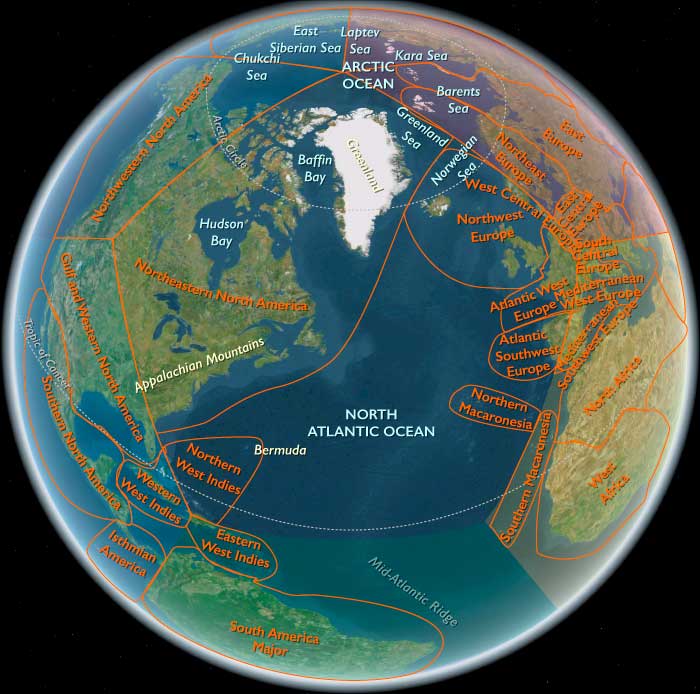
Atlantic West Europe (1852–1863): Imperial Ambitions, Industrial Expansion, and Social Change
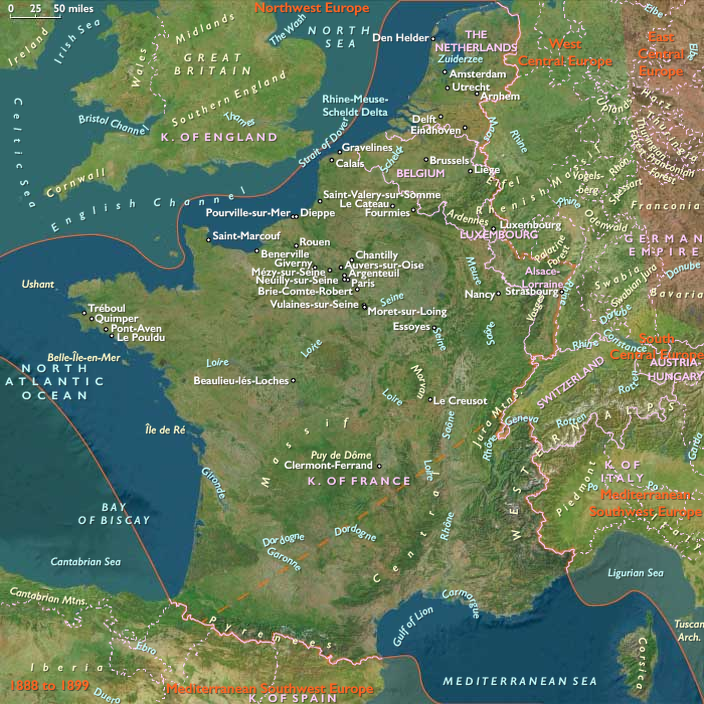
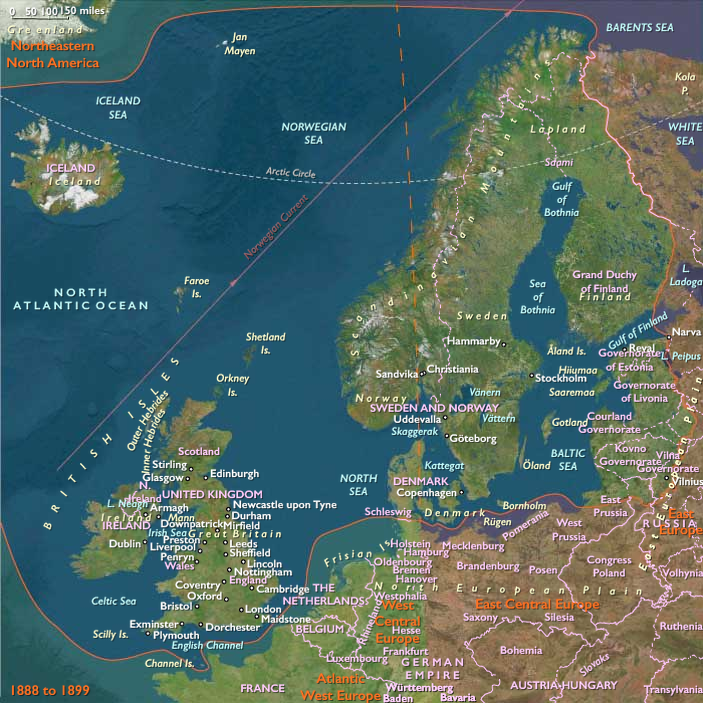
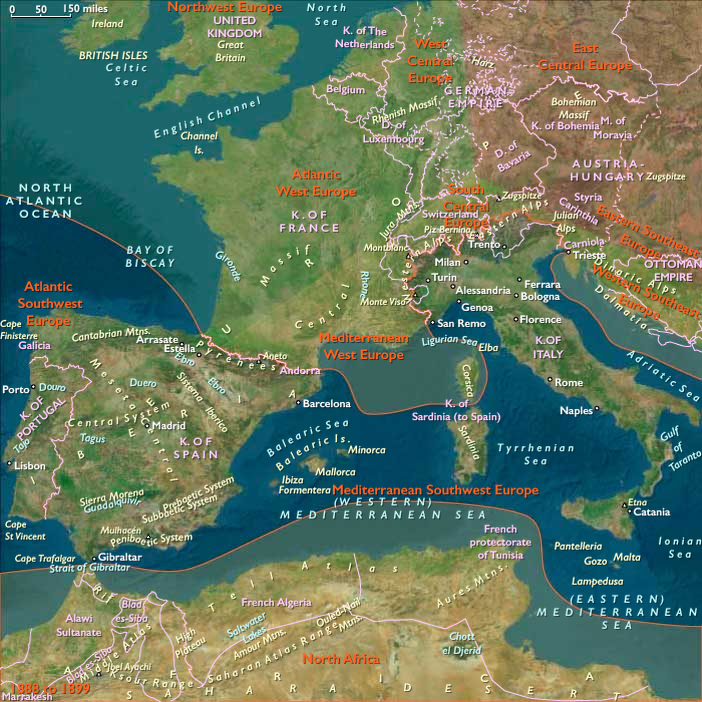
From 1852 to 1863, Atlantic West Europe—including northern France, Belgium, the Netherlands, Luxembourg, and the Atlantic and Channel coasts—experienced an era of profound economic growth, imperial ambitions, social reforms, and shifting political dynamics. This period marked the ascendance of France under Napoleon III’s Second Empire, further industrial and infrastructural growth across the region, and increasing social consciousness driven by labor activism and emerging socialist ideologies.
Political and Military Developments
France: The Second Empire under Napoleon III
-
Following a coup d'état in December 1851, Louis-Napoléon Bonaparte established the Second French Empirein 1852 as Emperor Napoleon III, promising political stability, economic growth, and national prestige.
-
Under Napoleon III, France pursued active imperialist policies, engaging in international diplomacy and conflicts such as the Crimean War (1853–1856), which temporarily bolstered France’s European prestige and military influence.
Belgium: Stability, Neutrality, and Economic Prosperity
-
Belgium, under King Leopold I (r. 1831–1865), maintained political stability and economic prosperity, emphasizing constitutional monarchy and international neutrality. The country strengthened its economy through industrial and commercial expansion.
-
Although politically stable, Belgium faced internal tensions due to linguistic divides and emerging demands for social and electoral reforms.
Netherlands and Luxembourg: Moderate Liberalism and Stability
-
Under King William III (r. 1849–1890), the Netherlands solidified its liberal constitutional monarchy, fostering political moderation and gradual democratic reforms. The Dutch economy prospered due to colonial trade (notably in the Dutch East Indies) and domestic industrialization.
-
Luxembourg remained stable, preserving its autonomy within the German Confederation and Dutch rule, pursuing economic modernization through railway expansion and industrial growth.
Economic Developments: Industrial Expansion and Innovation
France: Industrial Growth and Infrastructure Expansion
-
Napoleon III strongly promoted economic modernization and infrastructure development, significantly expanding railways, ports, and urban improvements, notably in Paris, Lille, and northern industrial centers.
-
Key northern cities such as Lille, Roubaix, Calais, and Le Havre saw robust growth in textile, steel, and shipbuilding industries, enhancing Atlantic trade and commercial networks.
Belgium: Industrial Powerhouse and International Trade Hub
-
Belgium solidified its status as one of Europe's leading industrial nations. Cities such as Liège, Ghent, and Antwerp thrived on coal mining, iron production, textiles, and international commerce.
-
The port of Antwerp flourished as a crucial trade center, further integrating Belgium into the broader European and global economic systems.
Netherlands: Commercial Expansion and Maritime Trade
-
The Netherlands, leveraging its maritime heritage, significantly expanded its international trade networks, benefiting from Dutch colonial enterprises and trade in goods such as coffee, spices, and tobacco.
-
Amsterdam and Rotterdam emerged as vital European commercial hubs, driving economic prosperity and facilitating industrial growth.
Social Developments: Rising Labor Movements and Social Reforms
Growth of Labor Activism
-
Rapid industrialization and urbanization intensified social inequalities and labor unrest, especially in Belgian and northern French industrial centers such as Lille, Roubaix, and Liège.
-
Early socialist and labor organizations grew stronger, advocating improved working conditions, higher wages, shorter workdays, and increased political representation for working-class communities.
Social and Educational Reforms
-
Governments responded to social challenges by introducing moderate reforms in labor conditions, public health, and education. France under Napoleon III expanded public works, urban sanitation, and educational access, notably influenced by Baron Haussmann’s transformative urban reforms in Paris.
-
Belgium advanced public education and early social welfare measures, addressing growing public demand for improved living conditions and social justice.
Cultural and Intellectual Developments
Realism and the Emergence of Modern Literature
-
Literary realism matured in this period, with influential French authors such as Gustave Flaubert (Madame Bovary, 1857) and Victor Hugo (Les Misérables, 1862), critically depicting contemporary society, social injustices, and moral complexities.
-
Realist painting also flourished, notably with artists such as Gustave Courbet in France, challenging traditional aesthetics and addressing social realities directly.
Scientific and Technological Advancements
-
The era saw notable scientific progress, particularly through advancements in chemistry, metallurgy, and medicine, significantly contributing to improved industrial productivity, healthcare, and urban sanitation systems.
Religious Developments
Ongoing Secularization and Religious Reactions
-
The trend toward secularization persisted, notably in France and Belgium, where liberal governments increasingly limited church influence in public education and governance, prompting strong conservative Catholic reactions.
-
In the Netherlands, Protestant liberalism continued to support moderate social and educational reforms, though religious tensions persisted, especially in predominantly Catholic regions.
Urbanization and Social Dynamics
Urban Expansion and Population Growth
-
Urban centers such as Brussels, Antwerp, Lille, Roubaix, Ghent, and Amsterdam continued rapid expansion, driven by industrial employment opportunities and improved transportation networks.
-
This accelerated urbanization brought significant challenges, including overcrowding, poor sanitation, housing shortages, and increased demand for public services.
Growing Middle-Class Influence
-
The middle class expanded significantly, benefiting from economic prosperity and industrial growth. Merchants, industrialists, and professionals increasingly influenced political and social reforms, advocating liberal economic policies, political moderation, and social stability.
Long-Term Consequences and Historical Significance
The period 1852–1863 represented a crucial phase in Atlantic West Europe’s transition toward modernity:
-
Politically, the consolidation of the Second Empire in France and continued stability in Belgium and the Netherlands established enduring governance frameworks, though tensions over liberalization and labor rights grew.
-
Economically, the region saw dramatic industrial growth, infrastructural expansion, and increased integration into global trade networks, positioning it as a vital economic center.
-
Socially, this era intensified labor activism, accelerated urban growth, and introduced critical early reforms addressing working conditions and public health, laying foundations for future social welfare policies.
-
Culturally, the flourishing of realism in literature and art reflected deeper societal engagement with modern life, influencing European culture profoundly into the late 19th century.
By 1863, Atlantic West Europe had firmly established itself as a prosperous, industrially dynamic region, grappling actively with emerging social challenges and setting essential foundations for future democratic and social transformations.
The Coup of 1856 leads to Luxembourg's unilateral adoption of a new, reactionary constitution as King-Grand Duke William III signs the new constitution on November 27 without the Chamber of Deputies' consent.
To form the government of Luxembourg at this time requires the support of both the Chamber of Deputies and the Grand Duke; without the former, the de la Fontaine government had collapsed in 1848, while Jean-Jacques Willmar's government had been fired by the Grand Duke in 1853 despite still having the confidence of the Chamber of Deputies.
This had created a rivalry between the monarchy and the Chamber.
In the speech from the throne on October 7, 1856, the Governor of Luxembourg, Prince Henry, had announced the amendment of the constitution, which he claimed was required to bring it into line with the rest of the German Confederation.
The liberals in the Chamber were outraged, and demanded that any changes respect the freedoms won in the Revolutions of 1848 and the independence of Luxembourg from the Netherlands, which was in a personal union with Luxembourg.
The liberals' draft reply was passed by 31 votes to 15.
On October 28, the Chamber had voted to adjourn on November 19.
On that day, the Chamber withdrew its confidence in the government and requested another adjournment, which was rejected.
The liberals left the Chamber, refusing to return the following day.
In response to this, the Grand Duke had dissolved the Chamber, and the government presented the Grand Duke with a new constitution, as well as a condemnation of the oppositions' withdrawal.
The Grand Duke signs on November 27, and the changes will be published in Mémorial, the official gazette of the state, on November 30.
It will be approved by the German Confederation on January 29, 1857.
The changes include:
The creation of the Council of State, modeled on the French body and appointed by the Grand Duke. While the appointment model will be revised in 1866, the Council of State still exists.
Restrictions on freedom of the press; these will be lifted in 1868.
Adding to the constitution that 'sovereignty resides in the person of the King-Grand Duke', which will be removed with an amendment on May 15, 1919.
An increase in the poll tax, which will be scrapped only with the introduction of universal suffrage in 1919.
The reorganization of elections to the Chamber of Deputies to include two classes of deputies. Those that pay more than 125 francs in tax elect 15 members representing the districts; those paying between 10 francs and 125 francs elect 16 members representing the cantons, thus giving the rich a representation far beyond their proportion of the population, similar to the provisions of the Constitution of the Kingdom of Prussia adopted a few years before. This will be undone by the new constitution in 1868.
Atlantic West Europe (1864–1875): Industrial Maturity, National Conflicts, and Social Reform
From 1864 to 1875, Atlantic West Europe—including northern France, Belgium, the Netherlands, Luxembourg, and the Atlantic and English Channel coasts—entered a crucial phase marked by sustained industrial maturity, increased national tensions culminating in the Franco-Prussian War, significant urban and social transformations, and the emergence of deeper political divisions driven by class, religion, and nationalism.
Political and Military Developments
The Franco-Prussian War (1870–1871)
-
The era’s defining political event was the Franco-Prussian War, triggered in part by France’s ambitions under Napoleon III and manipulated by Prussian Chancellor Otto von Bismarck to unify Germany.
-
France’s devastating defeat, highlighted by Napoleon III’s capture at the Battle of Sedan (1870), ended the Second French Empire and led to the proclamation of the Third French Republic.
-
The humiliating loss and subsequent occupation by Prussian troops, including parts of northern France, profoundly impacted French national identity and political stability.
Emergence of the French Third Republic
-
The newly established Third Republic (1870) began navigating internal political instability, social tensions, and lingering monarchist aspirations. Under Adolphe Thiers and later Patrice de MacMahon, the republic struggled to consolidate its institutions and heal national divisions.
Belgium: Stability amid Neutrality and Reform
-
Belgium, under King Leopold II (r.1865–1909), continued its policy of neutrality but faced growing internal tensions between liberals and Catholics. Electoral reforms expanded suffrage modestly, setting the stage for future democratization.
-
Leopold II began focusing on overseas ambitions in Africa, laying early foundations for Belgian colonialism.
Netherlands and Luxembourg: Liberal Reforms and Stability
-
The Netherlands under King William III remained politically stable, with liberal parliamentary forces pushing progressive reforms in education, infrastructure, and public administration.
-
Luxembourg, following the Luxembourg Crisis of 1867, was reaffirmed as an independent and perpetually neutral state, ending previous Dutch sovereignty, and entering a new era of political autonomy.
Economic Developments: Industrial Consolidation and Growth
Post-War Economic Resilience in France
-
Despite political turmoil, northern French industry rapidly recovered after the Franco-Prussian War. Cities such as Lille, Roubaix, Dunkirk, and Le Havre continued to expand, driven by textiles, steel production, shipbuilding, and railways.
-
The Suez Canal’s opening (1869), though geographically distant, enhanced French maritime trade routes, indirectly benefiting Atlantic ports.
Belgian Industrial Strength and Expansion
-
Belgium sustained significant industrial growth, particularly in iron, coal, and textiles. Antwerp continued its ascent as a major global trade hub, while Wallonia’s steel and coal production surged, powering broader economic expansion.
Dutch Maritime Commerce and Industrial Diversification
-
The Netherlands experienced continued growth in maritime commerce, shipbuilding, and agricultural exports. Rotterdam emerged as a vital port city, increasingly surpassing Amsterdam as the nation’s primary commercial gateway.
-
New industrial sectors developed, including chemical manufacturing, textiles, and machinery production, enhancing economic diversification and resilience.
Social Developments: Labor Activism and Urbanization
Labor Movements and the Paris Commune (1871)
-
In France, profound social tensions emerged after the Franco-Prussian War, notably culminating in the revolutionary uprising known as the Paris Commune (March–May 1871), reflecting urban working-class dissatisfaction, socialist aspirations, and republican ideals.
-
Although brutally suppressed by government forces, the Commune deeply influenced European socialist thought and labor movements, inspiring workers and radical intellectuals across Atlantic West Europe.
Belgian and Dutch Labor Activism
-
Belgium experienced significant labor activism, particularly in industrial regions such as Liège, Antwerp, and Ghent, with workers demanding improved working conditions, higher wages, and political representation.
-
In the Netherlands, the rise of trade unions and early socialist movements, especially in urban centers such as Rotterdam and Amsterdam, signaled a gradual but increasing demand for social reform.
Cultural and Intellectual Developments
Realism and Naturalism in Literature and Art
-
Cultural life remained profoundly shaped by realism and emerging naturalism, notably in France, through writers like Émile Zola, whose works (beginning with Thérèse Raquin, 1867) highlighted the stark realities of industrial urban life and social inequalities.
-
Painters such as Édouard Manet and early Impressionists challenged traditional academic art, focusing instead on modern urban experiences and candid portrayals of daily life, reshaping artistic expression throughout Europe.
Advancements in Science and Technology
-
Significant advancements occurred in industrial technology, chemistry, medicine, and sanitation. These improvements supported rapid urban growth and increased industrial productivity, notably through innovations in steel production and public health infrastructure.
Religious Developments
Continued Secularization and Religious Conflict
-
Secularization intensified, particularly in France, where the Catholic Church's political influence was increasingly challenged by republican governments and secular intellectuals.
-
Belgium continued experiencing significant tensions between Catholic conservatives and liberal secularists, particularly over educational reforms and church-state relations, shaping the country's long-term political landscape.
Urbanization and Social Dynamics
Accelerated Urban Growth and Infrastructure
-
Urbanization accelerated dramatically, driven by industrial expansion and rural migration. Major cities—Paris, Lille, Roubaix, Antwerp, Rotterdam, Brussels, and Amsterdam—expanded rapidly, investing significantly in urban infrastructure, public transportation, and sanitation systems.
Deepening Class Divisions
-
Economic prosperity was unevenly distributed, deepening class divides. Wealthier merchant and industrialist classes thrived, especially in urban centers, while industrial workers faced difficult living conditions and periodic unemployment, fueling labor unrest and demands for reform.
Long-Term Consequences and Historical Significance
The era 1864–1875 represented a crucial phase in Atlantic West Europe’s historical trajectory:
-
Politically, the fall of Napoleon III and the establishment of the Third Republic reshaped France’s internal dynamics and European alliances, profoundly influencing subsequent geopolitical alignments.
-
Economically, the region demonstrated resilience and sustained industrial maturity, firmly integrating into global trade networks and setting foundations for late 19th-century prosperity.
-
Socially, intensified labor activism, epitomized by the Paris Commune, revealed growing class tensions and demands for political and social reforms that would drive subsequent European socialist and democratic movements.
-
Culturally, realism and emerging naturalism influenced European literature, art, and intellectual thought, reflecting a deeper engagement with social realities and the complexities of modern industrial life.
By 1875, Atlantic West Europe had emerged from a turbulent decade politically transformed, economically vibrant, socially dynamic, and culturally influential—poised for continued prominence in the rapidly modernizing Europe of the late 19th century.
Luxembourg City boasts some of the most impressive fortifications in the world; designed by Marshal Vauban, it is referred to as the Gibraltar of the North.
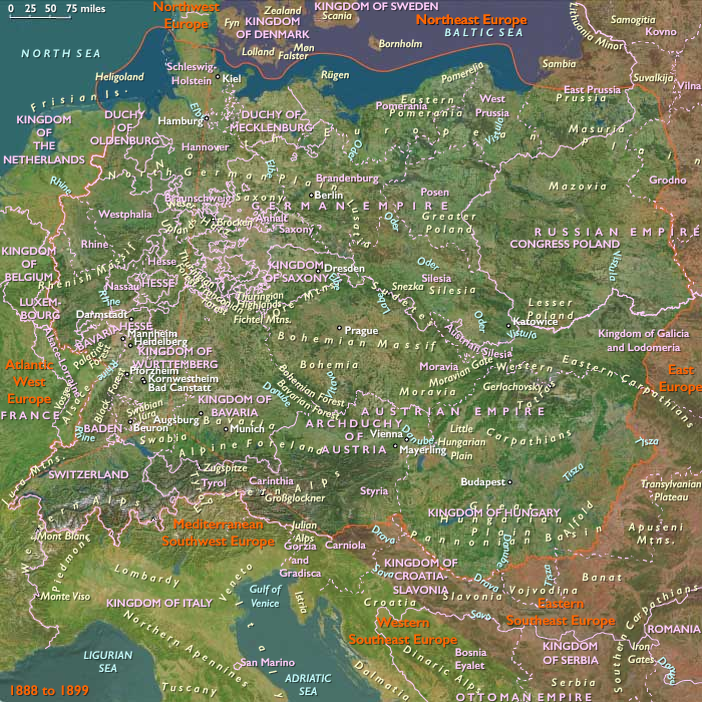
Since the 1815 Congress of Vienna, the Grand Duchy of Luxembourg had been in personal union with the Kingdom of the Netherlands.
In a concession to Prussia, Luxembourg is to be a member of the German Confederation, with several thousand Prussian soldiers stationed here.
The Belgian Revolution of 1830 had divided Luxembourg into two, and had threatened Dutch control of the remaining territory.
As a result, William I of the Netherlands had entered Luxembourg into the German customs union, the Zollverein, to dilute the French and Belgian cultural and economic influence in Luxembourg.
The Second Schleswig War had further advanced nationalist tensions in Germany, and, throughout 1865, it was clear that Prussia intended to challenge the position of Austria within the German Confederation.
Despite potentially holding the balance of power between the two, Napoleon III had kept France neutral; the French Emperor (like most of Europe) had expected an Austrian victory, but could not intervene on Austria's side, as that would jeopardize France's relationship with Italy post-Risorgimento.
As a result, at Biarritz on October 4, 1865, Napoleon III had promised Bismarck France's neutrality, hoping that such an open statement of intent would strengthen France's negotiating position on the western bank of the Rhine.
The Prussian Prime Minister had refused to offer any land from the Rhineland, which is Napoleon's preferred region.
However, he had made offers of French hegemony in Belgium and Luxembourg, although not committing anything to writing.
When Austria and Prussia did go to war in 1866, the result had been a shock to Europe.
After Prussia defeated Austria's allies in Bavaria and crushed the Austrian army under Benedek at Königgrätz, forcing Austria to the negotiating table, Napoleon III had offered to mediate, and the result, the Treaty of Prague, had dissolved the German Confederation in favor of a Prussian-dominated organization, the North German Confederation.
Assuming that Bismarck will honor his part of the agreement, the French government offers William III of the Netherlands five million guilders for his personal possession of Luxembourg.
Being in deep financial trouble, William accepts the offer on March 23, 1867, but the French are shocked to learn that Bismarck will not agree.
Not only has Bismarck united much of northern Germany under the Prussian crown, but he had secretly concluded agreements with the southern states on October 10, 1866.
His hand forced by nationalistic newspapers in North Germany, Bismarck seeks to renege on the pledge that he had made to Napoleon at Biarritz, and threatens war.
Ministers of other European countries rush to offer compromise proposals to avert a war that might drag their own countries into conflict.
Austria's Foreign minister, Count Beust, proposes transferring Luxembourg to neutral Belgium, in return for which France would be compensated with Belgian land.
However, Belgian King Leopold II refuses to part with any of his lands, putting paid to Beust's proposal.
With the German public angered and an impasse developing, Napoleon III seeks to backtrack; he certainly does not want to appear to be unduly expansionist to the other Great Powers.
Thus, he demands only that Prussia withdraw its soldiers from Luxembourg City, threatening war in the event that Prussia does not comply.
To avoid this fate, the Russian Emperor Alexander II calls for an international conference, to be held in London.
The United Kingdom is more than happy to host the talks, as the British government fears that the absorption of Luxembourg, by either power, would weaken Belgium, its strategic ally on the continent.
All of the Great Powers are invited to London to hammer out a deal that will prevent war.
The negotiations at London had centered upon the terms of Luxembourg's neutrality, as it had been clear that no other power will accept the incorporation of Luxembourg into either France or the North German Confederation.
The result is a victory for Bismarck; although Prussia will have to remove its soldiers from Luxembourg City, Luxembourg will remain in the Zollverein.
Atlantic West Europe (1876–1887): Republican Stabilization, Imperial Ambitions, and Industrial Prosperity
From 1876 to 1887, Atlantic West Europe—encompassing northern France, Belgium, the Netherlands, Luxembourg, and regions facing the Atlantic and English Channel coasts—experienced political stabilization, deepening industrialization, expansive colonial ambitions, and critical social and cultural transformations. The period notably saw the solidification of the French Third Republic, Belgium's rapid colonial expansion in Africa, the continued rise of labor and socialist movements, and a flourishing of artistic and intellectual innovation.
Political and Military Developments
Consolidation of the French Third Republic
-
The French Third Republic stabilized politically during this period, notably under presidents Jules Grévy (1879–1887) and prime ministers such as Jules Ferry, who enacted crucial educational and civic reforms.
-
The republic firmly established secular governance through landmark education laws (1881–1882), mandating free, compulsory, and secular education, significantly curtailing the Catholic Church's influence on public life.
Belgian Colonial Expansion under Leopold II
-
King Leopold II of Belgium pursued aggressive colonial expansion in Central Africa, notably establishing the Congo Free State (1885) as his personal colony following the Berlin Conference (1884–1885).
-
This imperial ambition greatly impacted Belgium's economy and national prestige, but it also began to draw international scrutiny due to exploitation and severe humanitarian abuses in the Congo.
Stable Constitutional Governance in the Netherlands and Luxembourg
-
Under King William III (1849–1890), the Netherlands continued stable parliamentary governance. The Liberal and Conservative parties alternated power, implementing social reforms and further developing democratic institutions.
-
Luxembourg enjoyed political stability and economic prosperity, strengthened by continued neutrality and advantageous positioning between Germany, France, and Belgium.
Economic Developments: Industrial Prosperity and Global Trade
Expansion of Industrial Capacity and Trade Networks
-
Industrial production surged throughout the region. Northern France's textile mills, coal mines, and steel factories flourished, with cities like Lille, Roubaix, and Dunkirk benefiting from expanding railway networks and global trade connections.
-
Belgium's industrial regions (especially Wallonia) expanded coal and steel production, reinforcing its economic stature in Europe.
Maritime and Commercial Growth in the Netherlands
-
Dutch ports, particularly Rotterdam and Amsterdam, experienced sustained commercial growth, becoming central hubs for global trade. Rotterdam, in particular, significantly expanded its port facilities, laying foundations for its 20th-century prominence.
-
Agriculture continued as an economic backbone, with improved technology and land reclamation efforts significantly increasing Dutch productivity.
Increased Colonial Trade and Exploitation
-
Colonial markets expanded considerably, particularly Belgium’s exploitation of Congolese resources (rubber, ivory), enriching the nation at substantial human cost.
-
France, with existing colonial holdings in Africa and Asia, intensified economic exploitation of colonies, notably in Algeria, Indochina, and West Africa, fueling economic growth and industrial investment back home.
Social Developments: Labor Activism and Class Tensions
Growing Labor and Socialist Movements
-
Socialist and labor movements gained momentum, reflecting persistent industrial unrest and demands for improved working conditions, higher wages, and broader political rights. France’s workers increasingly rallied around socialist figures such as Jules Guesde and organizations like the Parti Ouvrier Français (POF), founded in 1882.
-
Belgium’s industrial regions (Liège, Charleroi) similarly witnessed significant labor organization, strikes, and socialist advocacy, pressing for broader social reforms.
Improved Social Legislation and Worker Rights
-
Social legislation began to improve labor conditions modestly, influenced by socialist pressures. Belgium and the Netherlands introduced early social insurance schemes, shorter working hours, and improved workplace safety laws.
Cultural and Intellectual Developments
Impressionism and Artistic Innovation
-
The Impressionist movement matured in France, profoundly influencing European art. Painters such as Claude Monet, Edgar Degas, Pierre-Auguste Renoir, and Camille Pissarro transformed artistic expression by capturing contemporary life, urban landscapes, and transient moments.
-
This movement significantly influenced subsequent generations, laying the groundwork for Post-Impressionism and early Modernist art movements.
Literary Realism and Naturalism
-
French literature continued its exploration of realism and naturalism, notably through works by Émile Zola, whose novel Germinal (1885) vividly portrayed working-class struggles in northern France’s coalfields.
-
Such literature deeply influenced European thought, highlighting the harsh realities of industrialization and class disparities.
Scientific and Technological Advances
-
Major advances occurred in technology, chemistry, and engineering, especially in the chemical industries of Belgium and the Netherlands. Innovations in chemical production, metallurgy, and manufacturing processes enhanced industrial efficiency and economic growth.
-
Technological advancements in transportation—expanding railway networks, improved steamships—further integrated the region economically and socially.
Religious and Educational Developments
Secularization and Church-State Conflict
-
Continued secularization, particularly in France, intensified tensions between the state and the Catholic Church. The 1880s educational reforms significantly reduced religious influence in public education, fostering stronger secular civic identities.
Education Expansion and Intellectual Growth
-
Education expanded significantly across Atlantic West Europe, driven by state-funded secular schooling in France, Belgium, and the Netherlands. Increased literacy and education profoundly impacted social mobility and intellectual life, stimulating greater cultural vibrancy and democratic engagement.
Urbanization and Social Dynamics
Accelerated Urban Growth
-
Major cities such as Paris, Brussels, Antwerp, Rotterdam, Amsterdam, Lille, and Roubaix experienced substantial urban expansion, driven by industrialization and immigration from rural areas.
-
Improved infrastructure—transportation, sanitation, housing—supported this urban growth, reflecting significant investments aimed at managing increasing populations.
Persistent Social Inequality and Class Struggles
-
Economic growth disproportionately benefited industrial and merchant elites, exacerbating social disparities. Urban working classes faced harsh living conditions, spurring continued social unrest, labor activism, and demands for greater social justice and political representation.
Long-Term Consequences and Historical Significance
The period 1876–1887 represented a critical juncture in Atlantic West Europe's modern development:
-
Politically, France’s Third Republic solidified its institutions, Belgium embarked on imperial expansion, and the Netherlands and Luxembourg maintained stable parliamentary governance.
-
Economically, rapid industrial expansion, global trade integration, and colonial exploitation secured long-term prosperity, albeit with deepening social inequalities.
-
Socially, the rise of labor movements, socialism, and early welfare reforms began reshaping class relations and democratic institutions.
-
Culturally, artistic movements like Impressionism and literary naturalism profoundly shaped European cultural identity, fostering innovative artistic and intellectual traditions.
By 1887, Atlantic West Europe stood firmly integrated into global economic networks, politically stable but socially divided, culturally influential yet confronting complex internal tensions, laying essential foundations for the intense modernization and dramatic upheavals of the late 19th and early 20th centuries.
At the death of William III, the throne of the Netherlands passes to his ten-year-old daughter Wilhelmina, while Luxembourg (at this time restricted to male heirs by the Nassau Family Pact) passes to Adolph of Nassau-Weilburg.
Although ten-year-old Wilhelmina becomes queen of the Netherlands instantly, her mother, Emma, is named regent.