High Medieval
964 CE to 1252 CE
Related Events
Showing 10 events out of 34 total
A fire devastates much of Baghdad in 973, killing some seventeen thousand people, many of them Jews.
This disaster contributes to the decline in Baghdad's Jewish population and its importance in the Jewish world.
In 1006 also, a major eruption of Mount Merapi, the most active volcano in Indonesia, supposedly covers all of central Java with volcanic ash, causing devastation throughout central Java that is claimed to have led to the collapse of the Hindu Kingdom of Mataram; however, there is insufficient evidence from this era for this claim to be substantiated.
Entire provinces in India are depopulated during three great famines in India from 1022 through 1052.
The Great Famine of 1031–1033 in France
Between 1031 and 1033, France suffered from a devastating famine, exacerbating social instability and fueling apocalyptic fears surrounding the anticipated millennial anniversary of Christ’s crucifixion in 1033. This famine, caused by poor harvests, harsh weather, and economic disruptions, led to widespread starvation, disease, and desperation, profoundly affecting the medieval French population.
Causes of the Famine
- Extreme Weather Conditions:
- Unseasonable cold, excessive rains, and failed harvests contributed to severe food shortages.
- Flooding and poor soil conditions prevented effective crop production, leading to multi-year grain shortages.
- Economic and Political Instability:
- The death of King Robert II ("the Pious") in 1031 led to succession disputes, further weakening centralized authority and disrupting local economies.
- Feudal lords often hoarded grain or raised taxes, exacerbating suffering among peasants and urban populations.
- Lack of Trade and Transportation Infrastructure:
- The limited medieval transportation network made it difficult to redistribute food from regions with better harvests to those in crisis.
Effects of the Famine
- Widespread Starvation and Death:
- Chronicles describe mass starvation, with people resorting to eating grass, tree bark, and even human flesh in extreme cases.
- The famine caused a significant population decline, with some regions suffering years of demographic and economic setbacks.
- Religious Panic and Apocalyptic Fear:
- The famine coincided with millennial anxieties linked to the year 1033, the believed one-thousandth anniversary of Christ’s crucifixion.
- Many interpreted the famine as a divine punishment, leading to mass pilgrimages, public penance, and religious hysteria.
- Increased Social Unrest and Crime:
- Peasant revolts, theft, and violence surged as people fought over dwindling food supplies.
- Some wealthy landowners and clergy provided limited relief, but many hoarded resources, fueling further resentment against the feudal order.
End of the Famine and Aftermath
- By 1034, conditions began to improve as harvests stabilized and weather patterns became more favorable.
- The famine left a lasting impact on medieval French society, reinforcing the importance of:
- Monastic charity and Church-led relief efforts, which helped restore social order.
- Strengthened feudal obligations, as rulers and lords sought to reaffirm their legitimacy through economic and military stability.
- A shift in religious attitudes, as many came to see the famine’s end as a sign of divine mercy, rather than impending apocalypse.
Legacy
The Great Famine of 1031–1033 stands as one of the earliest well-documented climate-related crises in medieval France, illustrating the vulnerability of medieval economies to natural disasters. Its confluence with millennial fears and religious turmoil amplified its social effects, reinforcing both religious devotion and social unrest.
Jewish farmers in Palestine, especially in the Sharon Valley, suffer great losses due to an earthquake in 1033, and when additional taxes are levied on non-Muslim landowners, almost all of the Jews remaining in Palestine leave agriculture.
The city of Tabriz, its oldest sites dated to around 1500 BCE, will be associated with a long and turbulent history following the conquest of Iran by Muslims.
The Islamic geographer Yaqut says that Tabriz was a village before the arrival of Rawwad from the Arabic Azd tribe from Yemen.
Zubaidah bint Ja`far, the wife of Abbasid caliph Harun al-Rashid, had rebuilt Tabriz in 791, after a devastating earthquake, so beautifying the city that she will be long credited as its founder.
Another devastating earthquake had occurred in 858; yet another devastates the city in 1041.
Severe earthquakes will continue to plague the region.
The youngest in a string of volcanoes (the San Francisco volcanic field) erupts near the volcanic San Francisco Peaks in northern Arizona around 1085, forming the so-called Sunset Crater, a one thousand-foot-high (three hundred and five meter) cone with a rim of bright red orange ash and cinder.
The eruption produces a blanket of ash and lapilli covering an area of more than twenty-one hundred square kilometers (eight hundred and ten square miles) and forces the temporary abandonment of settlements of the local Sinagua people.
Bede records that Saint Augustine consecrated Mellitus as the first bishop to the Anglo-Saxon kingdom of the East Saxons and their king, Sæberht, in 604.
Sæberht's uncle and overlord, Æthelberht, king of Kent, built a church dedicated to St Paul in London, as the seat of the new bishop.
It is assumed, although unproven, that this first Anglo-Saxon cathedral stood on the same site as the later medieval and the present cathedrals.
On the death of Sæberht in about 616, his pagan sons expelled Mellitus from London, and the East Saxons reverted to paganism.
The fate of the first cathedral building is unknown.
Christianity was restored among the East Saxons in the late seventh-century and it is presumed that either the Anglo-Saxon cathedral was restored or a new building erected as the seat of bishops such as Cedd, Wine and Earconwald, the last of whom was buried in the cathedral in 693.
This building, or a successor, was destroyed by fire in 962, but rebuilt in the same year.
King Æthelred the Unready was buried in the cathedral on his death in 1016.
The cathedral is burnt, with much of the city, in a fire in 1087, as recorded in the Anglo-Saxon Chronicle.
The Normans begin building the fourth St. Paul's (generally referred to as Old St. Paul's).
The wavering character and incompetent political decisions of George II of Georgia, coupled with the Seljuq yoke, have brought the Kingdom of Georgia into a profound crisis, which climaxes in the aftermath of a disastrous earthquake that had struck Georgia in 1088.
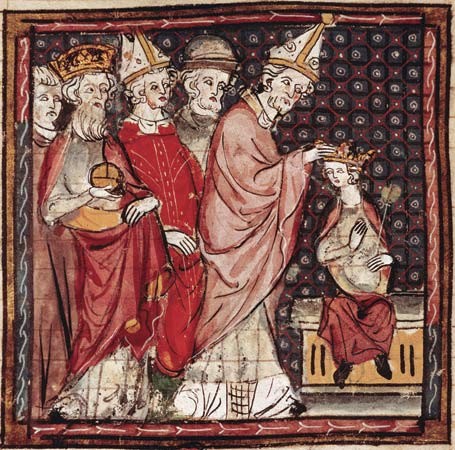
George hands over the crown to his vigorous sixteen-year old son David in 1089.
This changeover is shrouded in mystery and is mentioned only in passing in the Georgian chronicles.
All that is recorded is that George crowned his son as king with his own hands, after which he disappears from the chronicle.
He was most probably forced by his nobles, in a palace coup masterminded by the powerful minister Bishop Giorgi Chkondideli, to abdicate in favor of David.
George is mentioned in prayers dated to 1203 as "king of kings, and caesar of all the East and West", suggesting that he was still alive and given some titles by his reigning son, but exercised no real power.
The London Tornado of 1091 is reckoned by modern assessment of the reports as possibly a T8 tornado (roughly equal to an F4 tornado) which occurs in London, England.
Britain's earliest reported tornado, it occurs on Friday, October 17, 1091, killing two.
The wooden London Bridge is destroyed, and the church of St. Mary-le-Bow in the city of London is badly damaged; four rafters twenty-six feet (seven point nine meters) long are driven into the ground with such force that only four feet (one point two meters) protrude above the surface.
Other churches in the area are demolished, as are over six hundred (mostly wooden) houses.