Central Asia
Subregions
Central Asia
View →Related Events
Showing 10 events out of 405 total
The Great Crossroads, one of the twelve divisions of the globe, is centered on Eurasia, with its northernmost extent meeting Northern Oceania and The Atlantic World at the North Pole. This vast region excludes the eastern, western, and southern extremities of the Eurasian landmass, which spans a significant portion of the Earth's surface.
The Ural Mountains, running approximately north to south, serve as the traditional boundary between Europe and Asia, as well as between Russia proper and Siberia.
For the purposes of this framework, The Great Crossroads includes Mongolia; western China, including Xinjiang and the Tibetan Plateau; the northern half of the Indian subcontinent; Afghanistan; the Iranian Plateau; Mesopotamia; eastern Arabia; the northern Levant; northeastern Cyprus; western and southwestern Anatolia; the Caucasus; Eastern Europe; Siberia; the Eastern Balkans; Eastern Scandinavia; the Baltic Sea basin; and Middle Europe.
- The southwestern boundary runs diagonally from south-central Germany, through the eastern Alps, the Balkans, and western Asia, terminating in the southern third of the Arabian Peninsula in the vast desert known as the Rub’ al Khali.
- The southern boundary divides South India from North India, following the generally recognized demarcation that includes the Narmada River, and separates the Indian Ocean-facing southeastern Arabian coast from the Persian Gulf-focused eastern Arabia.
- The southeastern boundary runs diagonally from the Bay of Bengal, following India’s border with Myanmar, marking the division between South Asia and both Southeast Asia and Eastern Asia.
Narrow results by searching for a word or phrase or select from one or more of a dozen filters.
The Moderns are taller, more slender, and less muscular than the Neanderthals, with whom they share—perhaps uneasily—the Earth.
Though their brains are smaller in overall size, they are heavier in the forebrain, a difference that may allow for more abstract thought and the development of complex speech.
Yet, the inner world of the Neanderthals remains a mystery—no one knows the depths of their thoughts or how they truly expressed them.
The descendants of the immigrants to West Asia who had remained in the south (or taken the southern route) had spread generation by generation around the coast of Arabia and the Iranian plateau until they reached India.
One of the groups that had gone north (east Asians were the second group) had ventured inland and radiated to Europe, eventually displacing the Neanderthals.
They had also radiated to India from Central Asia.
The former group headed along the southeast coast of Asia, reaching Australia between fifty-five thousand and thirty thousand years ago, with most estimates placing it about forty-six thousand to forty-one thousand years ago.
Sea level is much lower during this time, and most of Maritime Southeast Asia is one land mass known as the lost continent of Sunda.
The settlers probably continued on the coastal route southeast until they reached the series of straits between Sunda and Sahul, the continental land mass that was made up of present-day Australia and New Guinea.
The widest gaps are on the Weber Line and are at least ninety kilometers wide, indicating that settlers had knowledge of seafaring skills.
Archaic humans such as Homo erectus never reached Australia.
If these dates are correct, Australia was populated up to ten thousand years before Europe.
This is possible because humans avoided the colder regions of the North favoring the warmer tropical regions to which they were adapted given their African homeland.
Another piece of evidence favoring human occupation in Australia is that about forty-six thousand years ago, all large mammals weighing more than one hundred kilograms suddenly became extinct.
The new settlers were likely to be responsible for this extinction.
Many of the animals may have been accustomed to living without predators and become docile and vulnerable to attack (as will occur later in the Americas).
Migrants from Central Asia and the Middle East are believed to have colonized Europe, moving northwestward over time.
By the time anatomically modern humans first enter Europe, Neanderthals are already well-established in the region. The question of whether these two populations interbred remains a subject of ongoing debate.
Evidence suggests that modern humans and Neanderthals coexisted in various regions, including the Iberian Peninsula and the Middle East, where interbreeding may have contributed Neanderthal genes to early Paleolithic Europeans and, ultimately, to modern European populations.
Regardless of whether interbreeding occurred, it is generally believed that early human populations took refuge in hypothetical Ice Age shelters, later repopulating Europe as the glaciers receded—forming the ancestral foundation of present-day European populations.
An alternative theory proposes that modern Europeans primarily descend from Neolithic populations originating in the Middle East, whose migrations into Europe are well documented.
Modern human culture begins to evolve at an accelerated pace, marking a significant shift in behavior and innovation.
Some anthropologists, notably Jared Diamond, author of The Third Chimpanzee, describe this period as a "Great Leap Forward." During this time, modern humans adopt new cultural and technological practices, including:
- Burying their dead, often with grave goods, suggesting ritual or symbolic thought,
- Crafting clothing from hides, improving survival in colder climates,
- Developing advanced hunting techniques, such as trapping pits or driving animals off cliffs, and
- Creating cave paintings and other forms of artistic expression.
As human culture advances, different populations begin to introduce novelty into existing technologies. Unlike earlier hominins, modern humans show regional variations in artifacts such as fish hooks, buttons, and bone needles, demonstrating a previously unseen diversity of tools and personal items.
Anthropologists identify several key markers of modern human behavior, including:
- Tool specialization,
- Adornment with jewelry and symbolic imagery (such as cave drawings),
- Organized living spaces,
- Elaborate rituals, including burials with grave gifts,
- Exploration of harsh or previously uninhabited environments, and
- The development of barter trade networks.
Debate continues over whether these advancements were the result of a sudden cognitive "revolution"—sometimes called "the big bang of human consciousness"—or whether they emerged through a more gradual evolutionary process.
The development of stone tools appears to have progressed in gradual steps until around 50,000 to 40,000 years ago.
Each successive Homo species—from H. habilis to H. ergaster to H. neanderthalensis—began at a higher technological level than its predecessor. However, once a phase began, further innovation remained slow, reflecting a culturally conservative approach to tool-making.
Around 50,000 BP, however, modern human culture began to evolve at a significantly faster pace. While Neanderthal populations typically displayed little variation in their tool-making techniques, the Cro-Magnon immigrants introduced increasingly refined and specialized flint tools, such as knives, blades, and skimmers.
Additionally, Cro-Magnons expanded beyond stone, pioneering the use of bone tools, marking a major advancement in prehistoric technology.
The debate over the origins of Europeans has often been framed as a question of cultural diffusion versus demic diffusion.
Both archaeological and genetic evidence strongly support demic diffusion—the idea that a population spread from the Middle East over the last 12,000 years, gradually replacing or assimilating earlier groups.
However, some researchers have challenged this view using the genetic concept of Time to Most Recent Common Ancestor (TMRCA). This approach has been used to argue in favor of cultural diffusion, suggesting that technological and cultural advancements spread without significant population movement.
The debate remains ongoing, with scholars examining the complex interplay between migration, gene flow, and cultural exchange in shaping Europe's early populations.
The Arrival of Early Modern Humans in Eurasia
Homo sapiens sapiens, the same physical type as modern humans, appeared in various regions by at least 50,000 BCE. These Early European Modern Humans (EEMH), formerly known as Cro-Magnon peoples, represent the first anatomically modern humans in Europe.
Migration into Eurasia
- Early modern humans entered Eurasia via the Arabian Peninsula approximately 60,000 years ago.
- One group rapidly settled coastal areas around the Indian Ocean, expanding into South and Southeast Asia.
- Another group migrated north, reaching the steppes of Central Asia and eventually spreading into Europe.
Coexistence with Neanderthals
- Neanderthals and modern humans coexisted across Europe and western Asia for thousands of years.
- Evidence suggests that interactions may have been peaceful, with possible cultural exchanges.
Interbreeding and Genetic Legacy
- Genetic studies indicate that Neanderthals and modern humans interbred occasionally, with non-African populations today carrying traces of Neanderthal DNA.
- However, there is no strong evidence supporting the existence of true Neanderthal-modern hybrids as a distinct population. Instead, interbreeding events were limited, contributing only small genetic fragments to the modern human genome.
The arrival of modern humans in Eurasia marked a significant turning point, eventually leading to the replacement of Neanderthals, though traces of their genetic legacy remain in human populations today.
Central Asia (49,293 – 28,578 BCE): Upper Paleolithic I — Periglacial Steppes and River-Terrace Camps
Geographic and Environmental Context
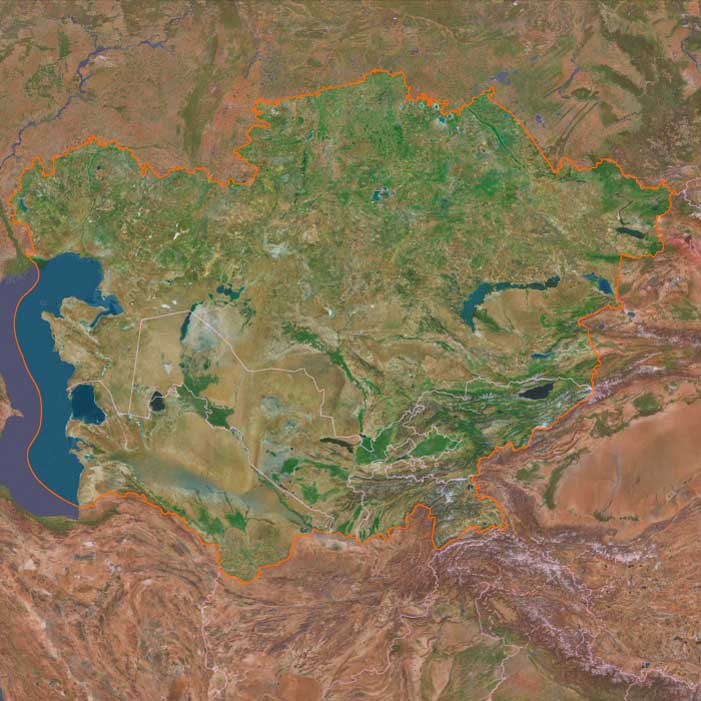
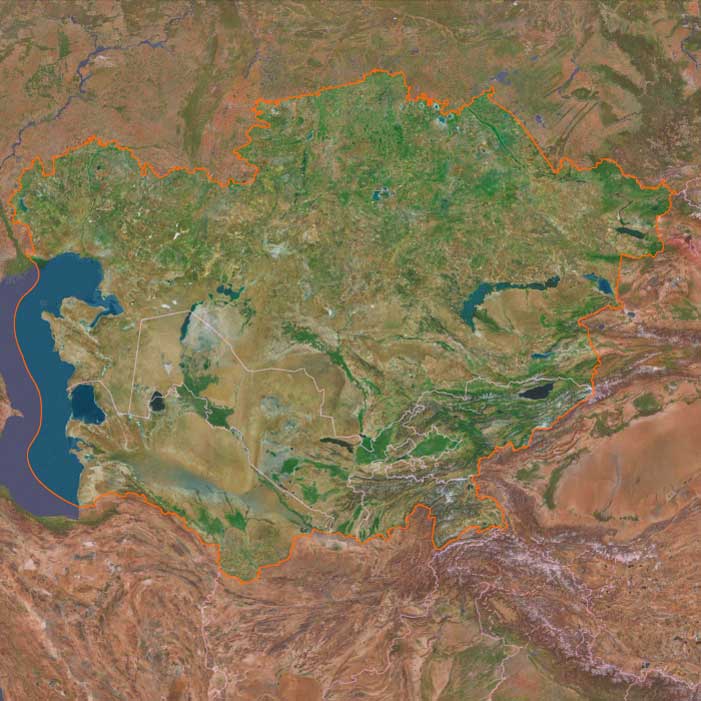
Central Asia includes the Syr Darya (Jaxartes) and Amu Darya (Oxus) basins (Transoxiana), Khwarazm and the Aral–Caspian lowlands, the Ferghana valley, the Merv oasis and Kopet Dag piedmont, the Kazakh steppe to the Aral littoral, and the Tian Shan–Pamir margins.
-
Anchors: Zeravshan and Amu/Syr terrace systems, Kopet Dag foothills, Kyzylkum dune margins, Tian Shan forelands.
-
Wide periglacial plains, braided rivers, and loess plateaus framed hunter ranges.
Climate & Environmental Shifts
-
Peak Last Glacial: colder, drier; steppe–tundra with sparse woodland pockets; dune activity along the Kyzylkum/Ustyurt edges; lower baseflows in rivers compared to the Holocene.
Subsistence & Settlement
-
Big-game foragers tracked horse, saiga antelope, bison, and mammoth on riverine terraces.
-
Seasonal camps perched on aeolian bluffs and spring-fed fans; hearths and knapping floors common.
Technology & Material Culture
-
Blade–microblade toolkits in high-quality cherts; end-scrapers, burins, bone awls; tailored hides for winter.
-
Ornaments: drilled teeth, shell (imported), red ochre.
Movement & Interaction Corridors
-
Amu–Syr trunkways and Zeravshan benches structured movement; leeward routes under the Kopet Dag linked to Iranian forelands.
Cultural & Symbolic Expressions
-
Portable art and ochred burials reflect Upper Paleolithic symbolic repertoires shared across Inner Eurasia.
Environmental Adaptation & Resilience
-
High mobility, riverine focus, and broad prey portfolios buffered climatic extremes.