The Far West
Related Events
Showing 10 events out of 3494 total
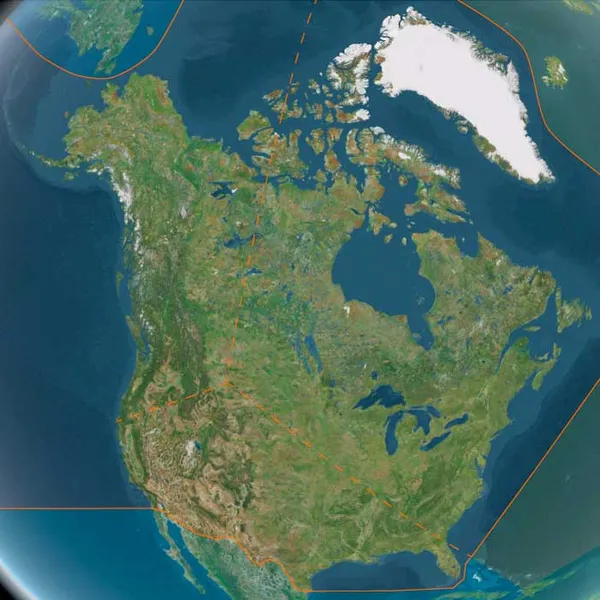
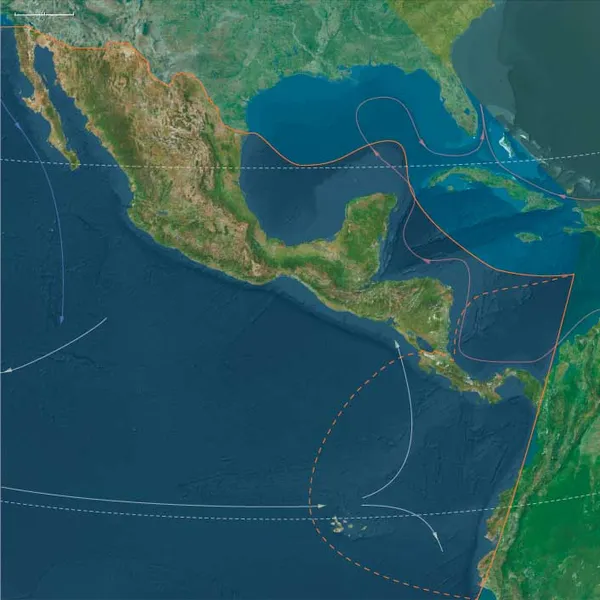
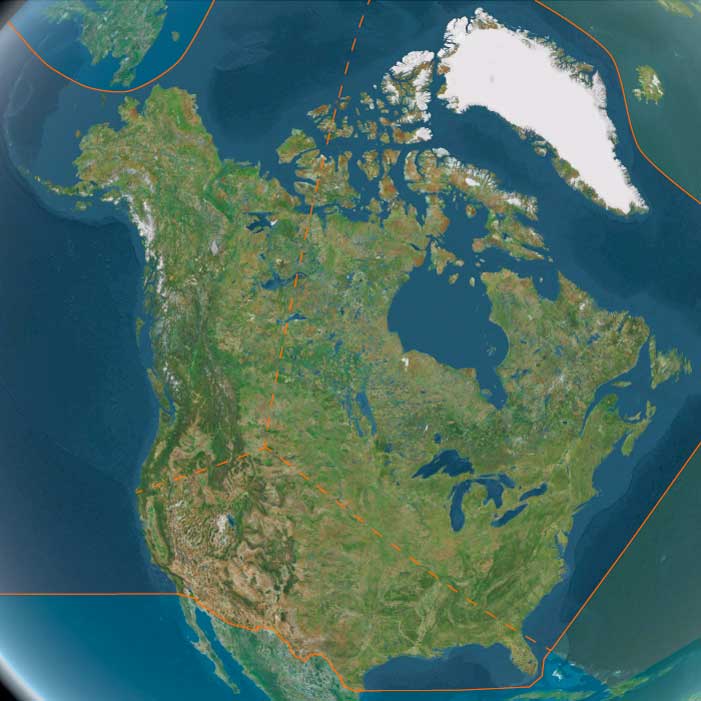
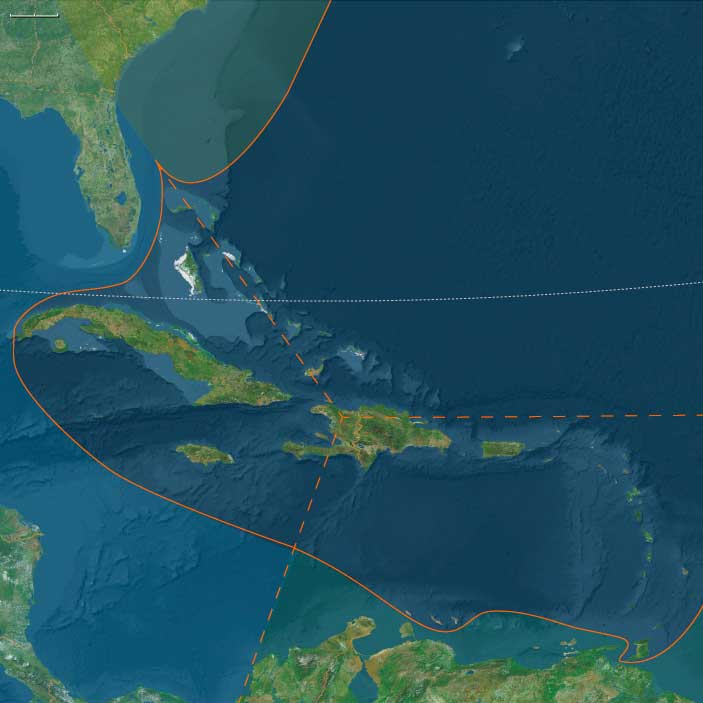
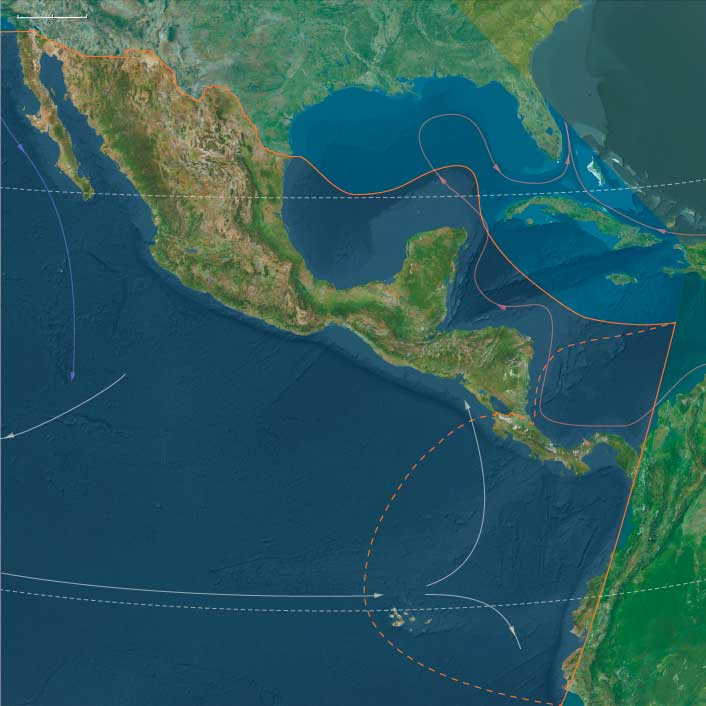
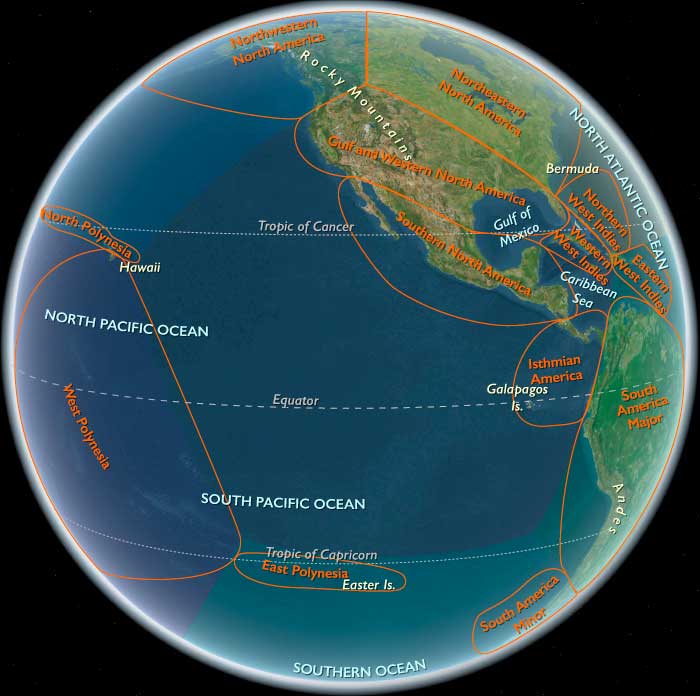
The Far West, encompassing the southwestern section of the North American continent along with the Caribbean Sea, the Gulf of Mexico, and the Pacific Ocean, includes the Galápagos Islands, the five countries of Central America, Mexico, and the Gulf and Western United States, as well as Cuba, Jamaica, the Cayman Islands, and the northwestern and southwestern regions of Haiti on Hispaniola.
Within the United States, the following states are entirely within The Far West:
Florida, Mississippi, Louisiana, Arkansas, Texas, Oklahoma, Kansas, Nebraska, Colorado, Wyoming, New Mexico, Arizona, California, and Nevada.
Portions of other states also belong to this world, including:
- Southwestern Georgia
- Most of Alabama
- Southeastern Tennessee
- Southeastern Missouri
- Southwestern South Dakota
- Most of Montana, except its northeastern and northwestern corners
- Southern Idaho
- Southeastern Oregon
HistoryAtlas contains 3707 entries for The Far West from the Paleolithic period to 1899.
Narrow results by searching for a word or phrase or select from one or more of a dozen filters.
Northern North America (49,293 – 28,578 BCE): Upper Pleistocene I — Ice Margins, Continental Gateways, and the First Migrations
Geographic and Environmental Context
During the late Pleistocene, Northern North America stretched across a landscape undergoing immense geological transformation. The advance and retreat of the Laurentide and Cordilleran ice sheets shaped a continent of alternating refugia and barriers. The region’s three great subregions—Northwestern, Northeastern, and Gulf & Western North America—each represented a distinctive interface between ice, land, and sea.
-
Northwestern North America bridged Asia and the Americas through the vast, exposed Beringian landmass. Grassy steppes, braided rivers, and polynyas along the Bering and Chukchi shelves linked Siberia to Alaska.
South of the continental ice, the Yukon and Kuskokwim basins opened to interior plains and the Gulf of Alaska’s wide glacial fjords. -
Northeastern North America was dominated by the Laurentide ice complex and its proglacial lakes—ancestral Iroquois, Algonquin, and Champlain basins—framed by newly deglaciated river valleys.
The Great Lakes corridor, the St. Lawrence–Hudson axis, and emerging Atlantic forelands formed the core of early post-glacial forager landscapes. -
Gulf & Western North America stretched from the Gulf Coast and Southern Plains across the deserts and canyons of the Southwest to the California littoral and Channel Islands.
Its mosaic of pluvial lakes, estuaries, and upwelling-rich coasts provided a warm-water counterpoint to the glacial north.
Together these zones composed a continental hinge between Ice-Age Eurasia and the Americas—each subregion a stage in the story of human dispersal and adaptation to the extremes of a changing world.
Climate and Environmental Shifts
The period encompassed the height of the Last Glacial Maximum. Yet regional variation produced a continent of contrasts:
-
In the Northwest, severe cold and aridity dominated inland Beringia, though coastal polynyas and summer grasslands offered productivity.
-
In the Northeast, alternating Dansgaard–Oeschger warm pulses and Heinrich cold snaps drove cycles of ice advance and retreat, spawning huge meltwater floods and loess plains.
-
In the Gulf & Western corridor, cooler but relatively stable climates supported pluvial lake systems and broad river valleys; along California’s margin, coastal upwelling made the Pacific rim one of the richest marine environments on Earth.
Low sea levels united Alaska and Siberia, widened the Pacific and Gulf shelves, and created continental interiors laced with temporary lakes, dunes, and glacial outwash plains—landscapes of constant flux but enduring opportunity.
Lifeways and Settlement Patterns
Northern North America during this interval was a frontier of mobility—a patchwork of exploratory movements, seasonal circuits, and, by the end of the epoch, enduring forager traditions.
-
In the Northwest, big-game hunters pursued mammoth, bison, and horse across the Beringian grasslands. Seasonal camps clustered at river confluences and bluff edges, while coastal groups ventured onto land-fast ice and ice-edge polynyas for seals and seabirds.
These were small, mobile bands accustomed to long circuits between steppe and shore. -
In the Northeast, later arrivals followed the retreating ice margins into proglacial valleys. Fluted-point traditions reveal expert hunters tracking caribou, elk, and deer across freshly deglaciated terrain.
Camps on river terraces and kame plains served as transient bases for butchery and tool repair rather than long-term villages. -
In the Gulf & Western regions, climatic moderation and ecological diversity allowed sustained occupation. Coastal foragers exploited shellfish, fish, and marine mammals along the expanded California and Gulf shelves, while interior hunters roamed canyonlands and pluvial basins in pursuit of camelids, horses, and later deer and pronghorn.
Rockshelters and spring-fed oases formed the nuclei of repeated seasonal use.
Across all three subregions, subsistence strategies balanced large-game hunting, aquatic foraging, and strategic mobility—the adaptive triad that defined Ice-Age resilience.
Technology and Material Culture
From Beringia to the Gulf, technology reflected shared Upper Paleolithic roots tempered by local innovation.
-
Northwestern assemblages featured blade and microblade industries in high-quality chert and obsidian, with inset composite points, burins, and sewing needles for tailored skins.
-
Northeastern traditions emphasized fluted projectile points, prismatic blades, and scrapers crafted from long-distance lithic sources, signaling wide-ranging exchange and expertise in stone selection.
-
Gulf & Western toolkits relied on flake–blade technology, early hafting, fire use, and pigment processing, suited to mixed desert, canyon, and littoral ecologies.
Throughout the region, ochre pigments and personal ornaments (drilled teeth, shells, beads) reveal symbolic continuity with the larger circumpolar Upper Paleolithic world.
Movement and Interaction Corridors
Northern North America’s human geography was defined by corridors of ice, water, and stone:
-
The Beringian steppe and the Yukon–Mackenzie trench formed the first continental highway, linking Siberia to interior North America.
-
The ice-free Pacific coast—the embryonic “kelp highway”—offered a maritime alternative, dotted with refugia along Alaska’s and British Columbia’s fjorded shores.
-
As deglaciation advanced, the St. Lawrence, Great Lakes, and Mississippi basins became arteries of migration and trade.
-
Farther south, the Rio Grande–Gila–Colorado network and the Gulf estuaries tied the interior to marine resources.
Through these routes, populations spread, merged, and diverged, laying the demographic foundations of later Holocene cultural provinces.
Cultural and Symbolic Expressions
Symbolic life across Northern North America echoed Eurasian antecedents yet developed distinctive local signatures.
Ochre-stained hearths, portable ornaments, and structured camp layouts indicate social memory and ritual behavior.
In both Beringia and the Great Lakes heartland, burials with pigment and grave goods suggest shared beliefs in ancestral continuity.
These expressions, modest in scale yet rich in meaning, anchored social cohesion in landscapes that demanded both cooperation and constant movement.
Environmental Adaptation and Resilience
Resilience was achieved through mobility, diversification, and knowledge of seasonality:
-
Layered clothing, snow shelters, and fire technology extended human presence deep into subarctic zones.
-
In milder belts, foragers exploited estuaries, riverine wetlands, and pluvial lakes, moving along altitudinal and hydrological gradients.
-
Coastal populations learned to synchronize with marine cycles; interior hunters tracked herd migrations across vast steppes.
This adaptive plasticity allowed human groups to colonize environments ranging from glacial fjords to desert basins—a testament to the flexibility that made the Americas habitable at the height of global cold.
Transition Toward the Last Glacial Maximum
By 28,578 BCE, Northern North America stood at the threshold of transformation.
Ice sheets approached their greatest extent, closing interior corridors but leaving narrow coastal and riverine refuges.
Populations in Beringia maintained a tenuous bridge between continents, while others expanded southward along the Pacific and Gulf margins into unglaciated refugia.
The region thus embodied the Twelve Worlds principle: a set of distinct yet interdependent subregions—each self-contained, each connected through migration, exchange, and shared adaptation—that together forged the human foothold on a glacial continent.
The West Indies (49,293–28,578 BCE): Upper Pleistocene I — Exposed Banks, Reef Arcs, and Island Worlds Without People
Geographic and Environmental Context
During the late Pleistocene, the West Indian archipelagos—stretching from the Bahama banks to Trinidad—were vast, emergent shelves divided into three natural subregions that would later become cultural zones: the Northern, Eastern, and Western West Indies.
-
The Northern West Indies comprised the Bahamas and Turks & Caicos banks and the northern coast of Hispaniola.
Sea levels ~100 m lower than today fused many of the present islands into broad limestone plains dotted with sinkholes and dune fields. The Cibao Valley and the Massif du Nord of Hispaniola formed the rugged southern margin of this shelf sea. -
The Eastern West Indies traced a long volcanic and carbonate arc from Puerto Rico and the Virgin Islands through the Lesser Antilles to Trinidad & Tobago, where the chain met the South American shelf.
Active volcanoes alternated with uplifted reef terraces and deep inter-island channels shaped by the northeast trades. -
The Western West Indies included Cuba, Jamaica, the Cayman Ridge, and western Hispaniola, flanked by the deep Cayman Trench and the Windward Passage.
Here, broad banks and narrow straits created a labyrinth of shelves, slopes, and enclosed lagoons fringed by coral and seagrass ecosystems.
These three subregions were already differentiated by geology and oceanography: the Northern banks were broad, flat, and porous; the Eastern arc steep and windward; the Western ridge mountainous and trench-bound. Together they formed the tropical hinge between the Atlantic and Caribbean basins—an archipelago before humanity, alive only with reefs, birds, and tides.
Climate and Environmental Shifts
The interval coincided with the approach to the Last Glacial Maximum, producing climatic contrasts across latitude and elevation:
-
Sea level fall of 90–110 m exposed vast carbonate platforms in the Bahamas and Caicos and broadened coastal plains around Cuba and Hispaniola.
-
Trade winds intensified as global temperature gradients sharpened, driving upwelling and enhancing nutrient flows along windward coasts.
-
Cooler sea-surface temperatures slowed coral accretion but favored calcareous algae, sponges, and mollusks, maintaining high marine productivity.
-
Periodic northers and dry seasons reduced rainfall, particularly over the northern and western islands, while volcanic highlands in the east retained moist forests and orographic rainfall.
The result was a gradient from arid limestone plains in the north to humid volcanic slopes in the east, already anticipating the ecological zones that would later support very different island societies.
Biotic Assemblages and Ecological Structure
With no humans yet present, the Pleistocene West Indies were laboratories of insular evolution:
-
Seabirds dominated: vast rookeries of boobies, frigatebirds, shearwaters, and petrels nested on cliffs and dunes from the Bahamas to the Grenadines.
-
Reptiles and amphibians were diverse, including large lizards and ground-dwelling tortoises on the larger banks.
-
Mammals were limited to endemic rodents and small insectivores; ground sloths and monkeys persisted on Cuba and Hispaniola into later millennia.
-
Marine ecosystems—reef flats, turtle-nesting beaches, mangrove-lined lagoons—functioned at full productivity, unaltered by hunting or fire.
-
Beneath the islands, freshwater lenses formed within porous limestones, supporting vegetation pockets and stabilizing the water table.
These pristine ecologies, organized by rainfall and ocean currents rather than human movement, set the template for all later biological and cultural differentiation in the Caribbean.
Movement and Interaction Corridors
Although uninhabited, the region was threaded by powerful oceanic highways that would later shape both migration and commerce:
-
The North Equatorial Current and its offshoot, the Florida Current, swept westward across the Lesser Antilles and northward through the Bahamas toward the Gulf Stream.
-
Countercurrents and eddies along the Caribbean side of the arc distributed larvae, seeds, and drifting vegetation between islands, knitting their ecosystems together.
-
These same pathways would eventually become the maritime corridors of human voyaging; in this epoch, they served only seabirds and sea turtles, tracing the routes that future canoes would follow.
Cultural and Symbolic Dimensions
No human symbolic system had yet entered this landscape, yet the environment itself encoded rhythms and structures that later peoples would mythologize: the circularity of atolls, the seasonal pulse of trade winds, the nesting cycles of seabirds, the periodic flooding and drying of lagoons.
These were the physical archetypes of later Caribbean cosmologies—worlds of tide and return, absence and reemergence.
Environmental Adaptation and Resilience
In biological terms, the archipelago functioned as a self-balancing triad:
-
Northern carbonate banks acted as vast nurseries for marine life, their freshwater lenses and seagrass meadows stabilizing regional nutrient budgets.
-
Eastern volcanic islands provided vertical zonation—reef, mangrove, forest—that buffered storms and erosion.
-
Western highlands generated sediment and nutrients feeding neighboring shelves.
Interconnected by wind and current, these systems maintained equilibrium without external disturbance. Each island was autonomous yet ecologically interdependent—an early analogue of the inter-island diversity that would later underpin cultural resilience in the peopled Caribbean.
Transition Toward the Last Glacial Maximum
By 28,578 BCE, the West Indies were an archipelago of abundance awaiting discovery.
Emergent banks and volcanic ridges, swept by steady trades, supported some of the most productive reef and seabird ecosystems on Earth.
No human footprints yet marked their dunes, but the stage was set: broad shelves for future navigation, fertile soils for cultivation, and ecological gradients for diversification.
In this epoch, the Caribbean existed as a network of natural worlds, poised—like the other realms of The Twelve Worlds—to become human worlds when the seas rose again.
Middle America (49,293 – 28,578 BCE): Upper Pleistocene I — Lowland Corridors, Refugial Forests, and Kelp-Edge Gateways
Geographic and Environmental Context
The realm of Middle America joined two distinct but converging landscapes:
the Southern North American isthmus of Mexico and northern Central America, and the Isthmian America belt of Costa Rica, Panama, and the Pacific-Caribbean narrows reaching toward South America.
-
In Southern North America, broad coastal plains flanked the Mexican Plateau and the volcanic highlands of Oaxaca, Chiapas, and the Yucatán. Sea level stood about 100 m lower, exposing vast Gulf and Pacific shelves, wide deltas, and dune-laced lagoons. The interior plateaus were cooler and semi-arid, while pockets of humid gallery forest persisted along the great rivers—the Pánuco, Papaloapan, Grijalva, and Usumacinta.
-
Farther south, Isthmian America narrowed to a rugged volcanic spine split by deep valleys and rain-shadowed coasts. The Darién–Chocó and Nicoya–Azuero zones formed the last humid forest refugia before the Andean world. Off the Pacific, the Galápagos stood as isolated volcanic outposts in a nutrient-rich Humboldt upwelling; to the north, San Andrés and the Caribbean shelves formed the opposite, coral-reef frontier.
Together these subregions already embodied the principle at the heart of The Twelve Worlds: a single “region” composed of two natural worlds—one continental, one inter-oceanic—each more closely tied ecologically to neighbors beyond its borders than to one another.
Climate and Environmental Shifts
Approaching the Last Glacial Maximum, global cooling reshaped Middle America’s climates without erasing their tropical gradients.
-
Cooling and aridity depressed cloud-forest belts and contracted tropical rainforests into riparian refugia.
-
Weakened summer monsoons and stronger winter trades brought long dry seasons to the Mexican Plateau and Pacific slope, while the Caribbean lowlands and Darién retained humid pockets.
-
Upwelling along the Pacific intensified under stronger winds, enriching near-shore fisheries and kelp forests.
-
Sea-level fall widened continental shelves on both coasts, joining islands to mainlands and revealing broad estuarine flats that would later drown beneath Holocene seas.
The result was a continent-spanning ecological mosaic—dry uplands, moist valleys, mangrove estuaries, and kelp-fringed shores—linked by seasonally reliable water corridors.
Lifeways and Early Presence
Direct evidence for people earlier than 30 ka BP remains debated, yet environmental reconstructions show multiple habitable refugia where early foragers could have persisted or passed through:
-
On the Mexican Plateau and Balsas grasslands, hunters followed herds of camelids, horses, bison, and deer across open steppe; small camps clustered near springs and extinct lake margins.
-
Along the Gulf and Caribbean coasts, broad mangrove estuaries offered shellfish, fish, and waterfowl. Cenote chains in the Yucatán provided reliable freshwater in an otherwise dry landscape.
-
The Pacific slope of Chiapas, Oaxaca, and Costa Rica, cooler and drier than today, supported thorn scrub interlaced with riparian woodland—a corridor of perennial rivers and volcanic caves.
-
Within Isthmian America, the Azuero–Nicoya capes and Darién forest refugia combined small-game hunting with reef and mangrove collecting; offshore islands such as San Andrés may have seen brief, resource-tracking visits.
Wherever present, human groups would have lived light on the land, following fresh water and seasonally abundant game, tethered to springs, cenotes, and coasts.
Technology and Material Culture
Toolkits likely mirrored other late Pleistocene foragers of the Americas and adjacent Asia:
-
Flake- and blade-based lithics from local chert, basalt, and obsidian; expedient scrapers and points rather than heavy bifaces.
-
Organic technologies—digging sticks, nets, baskets, and cordage—are inferred from regional parallels.
-
Pigments and ornaments—ochre nodules, shell or tooth beads—suggest symbolic behaviors aligned with global Upper Paleolithic norms.
-
Watercraft were probably dugouts or lashed-bamboo rafts, sufficient for short estuarine crossings along the Gulf or Pacific shelves.
Movement and Interaction Corridors
Middle America’s geography made it both a barrier and a bridge.
-
The Pacific “kelp-edge” highway ran continuously from California through Tehuantepec to Azuero, offering near-shore resources for any south-moving explorers.
-
Inland, the Balsas–Grijalva–Usumacinta–San Juan network formed a continental trunkline between plateau and coast.
-
The Tehuantepec and Nicoya gaps provided the easiest overland passages between oceans.
-
Eastward, the Caribbean strandlines and Yucatán shelves connected into the Antillean realm that would later become the Western West Indies.
These corridors pre-figured the trade, migration, and cultural flows that would dominate the Holocene.
Cultural and Symbolic Expressions
Symbolic evidence, if any, would have been subtle: ochre-stained hearths, bead caches, repeated camp refurbishing—the first marks of territorial familiarity. The interplay of mountain passes, coastal routes, and springs forged a cognitive map of place memory long before agriculture or architecture.
Environmental Adaptation and Resilience
Across both subregions, survival hinged on mobility anchored to water:
-
Refugial tethering—to cenotes, lagoons, and springlines—ensured security during dry phases.
-
Dual coast–interior scheduling diversified diets: marine protein in the dry season, inland plant and game resources when rains returned.
-
Flexibility across ecozones—plateau grasslands, mangrove flats, reef slopes—provided redundancy against climatic oscillation.
In ecological terms, the subregions were already complementary: the continental North offered broad grazing and inland rivers, the Isthmian South condensed resources into humid belts and fertile upwellings.
Transition Toward the Holocene
By 28,578 BCE, the two worlds of Middle America stood poised for transformation:
-
Deglaciation would flood their continental shelves, converting exposed plains into lagoons and archipelagos.
-
Monsoonal recovery would re-link the rainforests of Chiapas, Darién, and the Chocó into one continuous green bridge.
-
Coastal fisheries and freshwater wetlands would become long-term settlement magnets.
When people fully occupied these corridors millennia later, they inherited landscapes already structured by the interlocking logic of refuge and passage—a geography that made Middle America not one land but a hinge between the continents, two natural worlds joined by water and time.
Isthmian America (49,293 to 28,578 BCE) Upper Pleistocene I — Shelf Lowstands, Rainforest Refugia, and Kelp-Edge Seas
Geographic & Environmental Context
Isthmian America includes Costa Rica, Panama, Darién (Panama–Colombia), San Andrés Archipelago, Galápagos Islands, and the Ecuadorian Capelands (Cabos Manglares, San Francisco, Pasado, San Lorenzo, Punta Santa Elena; Manta; western Esmeraldas, Manabí, Guayas, Santa Elena).
Anchors: Panama isthmus and Azuero; Darién–Chocó rainforests; Costa Rica Central Valley and Nicoya; San Andrés banks; Galápagos volcanic outliers; Manta–Santa Elena capes and lagoons.
-
Sea level ~100 m lower exposed Pacific & Caribbean benches; Azuero/Nicoya capes extended; Manta–Santa Elena had broader strand-plains; Galápagos remained far-oceanic.
-
Darién–Chocó held humid forest refugia; Central American volcanic spine cooler/drier.
Climate & Environmental Shifts
-
LGM: cooler, drier; monsoon weakened; upwelling strengthened along Humboldt contact; Caribbean trade winds intensified.
Subsistence & Settlement
-
No secure evidence for people this early is expected in this corridor; any presence would hug refugia (Darién springs, Azuero coves), exploiting shellfish, reef fish, deer, peccary.
Technology & Material Culture
-
Flake–core industries if present; expedient shell tools; organic nets/baskets (poorly preserved).
Movement & Interaction Corridors
-
Pacific kelp-edge & Caribbean strandlines offered rich “highways” if used episodically; gap crossings shortest near Darién.
Cultural & Symbolic Expressions — Inferred only (ochre, shell beads) by analogy to nearby regions.
Environmental Adaptation & Resilience
-
Refugial tethering (springs & coves) + mixed coast/inland foraging buffered LGM stress.
Transition
-
Deglaciation will flood benches, build lagoons, and stabilize rainforest corridors for sustained occupation.
Western West Indies (49,293–28,578 BCE) Upper Pleistocene I — Bank Shelves, Seabird Rookeries (No People)
Geographic and Environmental Context
Western West Indies includes Cuba and its surrounding isles, Jamaica, the Cayman Islands, and western Haiti — Tortuga Island, Port-de-Paix, western Massif du Nord, Gonâve Gulf & Île de la Gonâve, western Tiburon Peninsula (including Île à Vache).
Anchors: Windward Passage, Jamaica Channel, Tortuga–Port-de-Paix corridor, Gonâve Gulf, Cayman Ridge, northern Cuba shelves.
- Exposed shelves and benches; high marine productivity; unpopulated.
Southern North America (49,293 – 28,578 BCE): Upper Pleistocene I — Lowland Corridors, Plateau Refugia, and Coastal Steppes
Geographic & Environmental Context
Southern North America spans the modern Mexico–Central America transition, including the Mexican Plateau, Gulf and Pacific lowlands, and the Central American volcanic front north of Costa Rica.
It embraces:
-
The Mexican Plateau (Basin of Mexico, Puebla–Tlaxcala, Zacatecas)
-
The Gulf lowlands (Tamaulipas–Veracruz–Tabasco)
-
The Pacific slope (Balsas and Soconusco valleys, Chiapas highlands, Tehuantepec Isthmus)
-
The Yucatán Peninsula and its northern carbonate shelf
Sea level stood roughly 100 m lower, expanding both Gulf and Pacific coastal plains. The Yucatán karst exposed vast dry basins dotted with cenotes; the Basin of Mexico held cool upland lakes; the Tehuantepec Isthmus served as a biogeographic hinge between the two oceans.
Climate & Environmental Shifts
-
Global cooling during the Last Glacial Maximum produced stronger seasonality and drier interiors, while storm intensity rose along both coasts.
-
Northern trade winds strengthened; monsoonal rains weakened.
-
The Mexican Plateau became semi-arid grassland; Gulf lowlands retained gallery forest refugia along rivers; Pacific slopes alternated between thorn scrub and riparian woodland.
-
In the Yucatán, rainfall declined and aquifers fell, exposing deeper cenotes but preserving groundwater access for future foragers.
Subsistence & Settlement
Definitive human presence before 30 ka BP is debated. If early occupants existed, they would have:
-
Favored springs, cenotes, and coastal wetlands as perennial refugia.
-
Hunted camelids, horses, bison, deer, and peccary on the Mexican Plateau and Balsas grasslands.
-
Harvested shellfish, fish, and turtles along widened Gulf and Pacific shelves.
-
Gathered palms, tubers, and cactus fruits in semi-arid zones and riparian belts.
Camps were likely ephemeral, situated on lake terraces, dune ridges, or rock shelters near reliable water.
Technology & Material Culture
-
Late Middle / Early Upper Paleolithic flake-blade industries in local chert, obsidian, and basalt.
-
Expedient core tools, backed flakes, and occasional bifacial points; heavy reliance on organic implements—digging sticks, nets, and carrying bags—now lost to preservation.
-
Pigments and ornaments (ochre, marine shell) probable in later phases by analogy to adjacent regions.
Movement & Interaction Corridors
-
Pacific coastal shelf provided a potential “kelp-edge” route southward into the Isthmian world.
-
Gulf strandlines and river deltas (Pánuco–Papaloapan–Grijalva–Usumacinta) served as east-coast arteries linking inland plateaus to mangrove margins.
-
Interior passes through Oaxaca and Chiapas connected the Plateau with Pacific and Caribbean slopes, anticipating later Mesoamerican exchange geography.
-
The Yucatán–Petén corridor remained a porous bridge between northern and equatorial biotas.
Cultural & Symbolic Expressions
If present, symbolic behavior paralleled broader Upper Pleistocene traditions:
-
Ochre for body or tool treatment, shell ornaments, and hearth structuring in caves or rock overhangs.
-
Recurrent camp refurbishing and stone caching imply cognitive mapping of place—early expressions of landscape memory.
Environmental Adaptation & Resilience
Adaptive success depended on water-tethered mobility:
-
Refugia anchoring—cenotes, lagoons, riverine forests—offset the risk of drought.
-
Dual coast–interior scheduling allowed seasonal access to fish, shellfish, and migratory game.
-
Diverse ecozones (arid plateau, humid gulf, marine shelf) provided fallback options during climate swings.
Transition
By 28,578 BCE, Southern North America had become a patchwork of viable refugia linked by coastlines and valleys that would guide later migrations southward.
As deglaciation advanced, rising seas would flood the exposed shelves and restore monsoonal rainfall, binding the Mexican isthmus and Isthmian corridor into a continuous tropical–subtropical world—the stage for the fully peopled Middle America of the next epoch.
Gulf and Western North America (49,293 – 28,578 BCE): Upper Pleistocene I — Ice Age Coastlines, Desert Basins, and Canyon Shelters
Geographic and Environmental Context
Gulf and Western North America includes Mississippi–Lower Mississippi, Gulf Coast Plains (FL Panhandle, AL–MS–LA–TX), Southern Plains (TX–OK–KS), Southwest deserts/plateaus (NM–AZ), Rocky Mountain fringes (CO–WY south), Great Basin (UT–NV), and nearly all California (except far NW).
Anchors: Lower Mississippi & Yazoo–Natchezbluffs; Mobile–Pensacola–Calusa estuaries; Edwards Plateau–Pecos; Chihuahuan–Sonoran drainages (Gila–Salt–Rio Grande); Colorado Plateau canyons; Great Basin playas; Sacramento–San Joaquin delta; Channel Islands & Chumash coast.
-
Sea level ~100 m lower expanded Gulf/California shelves; Great Basin larger pluvial lakes (Bonneville/Lahontan ancestors); Southwest cooler/drier; California coasts broad.
Climate & Environmental Shifts
-
LGM cold, arid interiors; pluvial pulses in basins; productive upwelling along California.
Subsistence & Settlement
-
Early people likely present by later in this span:
-
Coastal: shellfish, pinnipeds, fish; kelp beds (California, Gulf estuaries).
-
Interior: camelid, horse (early), later deer/pronghorn; small game; seed geophytes.
-
Canyon/rockshelter residence in Colorado Plateau, Edwards Plateau.
-
Technology & Material Culture
-
Flake–blade industries; early hafting; fire use; ochre pigments.
Movement & Interaction Corridors
-
Gulf estuaries, Lower Mississippi river-terraces; Rio Grande–Gila–Salt; coastal highway along California.
Cultural & Symbolic Expressions
-
Hearth structuring; pigment use; early engraved stones in some regions.
Environmental Adaptation & Resilience
-
Coast–canyon–lake mobility hedged climate extremes.
Transition
-
Deglaciation will enlarge estuaries, stabilize river plains, and build Holocene fisheries.
An asteroid strikes northern Arizona, the impact releasing energy equivalent to three-and-a-half million tons of TNT.
Probably one hundred feet (thirty meters) in diameter, weighing sixty-three thousand metric tons and traveling five to ten miles per second (eight to sixteen kilometers per second), most of the object vaporizes, but blasts out a bowl-shaped depression six hundred feet (one hundred and eighty meters) deep and 0.72 miles (1.2 kilometers) in diameter, surrounded by a rim one hundred and sixty feet (fifty meters) high.
Barringer Meteor Crater, as the impact site is called, is named for American engineer Daniel M. Barringer, who will theorize in 1905 that the crater was meteoric in origin.
The questions of how, when, and why the first peoples entered the Americas remain subjects of active research, though recent genomic advances have significantly refined our understanding. While there is general agreement that the Americas were first settled by peoples who migrated from Asia across Beringia, the migration patterns, timing, and genetic origins have proven far more complex than previously recognized.
Archaeological evidence suggests that widespread human habitation of the Americas occurred during the late glacial period (roughly 16,500-13,000 years ago), following the Last Glacial Maximum. However, sites like White Sands, New Mexico, suggest human presence as early as 21,000-23,000 years ago, potentially during the height of glaciation.
Whole-genome studies have revolutionized understanding of Native American origins, revealing that while most ancestry stems from a shared founding population, at least four distinct streams of Eurasian migration contributed to present-day and prehistoric Native American populations. Ancient DNA analysis of individuals like the 12,600-year-old Anzick-1 child (associated with Clovis artifacts) confirms genetic continuity between early inhabitants and modern Native Americans, contradicting theories of population replacement.
Current research supports a model involving initial migration from a structured Northeast Asian source population, followed by a period of isolation in Beringia, and subsequent coastal migration into the Americas. This founding population then diversified within the continent, splitting into northern and southern lineages around 14,500-17,000 years ago. Additionally, some Amazonian populations show genetic signatures suggesting ancestry from a second source related to indigenous Australasians, indicating an even more complex founding history.
Rather than simple single versus multiple migration models, the genetic evidence points to a nuanced process involving multiple ancestral streams, periods of isolation, rapid expansion, and subsequent diversification within the Americas.