
Northeastern North America (1588 to 1599 CE):…
1588 CE to 1599 CE
Northeastern North America
(1588 to 1599 CE): Consolidation of European Influence, Indigenous Resilience, and Emerging Trade Networks
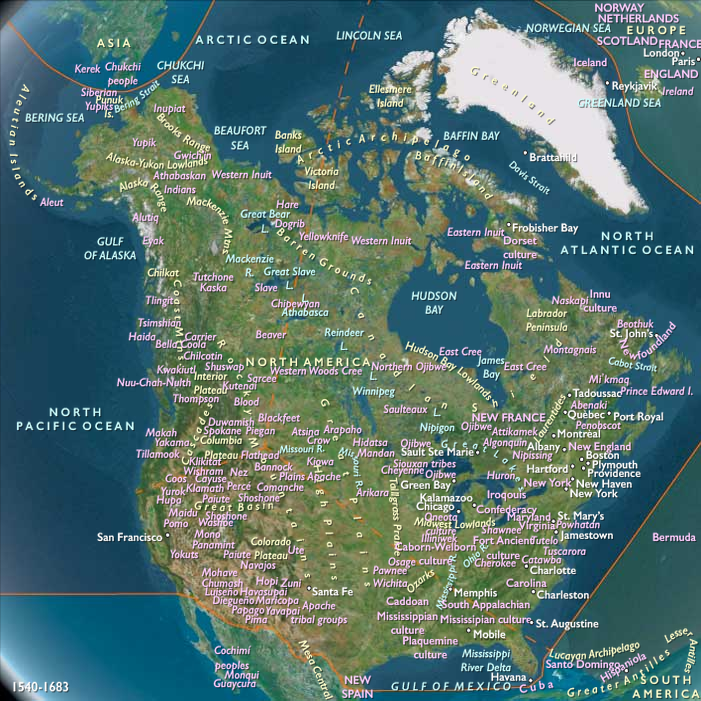
Between 1588 and 1599 CE, Northeastern North America experienced growing European influence through expanded maritime activity, intensified trade relationships, and initial permanent settlements. English, French, Basque, and Iberian presence continued to develop, while indigenous nations—including coastal Algonquian peoples, the Haudenosaunee Confederacy, interior Great Lakes tribes, and Siouan-speaking communities—strategically adapted through diplomatic alliances, territorial adjustments, and economic integration. The persistence of disease-related demographic pressures also significantly reshaped indigenous territorial patterns.
European Maritime Expansion and Early Settlements
Continued English Colonization in Newfoundland
Following Sir Humphrey Gilbert’s initial establishment at St. John’s (1583), English seasonal and semi-permanent settlements expanded along Newfoundland’s coastline. Though still modest, these settlements represented growing English interest and commitment to sustained colonization, foreshadowing future mainland colonial efforts.
Intensified Cod Fisheries and Shore-Based Activity
The extensive cod fisheries of Newfoundland’s Grand Banks remained an essential European economic hub, attracting numerous fishermen annually from Britain, France, Iberia, and the Basque regions. British fishermen, still primarily sun-drying cod ashore due to limited salt, increased the number and size of temporary coastal camps, providing opportunities for modest local trade with indigenous communities. French and Iberian fishermen continued salting catches at sea, emphasizing ship-based commerce with less extensive shore presence.
French and Basque Commercial Dynamics
French cod fishermen increasingly formalized fur-trade exchanges with coastal indigenous groups—particularly the Mi’kmaq and Montagnais—offering European goods (metal tools, textiles, beads, firearms) in return for furs. Basque whalers maintained robust seasonal whaling operations at Red Bay and the Strait of Belle Isle, focusing on right whale hunting and whale-oil production, though maintaining limited transactional interactions with native groups.
Indigenous Coastal Nations: Economic Integration and Diplomacy
Mi’kmaq Strategic Adaptation
The Mi’kmaq skillfully integrated European trade goods into traditional economies, strategically leveraging relationships with French fishermen. Their early engagement in the fur trade established them as essential regional intermediaries, enhancing their economic stability and political influence while preserving cultural resilience and autonomy.
Montagnais-French Fur Trade Relations
Similarly, the Montagnais expanded their economic involvement in the fur trade, solidifying long-term alliances with French traders. These sustained interactions set the foundation for enduring French-indigenous alliances, crucial in shaping regional geopolitical dynamics.
Stability Among Other Coastal Algonquian Tribes
Other Algonquian-speaking coastal nations—including the Abenaki, Massachusetts, Wampanoag, Narragansett, Pequot, Mahican, and Powhatan—continued stable agricultural, hunting, and fishing economies, gradually incorporating European trade items. Early diplomatic and economic exchanges fostered initial familiarity without significantly disrupting traditional social structures.
Haudenosaunee Confederacy: Territorial Strength and Diplomatic Influence
Strategic Control of Interior Territories
The Haudenosaunee Confederacy (Five Nations) retained strategic dominance by reserving extensive territories—including the Upper Ohio Valley and Central Appalachians—as exclusive hunting grounds. Their policy, reinforced by population declines from European diseases, successfully deterred permanent settlement by other indigenous groups, maintaining territorial integrity and ecological abundance.
Diplomatic Cohesion and Internal Stability
Haudenosaunee internal political cohesion remained robust, guided by traditions stemming from foundational leaders such as Hiawatha and Deganawidah. The Confederacy continued to position itself advantageously for emerging indigenous-European trade dynamics, leveraging control over vital territories and resources.
Interior Indigenous Nations: Great Lakes Stability and Migration Patterns
Great Lakes Algonquian Communities
The Potawatomi maintained stable villages throughout Michigan, while further north, th Ojibway, Cree, Cheyenne, and Arapaho continued traditional subsistence economies north of Lake Superior. Nearby, the Kickapoo, Menominee, Sauk, and Fox tribes persisted in stable, maize-based agricultural communities, largely insulated from direct European contact during this era.
Miami and Illinois Continuity
In the Ohio Valley, the Miami and Illinois sustained stable, strategically placed agricultural settlements, providing a foundation for future involvement in regional fur-trade networks and facilitating diplomatic interactions with neighboring indigenous nations.
Siouan-speaking Peoples: Stability and Western Movement
Eastern Siouan Groups
Eastern Siouan-speaking peoples—Dakota, Assiniboine, and Winnebago (Ho-Chunk)—remained in Wisconsin and Upper Michigan, continuing traditional hunting and gathering practices with limited direct European influence. Meanwhile, other Siouan-speaking nations—ancestors of the future Omaha, Iowa, Kansa, Osage, and Quapaw—still inhabited western Appalachian foothills, gradually preparing for eventual migration toward the Great Plains.
Mandan, Hidatsa, and Crow Migration
Further west, the Mandan and Hidatsa peoples established increasingly sophisticated, semi-sedentary agricultural villages along the Missouri River valley. The Crow, having recently separated from their Hidatsa kin, continued their westward migration into territories traditionally occupied by the Shoshone, forming alliances with the Kiowa and Kiowa Apache tribes and solidifying their territorial claims through warfare and strategic diplomacy.
Plains Indigenous Communities: Territorial and Cultural Stability
Pawnee Agricultural Villages
Ancestors of the Pawnee, inhabiting semi-sedentary agricultural villages along the Platte and other Great Plains river valleys, maintained robust communities featuring sophisticated social and ceremonial structures. Despite regional shifts among neighboring tribes, Pawnee societies remained culturally vibrant and territorially stable.
Gros Ventre and Tsuu T’ina Isolation
The northern interior Gros Ventre near Lake Manitoba and Tsuu T’ina (Sarcee) of northern Saskatchewan continued traditional lifestyles, relatively insulated from early European influences. Their geographic isolation enabled continued cultural and territorial stability during this period.
Demographic Impact of European Diseases
Continued Epidemics and Population Decline
European diseases—smallpox, influenza, measles, and typhus—persisted, significantly reducing indigenous populations across Eastern North America. This demographic collapse reshaped territorial alignments, fostering migrations and altering political dynamics among indigenous nations.
Strategic Depopulation and Territorial Realignments
Regions such as the Central Appalachians and Upper Ohio Valley remained notably depopulated due to disease, reinforcing Haudenosaunee territorial dominance. Eastern Kentucky—"dark and bloody ground"—remained largely unoccupied, its ancient stone fortifications underscoring the lasting impacts of demographic collapse and strategic indigenous management.
Newfoundland’s Beothuk: Continued Isolation
Cultural Isolation and Temporary Protection
Newfoundland’s indigenous Beothuk remained culturally isolated and linguistically distinct within the Algonquian family. Limited interactions with seasonal European fishermen temporarily shielded them from the extensive demographic impacts observed among mainland indigenous communities.
Indigenous Artistic and Cultural Resilience
Continuity of Craftsmanship and Ritual Practices
Indigenous communities continued vibrant artistic practices—including elaborate beadwork, shell gorgets, pottery, ceremonial regalia, and tobacco pipes—reinforcing cultural cohesion and identity. Traditional ceremonial and ritual practices—such as Haudenosaunee Longhouse ceremonies, Mi’kmaq seasonal celebrations, and Pawnee religious rituals—persisted robustly, maintaining community stability amid external pressures.
Environmental Adaptation and Climatic Challenges
Ongoing Little Ice Age Adaptations
The continuing climatic fluctuations of the Little Ice Age challenged agricultural productivity and resource availability. Indigenous communities effectively adapted through diversified agricultural methods, seasonal mobility, and ecological knowledge, demonstrating resilience and adaptability despite environmental stress.
Legacy of the Era (1588–1599 CE)
The years 1588 to 1599 CE represented a pivotal period characterized by increased European coastal activity, structured indigenous-European trade relations, and ongoing demographic challenges from disease. Indigenous nations strategically adapted through territorial realignments, diplomatic alliances, and cultural resilience. This critical foundational period laid the groundwork for increasingly complex intercultural relationships, reshaping Northeastern North America’s geopolitical and economic landscape for centuries to follow.
People
Groups
Topics
Commodities
Subjects
Regions
Northern North America
View →Subregions
