
Johannes Van den Bosch's plan forces Java's…
1828 CE to 1839 CE
The crops first targeted are sugar and indigo, but coffee and pepper are soon added, followed by newer crops, such as tea, tobacco, and cinnamon.
Unlike the system that Stamford Raffles had contemplated, van den Bosch proposes dealing with whole villages rather than individuals, and using government officials and local authorities (who receive a percentage of revenues their areas generated) to regulate which crops will be grown, on which and how much land, with which and how much labor, and at what prices.
Bringing the produce to the world market through the Netherlands becomes the monopoly of the Netherlands Trading Association (NHM), a private company in which the Dutch king is a major stockholder.
Entrepreneurs in general are locked out of the state-run system.
This approach, van den Bosch argues, will assure production and profits great enough not only to subsidize the colonial administration and contribute handsomely to the treasury of the Netherlands but also to substantially improve the well-being of the Javanese.
Scholars and politicians alike have argued ever since over what exactly those results were.
Topics
Regions
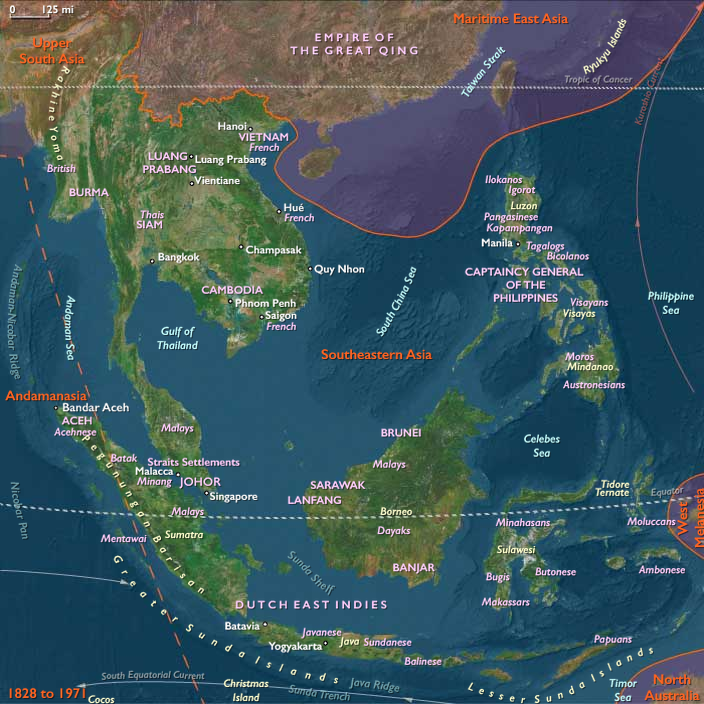
Southeast Asia
View →Subregions
