
...a fifth of the population of Estonia. …
Years: 1697 - 1697
...a fifth of the population of Estonia.
The famine occurs in a period known as the Little Ice Age.
Cold springs and summers characterize the climate in Europe during the 1690s, when temperatures are generally estimated to be 1.5°C lower than the average during the Little Ice Age.
This impacts other countries: France suffers the worst famine since the Middle Ages and ice floes form in the Thames, while Lake Constance and Lake Zurich freeze over completely.
The availability of salt, a vital ingredient for preserving meat and fish, had been impacted by the colder climate.
Portugal, the main source of salt to the Baltic region, had been affected by excessive rain, making salt production difficult.
The shortage of salt means that meat and fish produces cannot be preserved, reducing stockpiles available for consumption.
Harvests in Estonia had been poor in the years 1692 to 1694, due to the shorter than normal summer growing seasons and longer winters.
Seed stocks had been reduced as a result.
Excessive rain had fallen in the summer of 1695, almost constantly from June 24 to September 29.
This excess rain had destroyed crops and hay as the low lying land was flooded, resulting in a shortage of seed for the following autumn and spring sowing seasons.
The winter of 1695-96 had been extremely cold, and the early spring thaw was short-lived when winter conditions returned in March 1696, delaying sowing of the little available seed until the end of May.
The return of heavy rains in the summer had wrecked the harvest, with only between a fifth and a quarter of the seed planted being harvested.
In some areas the crop yield was a little as three percent.
Many peasants were destitute and hungry by the end of the summer in 1696; farmhands, servants and even some members of the nobility were reduced to begging.
Famine had taken hold by the autumn and the death rate had begun to rise in October.
The winter of 1696-97 is so severe that corpses will not be buried until the following spring.
An estimated seventy thousand people—one fifth or fourth of Estonian population—have died during the Great Famine.
Estonia and Livonia are seen at this time as the granaries of the Swedish Empire, shipping in large quantities to Sweden and Finland.
As these provinces hold low status in the empire, priority is given to the fulfillment of export quotas.
The Government in Stockholm is slow to react to the developing famine and does not relax their policies until 1697 when it is too late.
Peter the Great, as one of his main pretexts for declaring war against Sweden in 1700, will cite the Great Northern War, the inadequate provisioning of his retinue of two hundred and fifty people and horses by the Swedish Governor Generals in 1697 as they passed through the province during the famine.
Locations
Groups
- Sweden, (second) Kingdom of
- Estonia, Duchy of (Swedish Estonia)
- Swedish Empire
- Finland, (Swedish) Grand Duchy of
- Pomerania, Swedish
Topics
Commodoties
Subjects
Regions
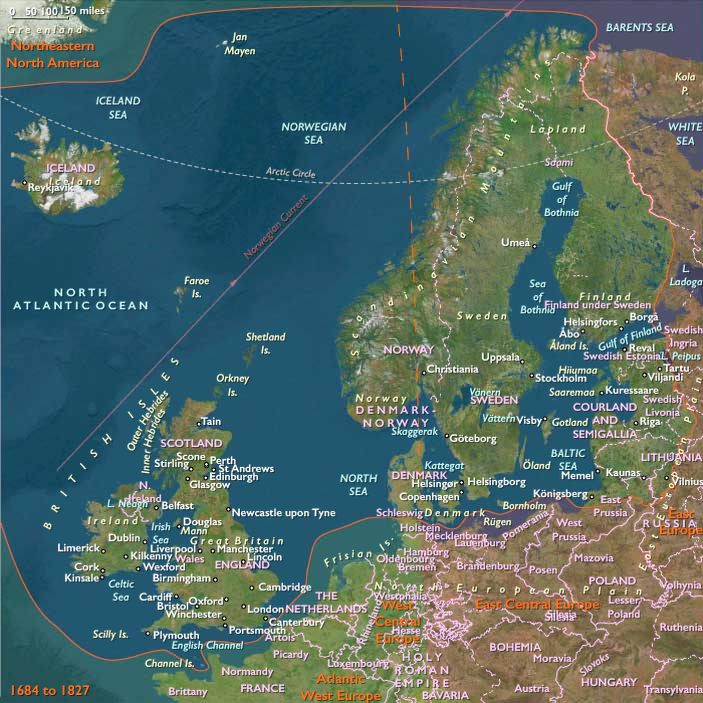
Subregions
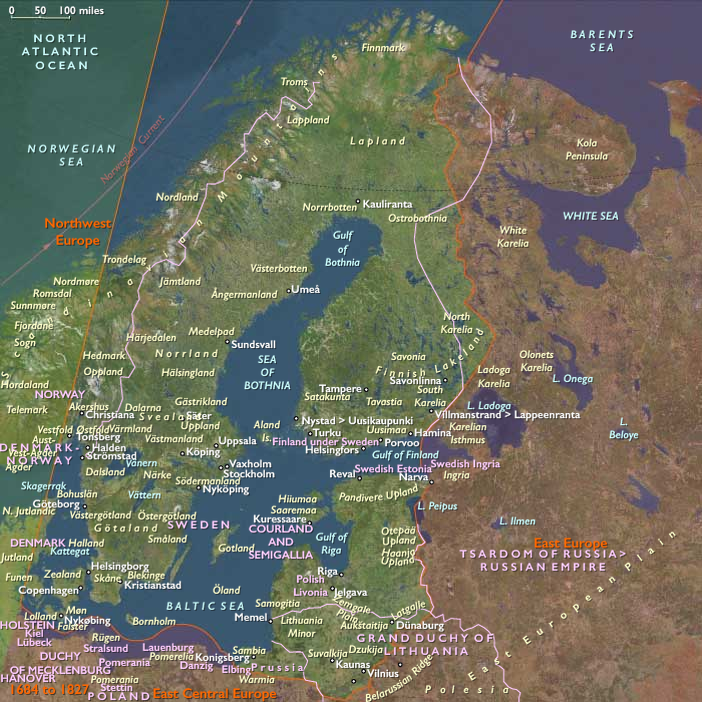
Years: 1697 - 1697
Locations
Groups
- Sweden, (second) Kingdom of
- Estonia, Duchy of (Swedish Estonia)
- Swedish Empire
- Finland, (Swedish) Grand Duchy of
- Pomerania, Swedish
Topics
Commodoties
Subjects
Regions
Subregions