
The ease of the Spanish "reconquest" of …
Years: 1816 - 1827
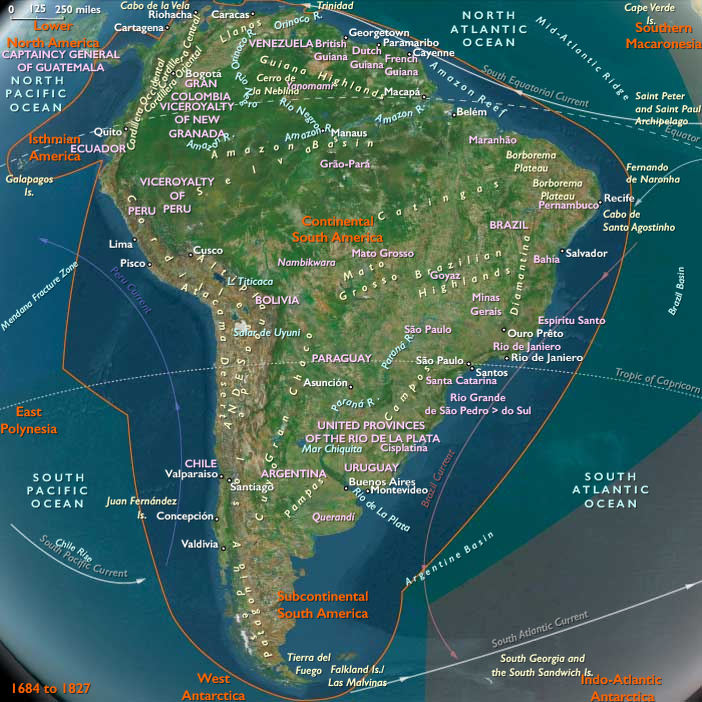
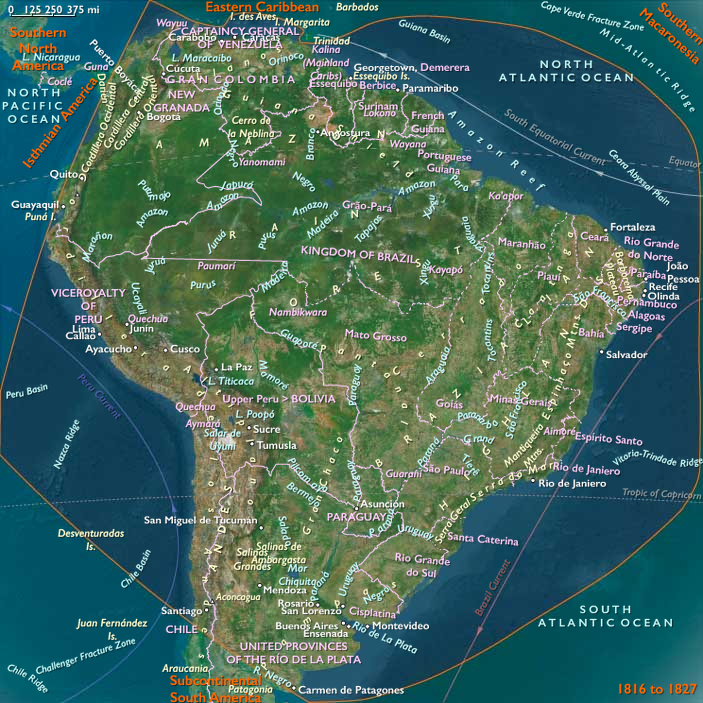
The ease of the Spanish "reconquest" of New Granada in 1815-16 can be attributed not only to patriot divisions but also to weariness with the hardships and disruptions of wartime.
Moreover, the pro-independence leadership, mainly drawn from criollo upper sectors of society, has generally failed to convince the popular majority that it has a real stake in the outcome.
Although one patriot faction at Cartagena has succeeded in rallying artisans and people of color to participate actively on its side, more aristocratic rivals win local control, not only in Cartagena but also in all of the more populated regions of New Granada by July 1816.
Yet restoration of the old regime is never complete.
Some patriot fighters follow Bolivar into Caribbean exile to continue plotting, and others—including the man destined to become Bolivar's closest New Granadan collaborator and ultimate rival, General Francisco de Paula Santander y Omana—retreat to the eastern plains (llanos), which become a republican sanctuary.
Moreover, the financial exactions of the Spanish authorities together with revulsion against their tactics of repression, which include systematic execution of most top figures of the Patria Boba, turn feeling increasingly against them.
Patriot guerrillas spring up in many parts of the highlands.
Moreover, the pro-independence leadership, mainly drawn from criollo upper sectors of society, has generally failed to convince the popular majority that it has a real stake in the outcome.
Although one patriot faction at Cartagena has succeeded in rallying artisans and people of color to participate actively on its side, more aristocratic rivals win local control, not only in Cartagena but also in all of the more populated regions of New Granada by July 1816.
Yet restoration of the old regime is never complete.
Some patriot fighters follow Bolivar into Caribbean exile to continue plotting, and others—including the man destined to become Bolivar's closest New Granadan collaborator and ultimate rival, General Francisco de Paula Santander y Omana—retreat to the eastern plains (llanos), which become a republican sanctuary.
Moreover, the financial exactions of the Spanish authorities together with revulsion against their tactics of repression, which include systematic execution of most top figures of the Patria Boba, turn feeling increasingly against them.
Patriot guerrillas spring up in many parts of the highlands.
Locations
People
Groups
- Tairona
- Christians, Roman Catholic
- Muisca (Amerind tribe)
- Inquisition, Spanish
- Spaniards (Latins)
- Peru, Viceroyalty of
- Quito, Real Audiencia of
- Bogotá, Audiencia de Santa Fe de (Captaincy General of New Granada)
- Britain, Kingdom of Great
- Venezuela, Captaincy General of
- New Granada, United Provinces of
- Spain, Bourbon Kingdom (first restoration) of
Topics
- Post-Classic Stage (Peru)
- Colonization of the Americas, Spanish
- Encomienda system
- Industrial Revolution, First
- Napoleonic Wars
- Spanish American wars of independence
- Colombian War of Independence
- Spanish reconquest of New Granada
Commodoties
- Gem materials
- Domestic animals
- Oils, gums, resins, and waxes
- Grains and produce
- Textiles
- Ceramics
- Strategic metals
- Slaves
- Sweeteners
- Beer, wine, and spirits
- Land
Subjects
Regions
Subregions
Related Events
Showing 10 events out of 20863 total
Years: 1816 - 1827
Locations
People
Groups
- Tairona
- Christians, Roman Catholic
- Muisca (Amerind tribe)
- Inquisition, Spanish
- Spaniards (Latins)
- Peru, Viceroyalty of
- Quito, Real Audiencia of
- Bogotá, Audiencia de Santa Fe de (Captaincy General of New Granada)
- Britain, Kingdom of Great
- Venezuela, Captaincy General of
- New Granada, United Provinces of
- Spain, Bourbon Kingdom (first restoration) of
Topics
- Post-Classic Stage (Peru)
- Colonization of the Americas, Spanish
- Encomienda system
- Industrial Revolution, First
- Napoleonic Wars
- Spanish American wars of independence
- Colombian War of Independence
- Spanish reconquest of New Granada
Commodoties
- Gem materials
- Domestic animals
- Oils, gums, resins, and waxes
- Grains and produce
- Textiles
- Ceramics
- Strategic metals
- Slaves
- Sweeteners
- Beer, wine, and spirits
- Land
Subjects
Regions
Subregions