
Eyre Coote, a member of the Coote…
January 1760 CE
He entered the 27th Regiment of Foot, first saw active service in the Jacobite rising of 1745, and later obtained a captaincy in the 39th Regiment, the first regular British regiment to serve in India.
In 1756 a part of the regiment, then quartered at Madras, had been sent forward to join Robert Clive in his operations against Calcutta, which had recently been captured by the forces of the Nawab of Bengal.
The city had been reoccupied without difficulty in January 1757, but Coote and Clive had argued so violently over who should reoccupy Fort William that they almost fired at each other, which began a lifelong rivalry and hatred between the two men.
Coote was soon given the local rank of Major for his good conduct in surprising the camp of the Nawab of Bengal.
Soon afterwards came the Battle of Plassey, which would probably never have taken place but for Coote's advice at the council of war; after the defeat of the Nawab he led a detachment in pursuit of the French for four hundred miles under extraordinary difficulties.
His conduct had won him the rank of Lieutenant-Colonel and the command of the 84th Regiment of Foot, newly raised in Britain for Indian service, but his exertions had seriously damaged his health.
Coote's regiment had arrived in October 1759 to take part in the decisive struggle between French and British in the Carnatic.
He had taken command of the forces at Madras, where a French siege had recently been defeated.
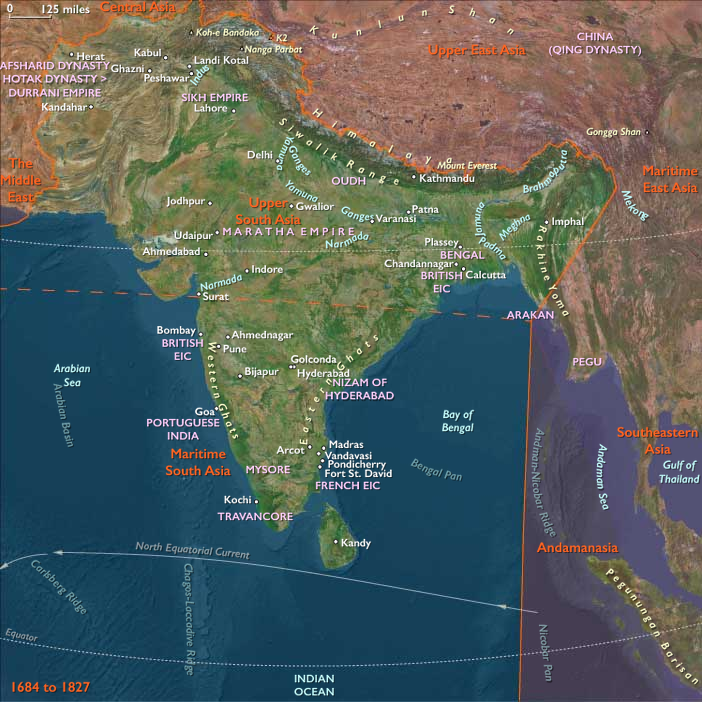
The Count de Lally's army, burdened by a lack of naval support and funds, attempts in early 1760 to regain the fort at Vandavasi, in present Tamil Nadu.
Wandiwash is the Anglicised pronunciation of Vandavasi.
The Battle of Wandiwash involves the capture of Chetpattu (Chetpet), Tirunomalai (Thiruvannaamalai), Tindivanam and Perumukkal.
The British, having made substantial gains in Bengal and Hyderabad and having collected huge amount of revenue, are fully equipped to face the French in Wandiwash, whom Sir Eyre Coote's forces and decisively defeat.
This is the Third Carnatic War fought between the French and the British.
According to Eduard Cust in Annals of the Wars of the Eighteenth Century, Vol. 2 (1862), the French army consisted of 300 European cavalry, 2,250 European infantry, 1,300 sepoys (native soldiers), 3,000 Marathas and sixteen pieces of artillery, while the English deployed about eighty European cavalry, 250 native cavalry, 1,900 European infantry, 2,100 sepoys and twenty-six pieces of artillery.
Locations
Groups
Topics
Regions
South Asia
View →Subregions
