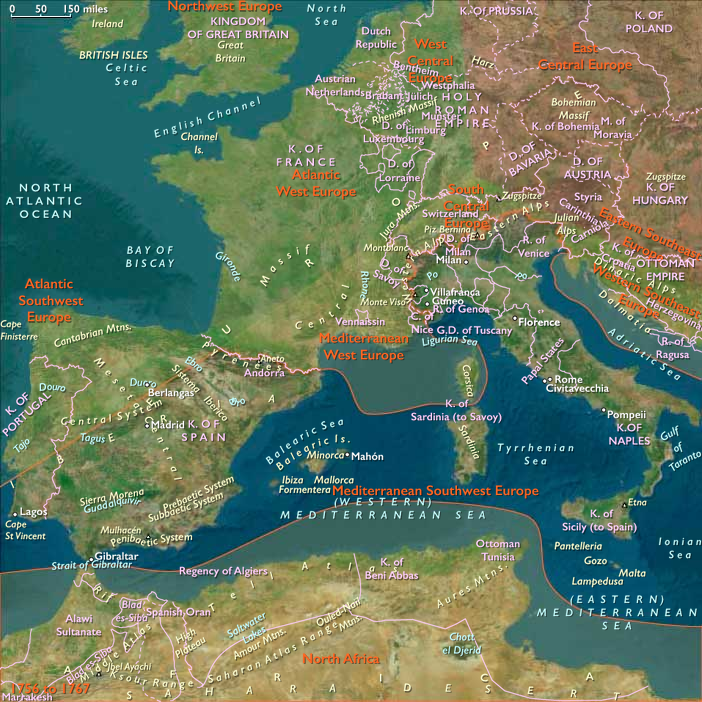
Charles III of Spain represents a new…
1760 CE
This is a form of absolute monarchy or despotism in which rulers embrace the principles of the Enlightenment, especially its emphasis upon rationality, and apply them to their territories.
They tend to allow religious toleration, freedom of speech and the press, and the right to hold private property.
Most foster the arts, sciences, and education.
Charles shares these ideals with other monarchs, including Maria Theresa of Austria, her son Joseph, and Catherine II of Russia, (the Great).
The principles of the Enlightenment had been applied to his rule in Naples and he intends to do the same in Spain, though on a much larger scale.
Charles goes about his reform with the help of the Marquis of Esquilache, Count of Aranda, Count of Campomanes, Count of Floridablanca, Ricardo Wall and the Genoan aristocrat Jerónimo Grimaldi.
Thanks to these principles, the king decides to forbid bullfighting, a practice regarded by the king himself as brutal and uncivilized.
The first crisis that Charles has to deal with is the death of his beloved wife Maria Amalia, who dies unexpectedly at aged thirty-five on September 27, 1760, at the Palace of Buen Retiro on the eastern outskirts of Madrid.
She is buried at the El Escorial in the royal crypt.
Locations
People
Catherine the Great
View →
Charles Emmanuel III
View →
Charles III of Spain
View →
Charles IV of Spain
View →
Ferdinand I of the Two Sicilies
View →
Ferdinand VI of Spain
View →
Jerónimo Grimaldi, 1st Duke of Grimaldi
View →
Joseph II, Holy Roman Emperor
View →
Leopoldo de Gregorio, Marquis of Squillace
View →
Maria Theresa
View →
Philip, Duke of Parma
View →
Ricardo Wall
View →
Topics
Regions
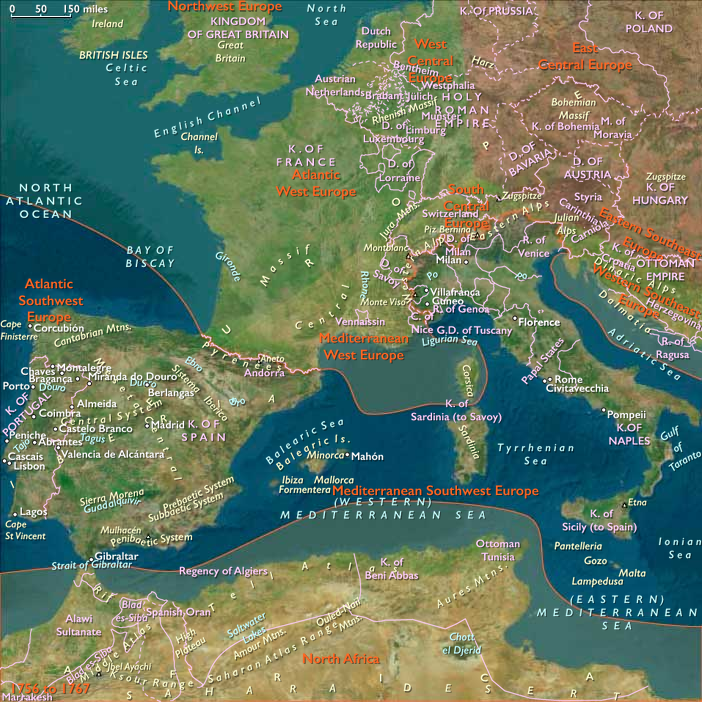
Southwest Europe
View →Subregions