A naval squadron of seventeen ships on…
August 1642 CE
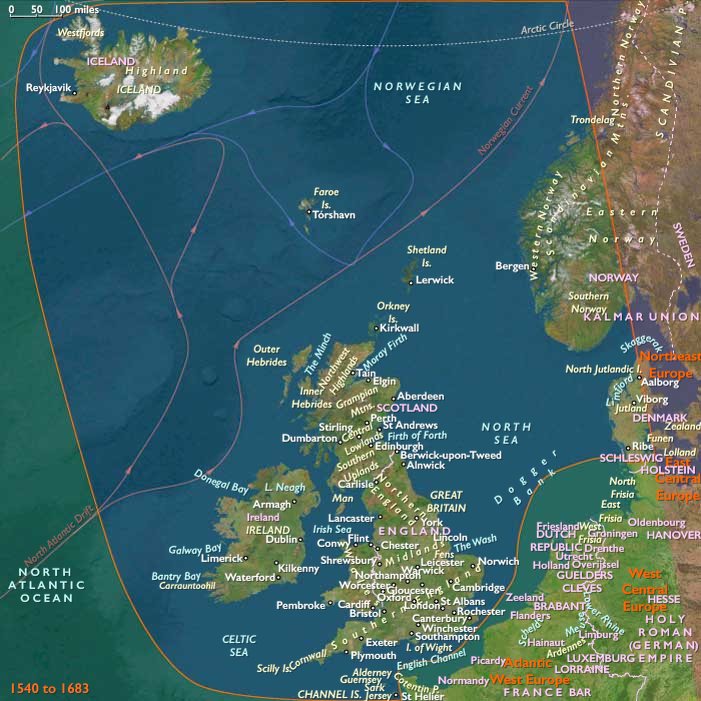
A naval squadron of seventeen ships on the morning of August 7, 1642, appears in Galway Bay.
Led by Alexander, 11th Lord Forbes, they had come to relieve the garrison of Forthill at the request of the English Parliament, and which had authorized Forbes, as Lieutenant-General, to waste the coasts of Ireland.
Launching long boats from the ship, Forthill is resupplied with food, arms and ammunition.
Forbes then sends a messenger with a letter for Mayor Walter Lynch fitz James, ordering the Galway citizens to "confess themselves to have been rebels, and humbly submitting to beg his majesty's intercession for them to the parliament of England, and to declare they would admit such governors as the king and state should appoint, and until then put themselves under the protection of Lord Forbes."
Mayor Lynch and the town council utterly refuse the terms, to the surprise and anger of Lord Forbes.
They instead make representations for protection to the Earl of Clanricarde—who is at this time a neutral.
Clanricarde in turn communicates to Forbes that, should he make war against the town, it would be both a breach of the peace and endanger the country by bringing yet another area into the war.
Furthermore, he makes it clear that, should the citizens become actively hostile against Forbes, there would be nothing he could do to influence them.
Being unable to directly assault the town itself, Forbes lands men west of the town and takes possession of the Claddagh, on the west bank of the Corrib.
All of the town's surrounding suburbs and villages are burned and destroyed; dozens of locals are killed, assaulted and raped.
St. Mary's Church in the Claddagh is badly defaced; in its graveyard, coffins are dug up as Lord Forbes's troops search the bodies for rings, gold chains and the like.
Forbes places "two pieces of ordnance", or cannons, at St. Mary's and uses them to bombard the city.
However, they have little effect.
Locations
Groups
Topics
Commodities
Subjects
Regions
North Europe
View →Subregions