
Trade at Singapore had eclipsed that of …
Years: 1840 - 1851
Trade at Singapore had eclipsed that of Penang by 1824, when it reached a total of Sp$1 million annually. By 1869 annual trade at Singapore had risen to Sp$89 million.
The cornerstone of the settlement's commercial success is the entrepot trade, which is carried on with no taxation and a minimum of restriction.
The main trading season begins each year with the arrival of ships from China, Siam, and Cochinchina.
Driven by the northeast monsoon winds and arriving in January, February, and March, the ships bring immigrant laborers and cargoes of dried and salted foods, medicines, silk, tea, porcelain, and pottery.
They leave beginning in May with the onset of the southwest monsoons, laden with produce, spices, tin, and gold from the Malay Archipelago, opium from India, and English cotton goods and arms.
The second major trading season begins in September or October with the arrival of the Bugis traders in their small, swift prahu, bringing rice, pepper, spices, edible bird nests and shark fins, mother-of-pearl, gold dust, rattan, and camphor from the archipelago.
They depart carrying British manufactures, cotton goods, iron, arms, opium, salt, silk, and porcelain.
By mid-century, there are more than twenty British merchant houses in Singapore, as well as German, Swiss, Dutch, Portuguese, and French firms.
The merchants receive cargoes of European or Indian goods on consignment and sell them on commission.
Locations
People
Groups
- Chinese Empire, Qing (Manchu) Dynasty
- East India Company, British (United Company of Merchants of England Trading to the East Indies)
- India, East India Company rule in
- Bengal Presidency
- British Malaya
- Siam, (Rattanakosin) Kingdom of
- Straits Settlements, (British)
- Britain (United Kingdom of Great Britain and Ireland)
- French Cochinchina
Commodoties
Subjects
Regions
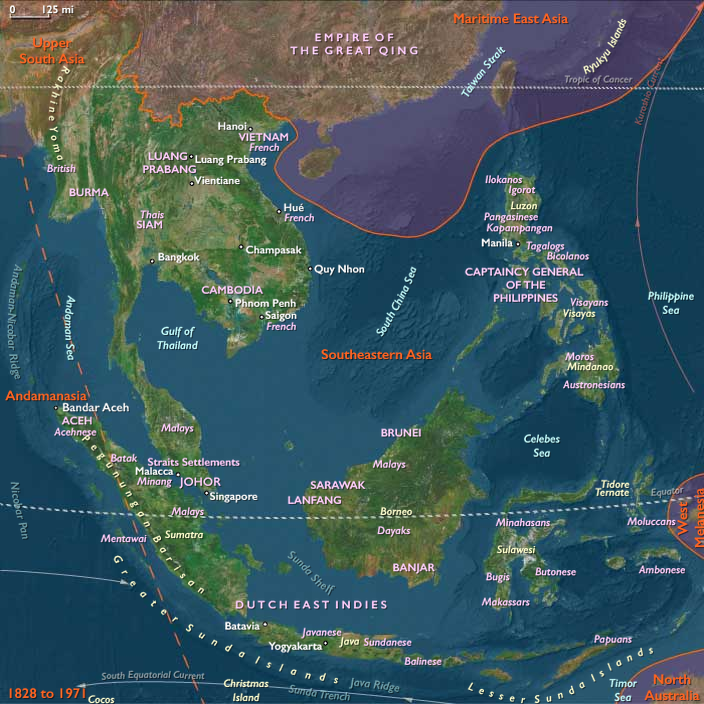
Subregions
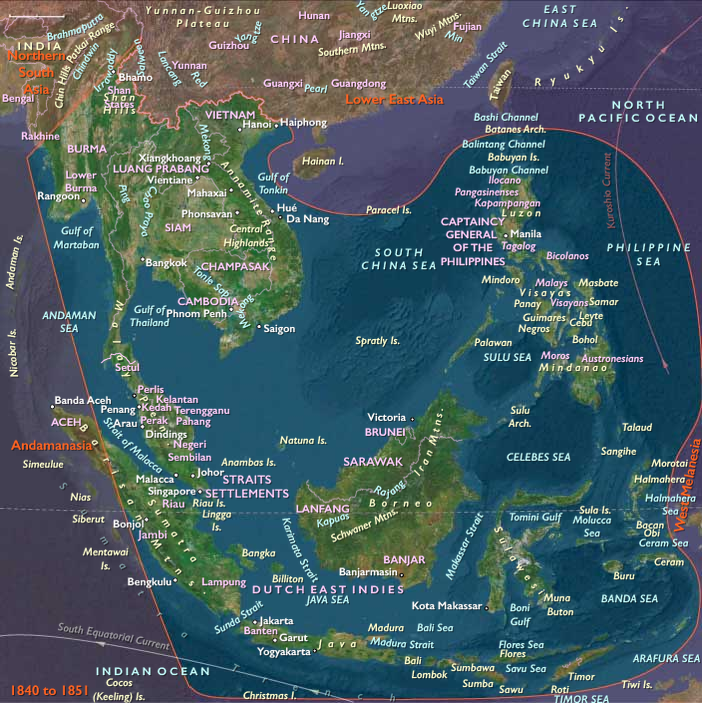
Related Events
Showing 10 events out of 18028 total
Years: 1840 - 1851
Locations
People
Groups
- Chinese Empire, Qing (Manchu) Dynasty
- East India Company, British (United Company of Merchants of England Trading to the East Indies)
- India, East India Company rule in
- Bengal Presidency
- British Malaya
- Siam, (Rattanakosin) Kingdom of
- Straits Settlements, (British)
- Britain (United Kingdom of Great Britain and Ireland)
- French Cochinchina
Commodoties
Subjects
Regions
Subregions