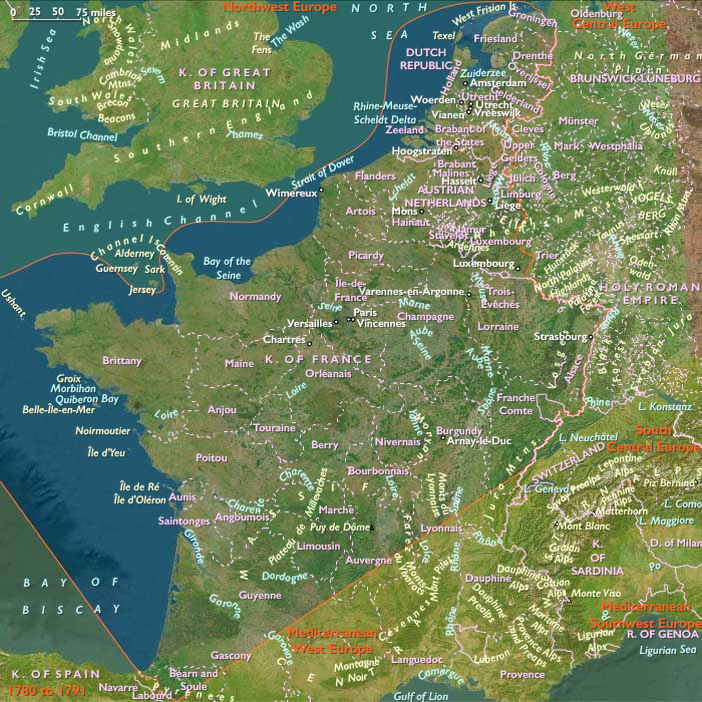
Joseph-Ignace Guillotin had written an essay to…
October 1789 CE
This essay had impressed the Jesuits so much that they persuaded him to enter their order and he became a professor of literature at the Irish College at Bordeaux.
However, he left after a few years and traveled to Paris to study medicine, becoming a pupil of Antoine Petit.
He gained a diploma from the faculty at Reims in 1768 and later won a prize given by the Paris faculty, the title of Doctor-Regent.
In 1784, when Franz Mesmer began to publicize his theory of "animal magnetism", which many considered offensive, Louis XVI hadc appointed a commission to investigate it and Guillotin was appointed a member, along with Benjamin Franklin and others.
In December 1788, Guillotin had drafted a pamphlet entitled Petition of the Citizens Living in Paris, concerning the proper constitution of the States-General.
As a result, he was summoned by the French parliament to give an account of his opinions, which served to increase his popularity.
On May 2, 1789, he became one of ten Paris deputies in the Estates-General of 1789 and will serve as secretary to the body from June 1789 to October 1791.
As a member of the assembly, Guillotin mainly directs his attention towards medical reform.
On October 10, 1789, during a debate on capital punishment, he proposes that "the criminal shall be decapitated; this will be done solely by means of a simple mechanism."
The "mechanism" is defined as "a machine that beheads painlessly".
His proposal appears in the Royalist periodical, Les Actes des Apôtres.
At this time, beheading in France is typically done by axe or sword, which does not always cause immediate death.
Additionally, beheading is reserved for the nobility, while commoners are typically hanged.
Locations
People
Topics
Regions
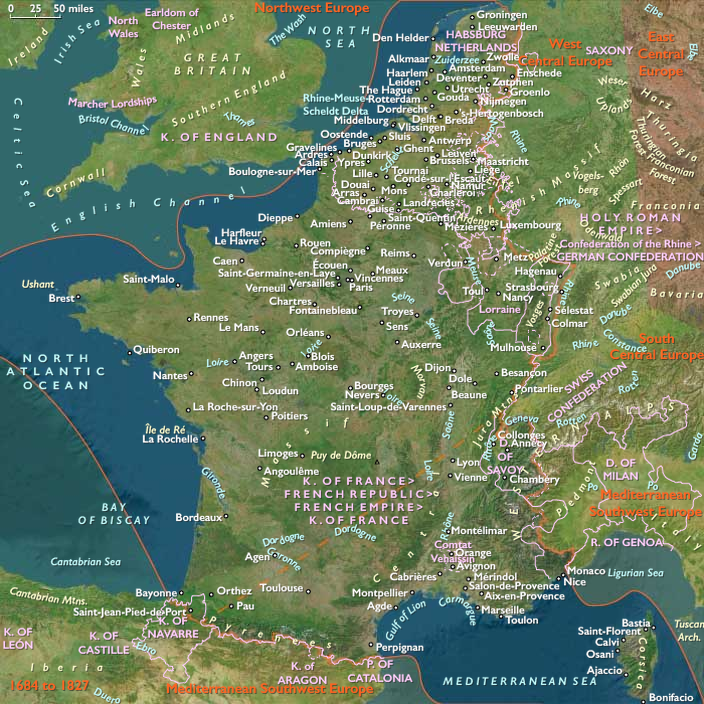
West Europe
View →Subregions