
A third church in Herzegovina, the Serbian …
Years: 1576 - 1587
A third church in Herzegovina, the Serbian Orthodox, has also competed for Christian adherents.
Christianity is thus structurally weaker in Bosnia than in almost any other part of the Balkans.
The motives that incline Bosnians to adopt Islam are economic: the prosperous cities of Sarajevo and Mostar are mainly Muslim, and it is not possible to lead a full civic life there without converting to Islam.
Other motives include the privileged legal status enjoyed by Muslims and, possibly, a desire to avoid the harac, though Muslims are subject, unlike Christians, both to the alms tax and to the duties of general military service. (Modern historians have largely disproven the traditional belief that Bosnian noblemen converted en masse to Islam in order to keep their estates).
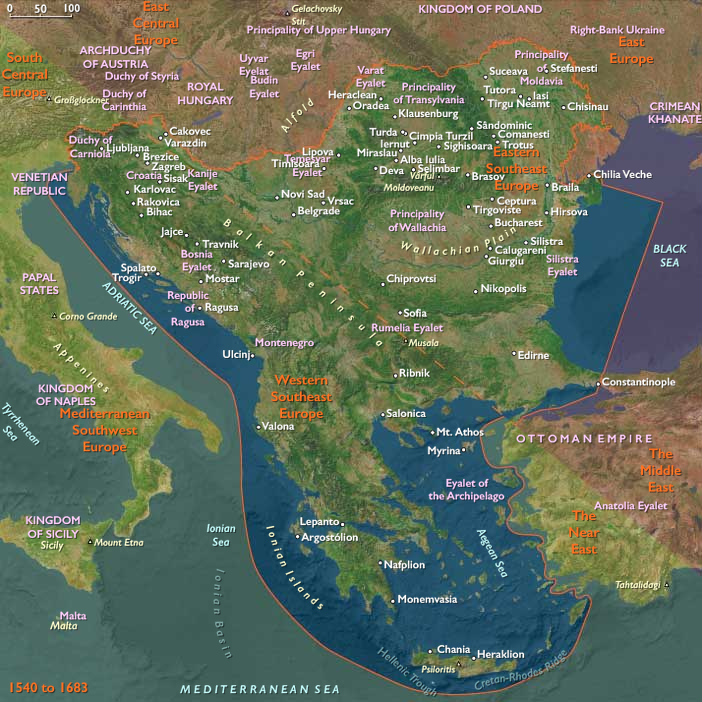
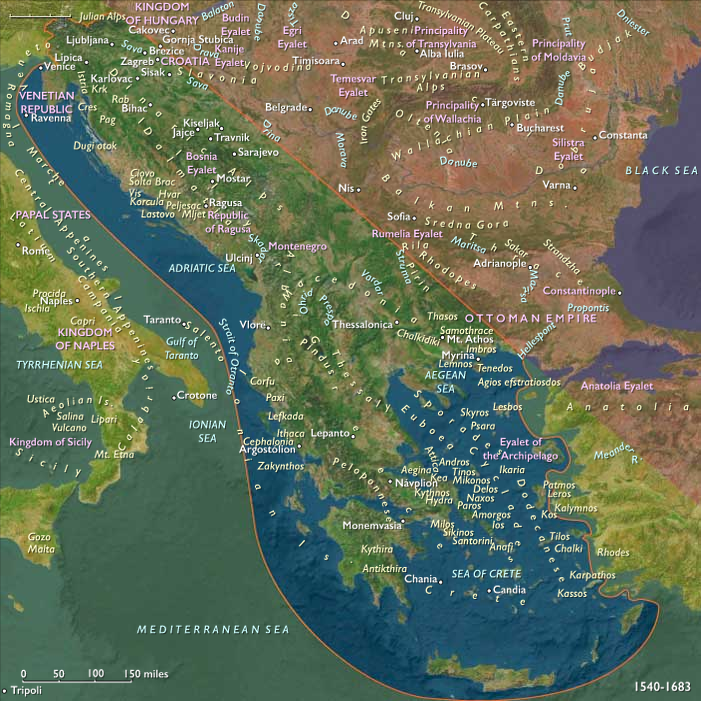
Another way in which Bosnia differs from other parts of the Ottoman Balkans is that for most of last century Bosnia has been a frontier province, facing two of the empire's most important enemies, Austria-Hungary and Venice.
To fill up depopulated areas of northern and western Bosnia, the Ottomans have encouraged the migration of large numbers of hardy settlers with military skills from Serbia and Herzegovina.
Many of these settlers are Vlachs, members of a pre-Slav Balkan population that has acquired a Latinate language and specialized in stockbreeding, horse raising, long-distance trade, and fighting.
Most are members of the Serbian Orthodox church.
Before the Ottoman conquest, that church had had very few members in the Bosnian lands outside Herzegovina and the eastern strip of the Drina valley; there is no definite evidence of any Orthodox church buildings in central, northern, or western Bosnia before 1463.
Several Orthodox monasteries have been built during the sixteenth century, however, in those parts of Bosnia, apparently to serve the newly settled Orthodox population there.
Locations
Groups
- Vlachs
- Muslims, Sunni
- Christians, Roman Catholic
- Christians, Eastern Orthodox
- Venice, (Most Serene) Republic of
- Ottoman Empire
- Serbia, Ottoman
- Bosnia, Sanjak of
- Protestantism
- Habsburg Monarchy, or Empire
- Habsburg Monarchy, or Empire
Commodoties
Regions
Subregions
Years: 1576 - 1587
Locations
Groups
- Vlachs
- Muslims, Sunni
- Christians, Roman Catholic
- Christians, Eastern Orthodox
- Venice, (Most Serene) Republic of
- Ottoman Empire
- Serbia, Ottoman
- Bosnia, Sanjak of
- Protestantism
- Habsburg Monarchy, or Empire
- Habsburg Monarchy, or Empire
Commodoties
Regions
Subregions