The hunger and despair of the market…
October 1789 CE
The Hôtel de Ville has already opened its plentiful stores to the rioters, but they remain unsatisfied: they want not just one meal but the assurance that bread will once again be plentiful and cheap.
Famine is a real and ever-present dread for the lower strata of the Third Estate, and rumors of an "aristocrats' plot" to starve the poor are rampant and readily believed.
At the same time, there is common resentment against the reactionary attitudes prevailing in Court circles even before the uproar sparked by the notorious banquet precipitates the political aspects of the march.
Deeper planners in the crowd spread the word that the king needs to dismiss his royal bodyguards entirely and replace them all with patriotic National Guardsmen, a line of argument that has a compelling resonance among Lafayette's soldiers.
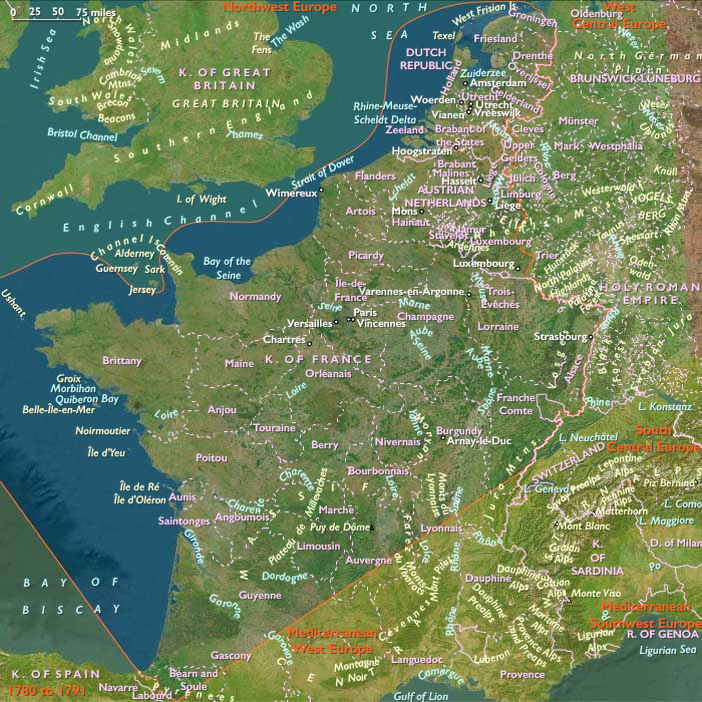
These two popular goals coalesce around a third that is largely the revolutionaries' idea, which is that the king and his court, and the Assembly as well, must all be moved to Paris to reside among the people.
Only then will the foreign soldiers be expelled, food be reliably available, and France served by a leader who is "in communion with his own people".
The plan appeals to all segments of the crowd.
Even those who are innocently supportive of the monarchy (and there are many among the women) feel the idea of bringing home le bon papa is a good and comforting plan.
For revolutionaries, the preservation of their recent legislation and the creation of a constitution are paramount, and a lockdown of the king within reformist Paris will provide the best possible environment for the Revolution to succeed.
Locations
People
Commodities
Subjects
Regions
West Europe
View →Subregions