The Lagos Incident and Portugal’s Struggle to…
January 1762 CE
The Lagos Incident and Portugal’s Struggle to Remain Neutral (1759–1762)
During the Seven Years’ War (1756–1763), Portugal, though historically allied with Britain, had officially declared neutrality in the conflict. However, maintaining this neutrality proved increasingly challenging, particularly due to growing Anglo-French tensions on Portuguese soil.
The British Attack in Portuguese Waters (1759)
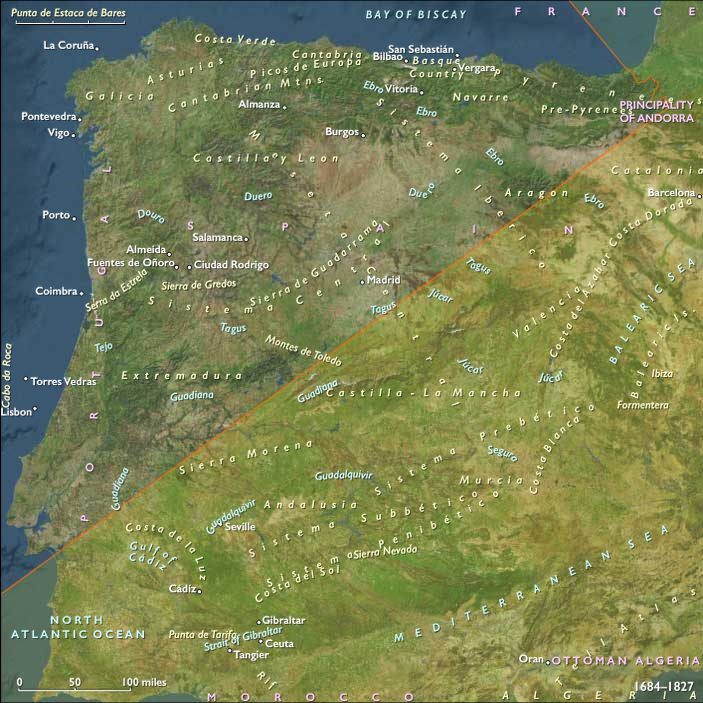
In 1759, a British fleet under Admiral Edward Boscawen attacked a French squadron in Portuguese territorial waters off the coast of Lagos, Algarve. The engagement resulted in:
- Three French ships captured
- Two French ships burned
- French survivors seeking refuge in Lagos
This breach of Portuguese neutrality forced Prime Minister Sebastião José de Carvalho e Melo, the Marquis of Pombal, to demand an official apology from Britain. In response, the British government sent a diplomatic delegation to Lisbon, formally apologizing to King José I. However, despite French demands, the captured French warships were not returned—a decision that Pombal had already informed British Prime Minister William Pitt he did not expect.
Portugal’s Gesture of Neutrality
To maintain the appearance of neutrality, the Portuguese government provided material assistance to the French sailors who had taken refuge in Lagos. This humanitarian gesture was met with gratitude from King Louis XV of France, who personally thanked King José I for his support. However, France continued to demand the return of the captured ships, an issue that remained unresolved.
Anglo-French Tensions in Portugal
Despite Portugal’s efforts to stay out of the war, minor conflicts between British and French residents on Portuguese soil increased tensions:
- In Faro, the British consul secretly warned Royal Navy frigates to enter the harbor and block the unloading of a French vessel.
- In Viana do Minho, British merchants armed a private boat and recaptured an English ship that had been seized by a French corsair.
These localized skirmishes, though minor, strained Portugal’s neutrality, as both France and Britain sought to exert influence in the strategically positioned Iberian kingdom.
The Pacte de Famille and Spain’s Entry into the War
Meanwhile, France was pressuring Spain to formally enter the war against Britain, despite Spain’s reluctance. While Spain hesitated, it also began secret negotiations with Britain, seeking a diplomatic exit from the conflict.
However, on August 15, 1761, France and Spain signed the Third Pacte de Famille, a continental system designed to isolate Britain in Europe and ensure greater Bourbon cooperation. The secret terms of the agreement contained a clause committing Spain to declare war on Britain on May 1, 1762.
Britain Strikes First – The War Expands
Unbeknownst to Spain, British naval intelligence intercepted official Spanish correspondence revealing the secret clause of the treaty. Armed with this knowledge, Britain decided to strike first.
On January 2, 1762, Britain preemptively declared war on Spain, anticipating the Spanish invasion of Portugal that would follow in May.
The Pretext for the Invasion of Portugal (1762)
Despite Portugal’s official neutrality, Spain and France used the Lagos Incident as a pretext to justify a Franco-Spanish invasion of Portugal in 1762.
Their rationale was that:
- Portugal had covertly aided Britain, despite claims of neutrality.
- The British attack in Portuguese waters had demonstrated Portugal’s inability to control its own territory.
- France and Spain viewed Portugal’s strategic alliance with Britain as a threat to Bourbon interests.
The Road to War
By May 1762, Spanish and French forces launched an invasion of Portugal, drawing Britain fully into the Iberian conflict. Though initially underprepared, Portugal, with British military support, successfully resisted the invasion, dealing a humiliating defeat to the Bourbon allies.
Thus, what began as a diplomatic incident off the coast of Lagos in 1759 had ultimately escalated into a full-scale war on Portuguese soil by 1762, illustrating how Portugal’s neutrality was increasingly untenable in the face of European power struggles.
Locations
People
Groups
Regions
Southwest Europe
View →Subregions