Aleksander Wielopolski, a Polish aristocrat, owner of…
1862 CE
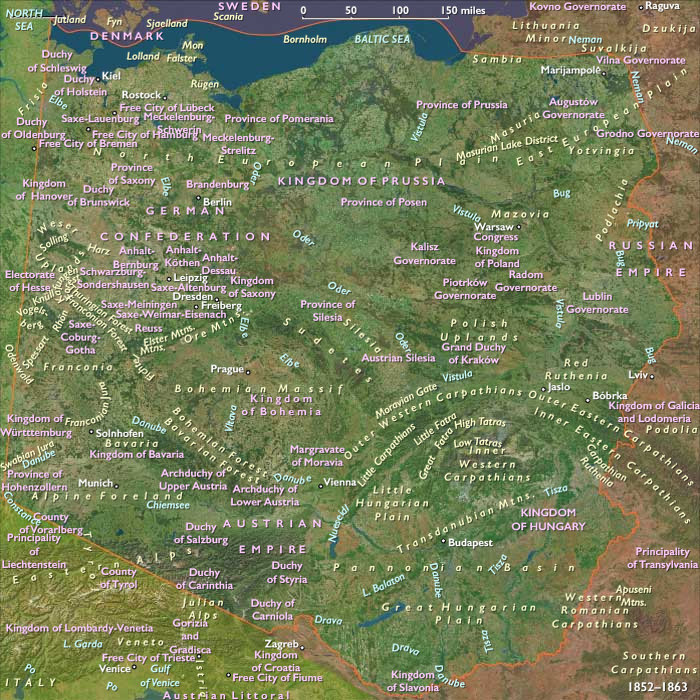
Aleksander Wielopolski, a Polish aristocrat, owner of large estates, and the 13th lord of the manor of Pinczów, is in 1862 appointed head of Poland's Civil Administration within the Russian Empire under Tsar Alexander II.
Conservative, pro-Russian, a proponent of regaining Poland's pre-1830 autonomy, and a champion of the emancipation of Jews, Wielopolski undertakes educational reforms, increasing the number of Polish-language schools and establishing in Warsaw the "Main School" (Szkola Glowna, the first university in Russian Poland, today's University of Warsaw).
He also enacts banking-system reforms and agricultural reform (rents instead of serfdom for peasants).
In introducing reforms that are not insignificant but that do not include peasant emancipation, he is viewed as an enemy both by the Reds, who create an underground National Committee, and by the Whites, who also set up a clandestine organization.
Wielopolski feels that the Russian Empire's difficult internal and international situation will force the Tsarist administration to make certain concessions to the Polish nobility.
On the other hand, the Polish nobility should -- in his opinion -- accept Tsarist rule and take part in the Empire's political life instead of calling for independence.
His project is based on decisions of 1815, when Tsar Alexander I signed a Constitution and made various promises to extend liberties to the parts of Poland incorporated into Russia (the "Taken Territories"; Ziemie zabrane).
Ultimately, Wielopolski abandons such ideas, and proposes instead the formal condemnation of the November Uprising and acceptance of the Romanov dynasty's everlasting rule over Poland, expecting in turn from the Tsar the restoration of Polish liberties, a semi-independent government, curtailment of censorship, and the closure of Russian Military Courts.
His proposal, unfortunately, is rejected.
Locations
Groups
Regions
Central Europe
View →Subregions