The economy on the Arab side of…
1744 CE to 1755 CE
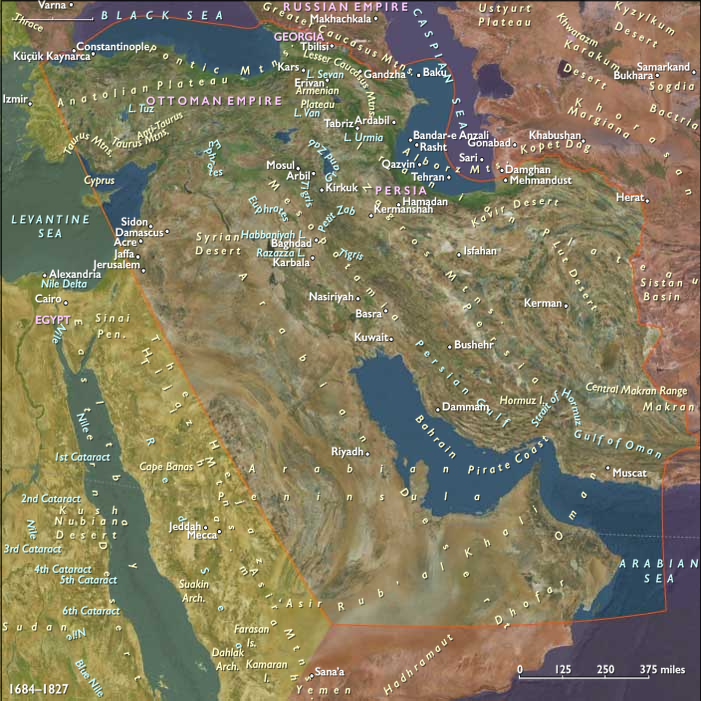
The economy on the Arab side of the Persian Gulf does not match past prosperity, but conditions on the coast remain better than those in central Arabia.
Limited agriculture exists, and the gulf waters contain rich oyster beds for harvesting pearls.
The area's easy access to India, a major market for pearls, makes the pearling industry particularly lucrative, and this attracts the attention of tribes in the interior, who increasingly begin to move and settle into the coastal centers of the Persian Gulf.
One such group, the Al Thani (a branch of the Arab tribe Tamim) lives in the eastern part of the Arabian peninsula, long settled around the well-known Jibrin oasis in what is now Saudi Arabia, south of the present Saudi capital of Riyadh.
The Al-Thani, who arrive in Qatar in the early- to mid-eighteenth century, initially settle in the northern part of the peninsula.
Originally Bedouin, the Al Thani, after settling in Qatar, engage in fishing, pearling, date palm cultivation, and trade.
Locations
Subjects
Regions
The Near and Middle East
View →Subregions