Andrea di Pietro della Gondola had trained…
1552 CE
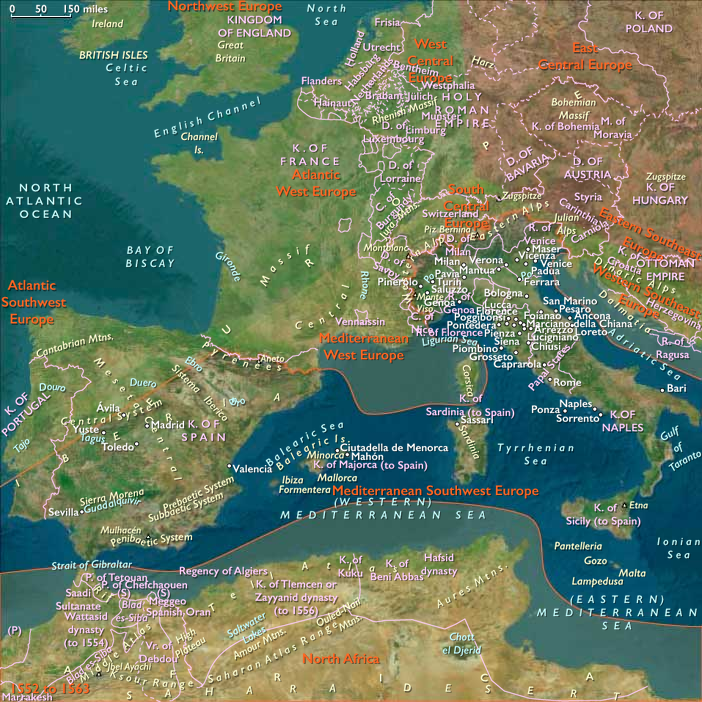
Andrea di Pietro della Gondola had trained in Vicenza as a stonecarver, and had become at the age of twenty-eight a protégé of the humanist poet Count Gian Giorgio Trissino, who had supported and encouraged his study of ancient art and architecture and given him the name Palladio, after a Humanist habit, as an allusion to the mythological figure Pallas Athena and to a character in Trissino's poem Italia liberata dai goti.
It indicates the hopes Trissino had had for his protégé.
Accompanied by his patron, Palladio had made five lengthy visits to Rome, where he had measured and sketched ancient buildings.
Palladio in 1552 completes the Palazzo Iseppo Porto in Vicenza, in which he states in its clearest form his reconstruction of a Roman house.
He closely bases the facade on the Roman Renaissance palace type, such as Bramante's House of Raphael, which Palladio had drawn in Rome, but plans it in what he believes to be the ancient Roman style.
Palladio places two tetrastyle halls, each with four columns, on opposite sides of a court surrounded by a giant colonnade of Corinthian columns.
Commissioned by the noble Iseppo da Porto when newly married (about 1544), this building has had a protracted designing stage and a longer and troublesome realization, partially unfinished.
The symmetrical cubic-cross plan for his two-story Villa Capra (Villa Rotunda), begun in 1552 also for church dignitary Mario Capra, features entrances and porticos on all four sides that clearly integrate the interior of the house with the exterior.
Images

Palazzo Porto (Photo taken 08/09/2007 by Marcok di it.wiki)
Locations
People
Subjects
Regions
Southwest Europe
View →Subregions