Eastern East Antarctica (4,365–2,638 BCE) Late Holocene…
4365 BCE to 2638 BCE
Eastern East Antarctica (4,365–2,638 BCE)
Late Holocene — Expanding Southern Ocean Ecosystems and Stable Polar Margins
Geographic & Environmental Context
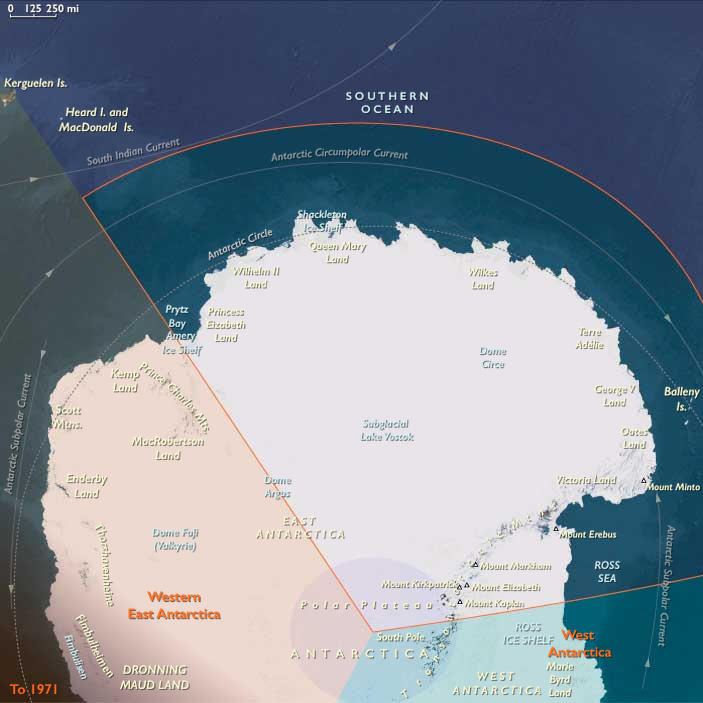
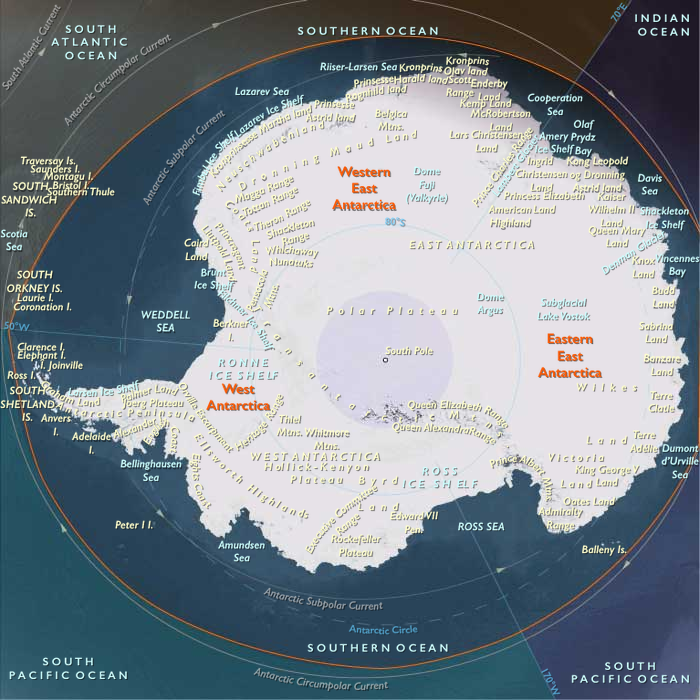
The subregion of Eastern East Antarctica includes the Ross Sea sector eastward through Wilkes Land, George V Land, Adélie Land, Princess Elizabeth Land, and the coastal margins surrounding the Amery Ice Shelf. Vast ice sheets descended from the East Antarctic Plateau toward broad embayments, glacier tongues, and seasonal sea-ice fields. Along scattered coastal refugia, ice-free headlands, rocky nunataks, and small oasis systems interrupted the otherwise continuous expanse of ice.
Climate & Environmental Shifts
This period corresponded to the latter stages of the Holocene climatic optimum in Antarctica. Temperatures remained modestly warmer than many later millennia, maintaining relatively stable glacier margins and reducing summer sea-ice persistence in some coastal sectors.
Seasonal polynyas repeatedly opened along the coast, particularly where katabatic winds pushed sea ice offshore. These productive marine zones supported extensive food webs and encouraged expansion of seabird and marine mammal populations. By the later third millennium BCE, subtle cooling trends began to appear, though the broader East Antarctic system remained remarkably stable.
Biotic Communities and Ecosystems
No humans were present.
Life concentrated almost entirely along coastal margins and adjacent seas.
Large colonies of Adélie penguins occupied rocky shorelines and exposed islands. Petrels and skuas nested on ice-free ridges overlooking seasonal open water. Weddell seals rested on stable sea ice while elephant seals appeared seasonally in suitable coastal refuges.
In sheltered ice-free oases, moss beds, lichens, algae, microbial mats, and cyanobacterial communities flourished during short summers. Offshore waters supported immense krill populations, which in turn sustained fish, seals, penguins, and migratory whales moving through Southern Ocean feeding grounds.
Technology & Material Culture
No human societies reached Antarctica during this period.
Natural systems alone shaped the landscape, with glaciers, sea ice, wind, and marine ecosystems functioning as the principal agents of environmental change.
Movement & Interaction Corridors
Seasonal openings in sea ice formed recurring ecological corridors around the East Antarctic coast. Whales migrated between Antarctic feeding grounds and lower-latitude breeding areas, while seabirds linked Antarctic ecosystems to distant islands throughout the Southern Ocean.
Polynyas acted as persistent centers of biological productivity, concentrating marine life and facilitating nutrient transfer across vast oceanic distances.
Cultural & Symbolic Expressions
There were no human symbolic systems in the region.
Instead, recurring seasonal rhythms structured the Antarctic environment: the annual advance and retreat of sea ice, the return of breeding penguins, the movement of whales through productive waters, and the continual calving of glaciers into the Southern Ocean.
Environmental Adaptation & Resilience
East Antarctic ecosystems depended on extreme seasonal specialization.
Penguins synchronized breeding with summer productivity peaks. Seals exploited stable ice platforms for resting and reproduction. Mosses and microbial communities endured prolonged freezing, rapidly resuming growth during brief thaw periods.
The interaction of glaciers, sea ice, coastal winds, and marine productivity created a resilient ecological balance capable of absorbing moderate climatic fluctuations.
Long-Term Significance
By 2,638 BCE, Eastern East Antarctica represented one of the most stable environmental systems on Earth. Coastal ecosystems had fully adapted to Holocene conditions, while vast ice sheets continued regulating global climate and ocean circulation.
Though untouched by humanity, the region played a critical planetary role. Its sea ice, polynyas, marine food webs, and glacial systems helped sustain Southern Ocean productivity and influenced atmospheric and oceanic processes across the southern hemisphere.
Images

Eastern East Antarctica in the Late Holocene
Subjects
Regions
Antarctica
View →Subregions