Eastern East Antarctica (7,821–6,094 BCE) Early Holocene…
7821 BCE to 6094 BCE
Eastern East Antarctica (7,821–6,094 BCE)
Early Holocene — Ice-Dome Stability, Coastal Oases, and Expanding Seabird Frontiers
Geographic & Environmental Context
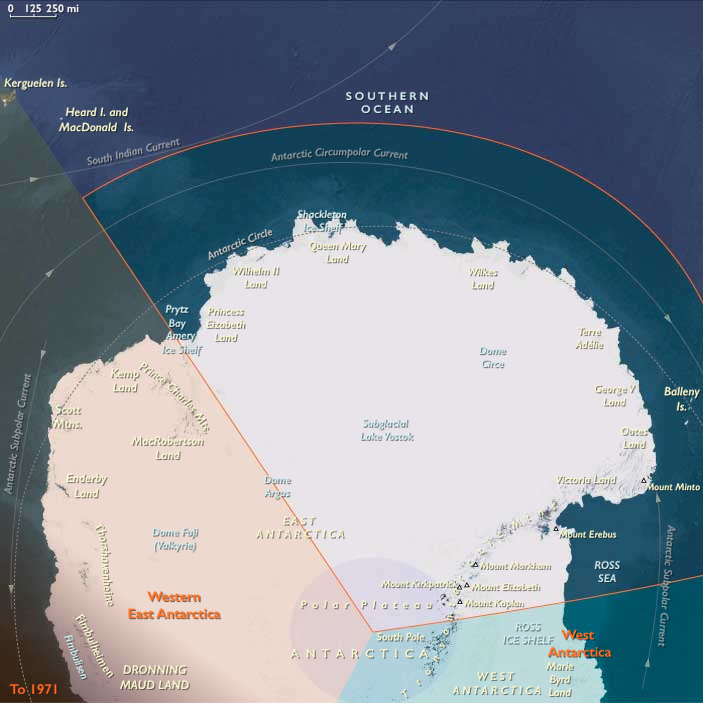
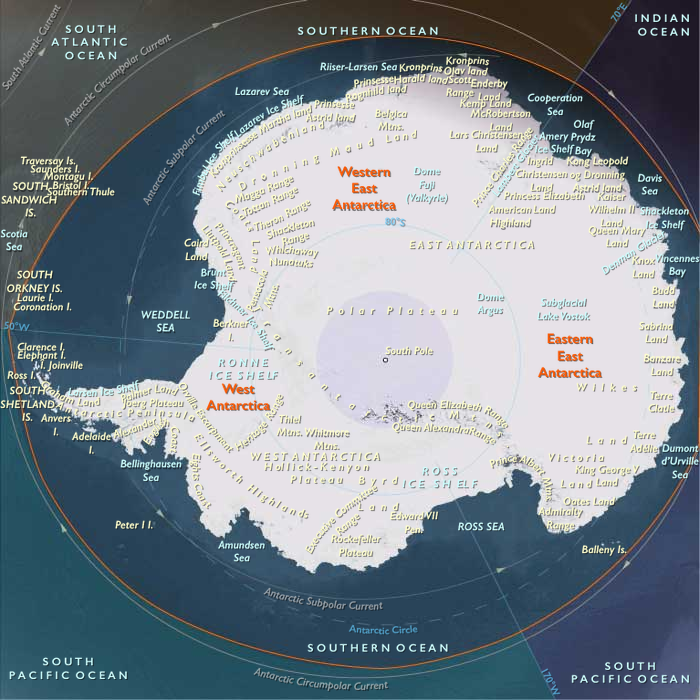
Eastern East Antarctica includes the East Antarctic mainland from approximately 90°E to 180°E, encompassing the Sabrina Coast, George V Coast, Oates Coast, Adélie Land, Wilkes Land, and adjacent sectors of the Ross Sea margin.
Anchors: the Aurora and Wilkes Subglacial Basins; the Totten and Denman glacier outlets; coastal nunatak chains; ice-free rocky refugia; and the Ross Sea margin.
The region remained dominated by the immense East Antarctic Ice Sheet, though warming following the last glacial maximum produced localized coastal retreat, expanding ice-free habitats along select shorelines and rocky promontories.
Climate & Environmental Shifts
- Early Holocene warming modestly reduced sea-ice duration along portions of the coast.
- Katabatic winds continued to govern local climate.
- Seasonal coastal productivity increased as longer open-water periods developed.
- Interior ice domes remained largely stable despite peripheral adjustments.
Baseline Ecology
- Penguin colonies expanded along newly favorable coastal sectors.
- Petrels, skuas, and other seabirds increasingly occupied exposed rock outcrops.
- Mosses, lichens, microbial mats, and cryogenic soils persisted in scattered ice-free refugia.
- Coastal waters supported productive krill and fish populations linked to seasonal sea-ice dynamics.
Landscape Character
- Vast ice plateaus descended toward fractured glacier tongues and floating ice shelves.
- Ice-free nunataks and rocky coastal oases punctuated the otherwise continuous ice cover.
- Seasonal meltwater channels briefly appeared during summer along exposed coastal margins.
- The overwhelming impression remained one of continental-scale ice dominance.
Long-Term Significance
Eastern East Antarctica remained among Earth's most stable cryospheric environments. The coastal biological communities and ice-free refugia established during this period provided the ecological framework for later Antarctic coastal ecosystems.
Topics
Regions
Antarctica
View →Subregions