John Jacob Astor, with the permission of…
April 1808 CE
Astor had immigrated to New York City at twenty-one, and after working at his brother's butcher shop for a time, had began to purchase raw hides from natives, prepare them himself, then resell them in London and elsewhere at great profit.
He had opened his own fur goods shop in New York in the late 1780s and served also as the New York agent of his uncle's musical instrument business.
Astor had taken advantage of the Jay Treaty between Great Britain and the United States in 1794, which opened new markets in Canada and the Great Lakes region.
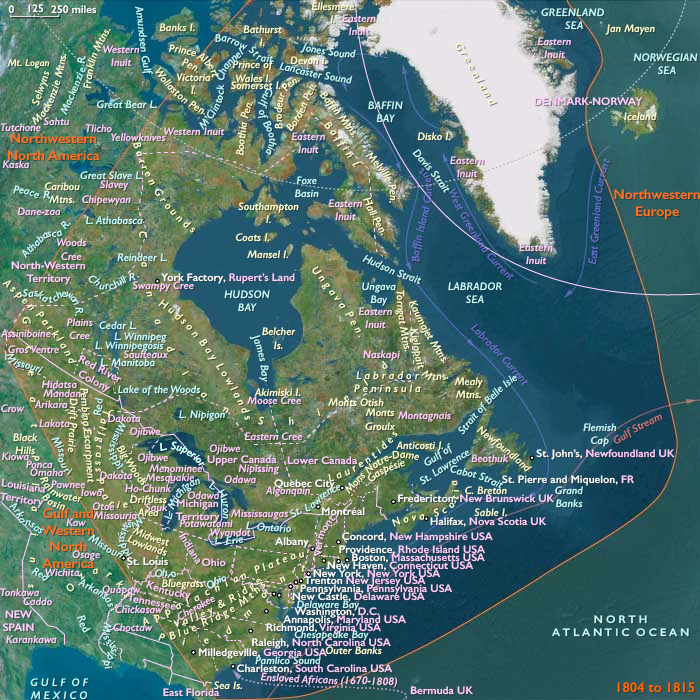
In London, Astor had at once made a contract with the North West Company, who from Montreal rivaled the trade interests of the Hudson's Bay Company, also based in London.
Astor had imported furs from Montreal to New York and shipped them to Europe.
By 1800, he had amassed almost a quarter of a million dollars, and had become one of the leading figures in the fur trade.
His agents work throughout the western areas and are ruthless in competition.
Astor had joined in on two Northwest Company voyages charted to sail to the Qing Dynasty during the 1790s, and in 1800, following the example of the Empress of China, the first American trading vessel to China, Astor traded furs, teas, and sandalwood with Canton in China.
These were done with American vessels to bypass British commercial law, which at the time prohibited any company besides the British East India Company from commerce with China.
These had been financially profitable ventures, enough so that Astor had offered to become the NWC agent for all shipments of furs destined for Guangzhou.
However, Alexander Mackenzie denies his offer, making Astor consider financing voyages to China without the Canadian traders.
Now a fully independent international merchant, Astor begins to fund trading voyages to China along with several partners.
Cargoes often amount to one hundred and fifty thousand dollars in otter and beaver pelts, in addition to needed specie.
Astor had ordered the construction of the Beaver in 1803 to expand his trade fleet.
By 1808, Astor having established an international trading empire, has begun to court diplomatic and government support of a fur trading venture to be established on the Pacific shore in this same year.
In correspondence with the Mayor of New York City, DeWitt Clinton, Astor had explained that a state charter would offer a particular level of formal sanction needed in the venture.
He in turn had requested the Federal government grant his operations military support to defend against British citizens and control these new markets.
The bold proposals had not been received official sanction however, making Astor to continue to promote his ideas among prominent governmental agents.
Astor had given a detailed plan of his mercantile considerations to President Jefferson, declaring that they had been designed to bring about American commercial dominance over North American fur trade.
This is to be accomplished through a chain of interconnected trading posts that will stretch across the Great Lakes, the Missouri River basin, the Rocky Mountains, and ending with a fort at the entrance of the Columbia River.
Once the pelts are collected from the extensive outposts they are to be loaded and shipped aboard ships owned by Astor to the Chinese port of Guangzhou, where furs are sold for impressive profits.
Chinese products like porcelain, nankeens, and tea are to be purchased; with the ships then to cross the Indian Ocean and head for European and American markets to sell the Chinese wares.
The U.S. Embargo Act in 1807, however, had disrupted Astor's import/export business because it had closed off trade with Canada.
People
Groups
Topics
Regions
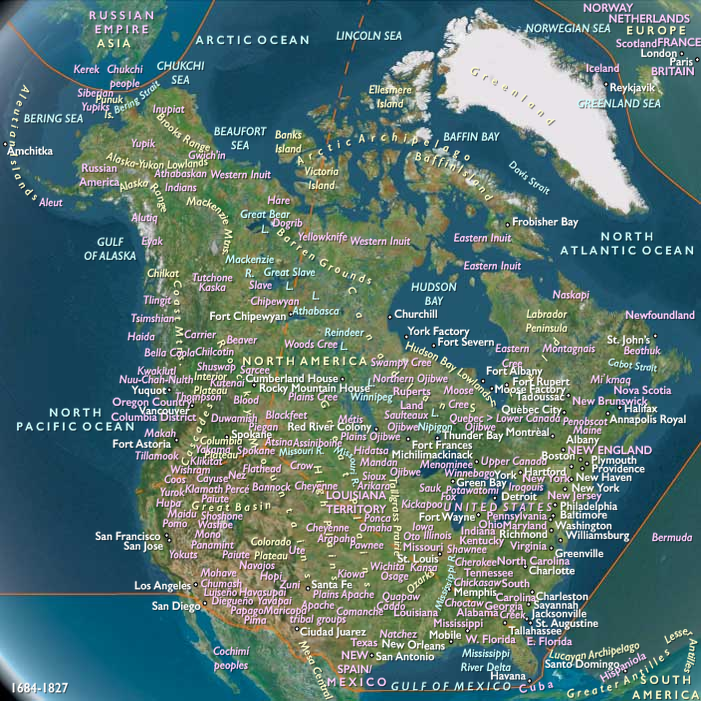
Northern North America
View →Subregions